Equipment quotes take most of the attention in a hydroponic project. Hydroponic farm working capital decides whether the farm survives long enough to use them. Between the first payment leaving the account and the first invoice being collected, the project funds site works, structures and systems, the first crop’s seed and media, a planted crop not yet saleable, a harvested crop not yet paid for, and a payroll running regardless. Little of that is capital cost. It is a timing gap, and the most common reason a technically sound farm struggles in year one.
This article covers sizing hydroponic farm working capital and the buffer that keeps a delay from becoming a crisis. Which instrument funds it belongs to the financing comparison.
What the Cash Gap Is Made Of
The gap is the period between the first cash outflow and the first cash collection: monthly burn multiplied by the number of months, made up of spend before any crop exists, spend while the crop grows, and spend after it is saleable but before buyers pay.
Plans tend to treat the first phase as the project and the other two as operating detail, yet the peak requirement more often sits in the second and third, which run alongside a payroll and a power bill with nothing coming in. The gap closes when collections in a month exceed that month’s outgoings — later than most plans assume.
Spend That Happens Before Any Crop Exists
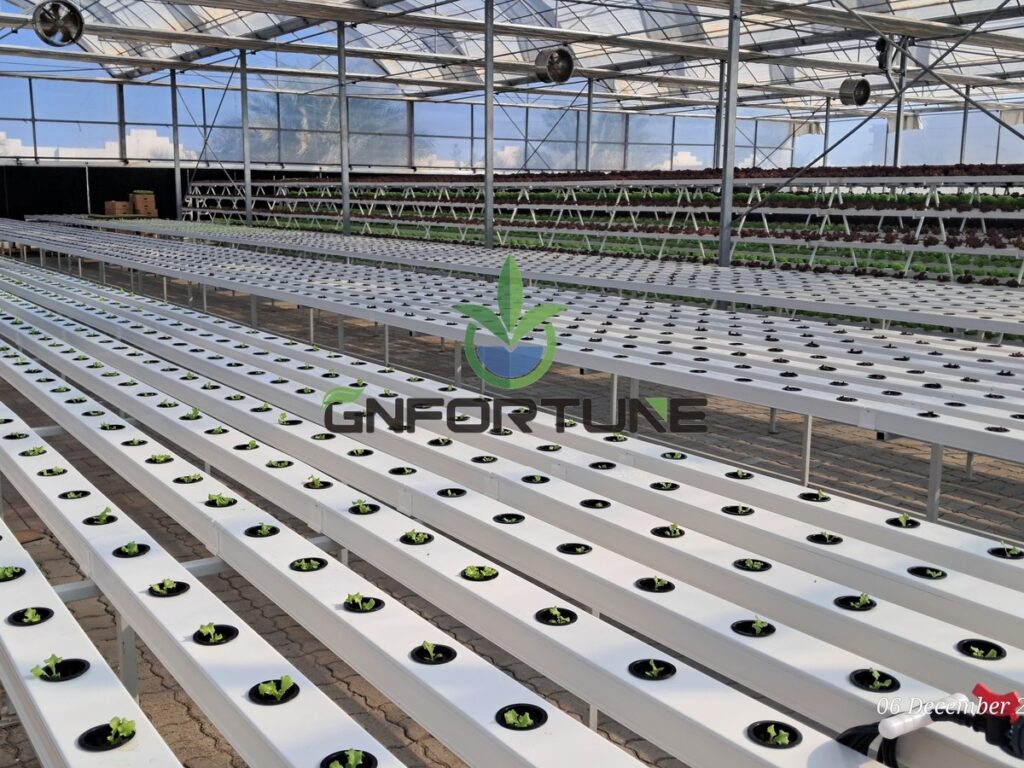
Site works, structure, systems and commissioning are paid in stages, and the stages sit early. Deposits, progress payments and balance-before-shipment clauses put much of the equipment cost into the account before the house produces anything.
- Deposits and progress payments on fabricated equipment, negotiable during quotation and more influential on the curve than the headline price.
- Site works and utilities — levelling, drainage, water and grid connection — often with their own deposit and a lead time starting before the work can be booked.
- Design, permits and insurance, payable whether or not construction holds schedule, with cover usually running from the start of building.
- Recruitment and training. Crew is hired before planting, so payroll starts one to two months ahead of revenue-relevant work.
Utility lead times and the training period are the two most often missed: small against the structure, large against a curve with no income.
First Fill: What the Opening Crop Consumes
The opening crop consumes cash long before it can be sold: plugs or seed, media, the first nutrient charge, packaging and spares. Keep it a distinct line rather than folding it into overheads, because it lands in a narrow window.
- Propagation and media for the first planting, plus an allowance for establishment losses, higher with a new crew.
- The first nutrient charge, acid and base stock, and make-up volume for the opening weeks.
- Packaging bought to the buyer’s format, in minimum quantities that exceed the first week’s consumption.
- Spares. A planning range of 2–6 weeks of critical parts — pumps, valves, sensors — is commonly held on site: the low end with a local distributor, the high end at remote sites.
Payment Terms Decide the Second Half of the Gap
Shipping a crop is not collecting for it. Wholesale and food-service buyers settle on terms measured in weeks, and every day of those terms is a day of payroll, power and inputs funded by the farm.
The figure to track is days sales outstanding — days between delivery and cleared payment, made up of invoice terms, the buyer’s approval cycle and their payment run date. A buyer nominally on 30-day terms who pays monthly behaves more like 45–50 days.
New suppliers are rarely paid fastest: first deliveries pass through a trial period, rejects are re-credited rather than paid, and a grade dispute tends to hold the whole invoice.
Cash Locked in the Crop and the Payroll
Standing crop is cash. Each week a plant spends in the house carries media, nutrient, energy and labour that cannot be invoiced until harvest, so a longer cycle raises working capital even where it improves price.
Finished inventory behaves differently: leafy produce has a short saleable window, so unsold stock cannot be financed or parked, only discounted or written off.
Labour does not flex with receipts. Crews are paid whether or not the buyer has paid, and harvest labour peaks before money arrives.
How to Size Hydroponic Farm Working Capital Month by Month
Build a month-by-month grid from the first planned outflow to three months past first collection, then read the lowest cumulative point. That trough is the number to fund — not total spend, and not annual operating cost.
- Set month zero as the first payment, not the contract date.
- Enter outflows in the month paid: progress payments, inputs, payroll, energy, rent, insurance, debt service.
- Enter inflows in the month cash clears, using terms plus the buyer’s payment run rather than the invoice date.
- Calculate cumulative cash; the most negative month is the peak requirement.
- Run three variants — a four-week slip, a yield shortfall, terms extended by two weeks — and fund the worst.
For scale, one starting band: on a leafy house transplanting around month three with first collection around month six, a planning range of 4–9 months of operating expense is a reasonable starting point, assuming one harvest stream and wholesale terms of 21–45 days. It widens with a longer-cycle crop or a single buyer. That is a planning range under stated premises, not a benchmark, and the grid replaces it once real dates exist.
Two lines drive most of the variance: how quickly the house reaches full occupancy, and how quickly buyers pay. Both are scheduled or negotiated rather than engineered.
Buffer Size, and Where Estimates Fall Short
A buffer of 20–40% on top of the modelled peak is a common planning range, taking the top of the range where the crop is new to the crew, the buyer base is single-channel, or the local season is untested. It exists for delay rather than optimism, and it must be committed — available on demand, not dependent on the farm hitting plan.
Stress tests worth running before the first steel arrives:
- Commissioning slips by four weeks, where a normal snag list consumes time after most of the spend has landed.
- First-cycle yield lands 20–30% below the model, since a new crew rarely hits design output immediately.
- A buyer extends terms or is replaced, and volume is re-sold through a spot channel at a lower price.
Under-estimates generally miss time rather than money: a house planted block by block reaches full output later than one assumed full from day one, and later output pushes collection later.
What the Cash Curve Means for Equipment Specification
Cash shape should influence what is bought and when: standardised components reduce the spares holding, staged deliveries spread progress payments, and relocatable designs protect the asset where land tenure is short. One channel profile, one valve family and one sensor family across the house lower the value of stock on site — a working capital argument for standardisation as much as a maintenance one.
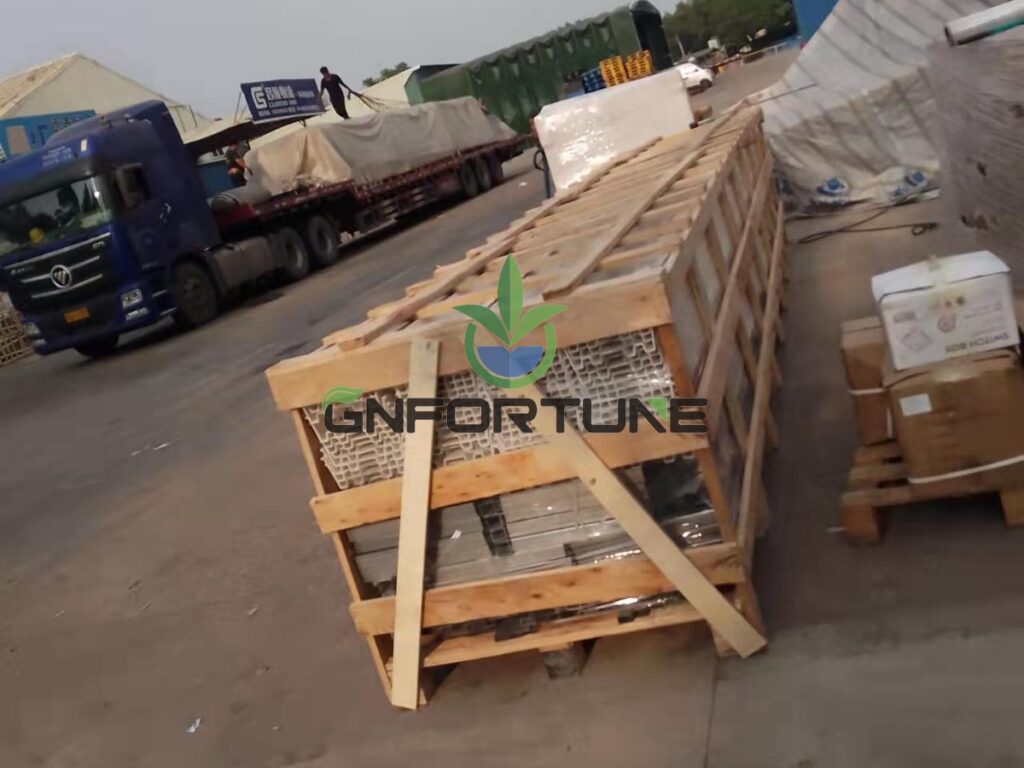
Delivery schedule is negotiable in most quotes: one consignment concentrates payment and installation risk in a single week, while splitting it against the installation sequence spreads both.
G AND N FORTUNE LIMITED manufactures NFT channels, DWC and substrate systems and matched greenhouse packages quoted to project parameters; with in-house extrusion and injection capacity, deliveries can be planned around a staged build rather than one shipment.
FAQs About Hydroponic Farm Working Capital
How much working capital does a hydroponic farm need before first revenue?
Plan for the months between first spend and first collection plus a buffer; for a leafy house with one harvest stream, a planning range of 4–9 months of operating expense is a reasonable starting band on 21–45 day terms. Replace it with your own grid once dates are known.
When does the cash gap actually close?
When collections in a month exceed that month’s outgoings, typically one to two full cycles after first harvest rather than on harvest day. The date moves out if planting ramps slowly or the first payment run is delayed.
Can supplier payment terms close the gap?
Partly, but not reliably: deposits and progress payments sit early, and balance-before-shipment falls due before any revenue exists.
Does a signed offtake agreement remove the need for working capital?
No. An offtake fixes price and volume, not timing. Cash is still tied up in the standing crop and in the payment terms written into the same contract.
Should the buffer be cash in the bank or a committed facility?
A committed facility is usually more efficient, provided it is available without covenants that depend on the farm hitting plan. Cash on hand costs more in opportunity terms but is easier to rely on in a dispute.
Related Reading
- Hydroponic Equipment Financing: Leasing, Bank Loans and Vendor Payment Terms Compared — Leasing, bank loans and vendor terms that cover the gap
- Selling Hydroponic Produce: Channels, Contracts and Pricing Discipline — Sales channels and the payment discipline behind receivables
- Phasing a Hydroponic Project: Building in Stages Without Strangling Cash Flow — Building in stages, which changes when cash is needed
- Financing and Insuring a Hydroponic Farm: What Lenders and Underwriters Ask — What lenders and underwriters ask before releasing funds
- Hydroponic Farm ROI: Cost per Acre & Payback Period — Cost per acre and payback period for the whole investment
Next Step: What to Send for a Quotation
Payment structure belongs in the quotation, not after it: suppliers asked to quote without a delivery schedule assume a single consignment.
Budgeting a new house? For RFQ or project consultation, send: greenhouse dimensions and usable growing area; crop plan and target grade; target weekly or annual output; local climate range and raw water analysis; preferred system (NFT, DWC, substrate gutter or undecided); whether staged deliveries are required and the installation sequence; automation level; delivery schedule; and the budget band. G AND N FORTUNE LIMITED supplies NFT channels, DWC and substrate systems and matched greenhouse packages quoted to those parameters.