

By the G&N commercial consulting team · First published: September 2026 · Reviewed for field accuracy
Basil is a structural crop on a hydroponic farm: the wholesale price holds above USD 8/kg through most retail channels, the plant regrows after each cut, and a well-managed NFT line produces every 21–28 days from the same planting. Mint, cilantro, dill, parsley, and oregano sit alongside it on the same NFT line with adjusted EC and spacing. This guide covers the spacing, EC, photoperiod, and pruning method that turn a single-channel herb trial into a perennial revenue line; the same approach is what we ship in our commercial NFT hydroponic system configures for herb-dominant buyers.
Why Herbs Sit at a 4–8 Week Revenue Cycle
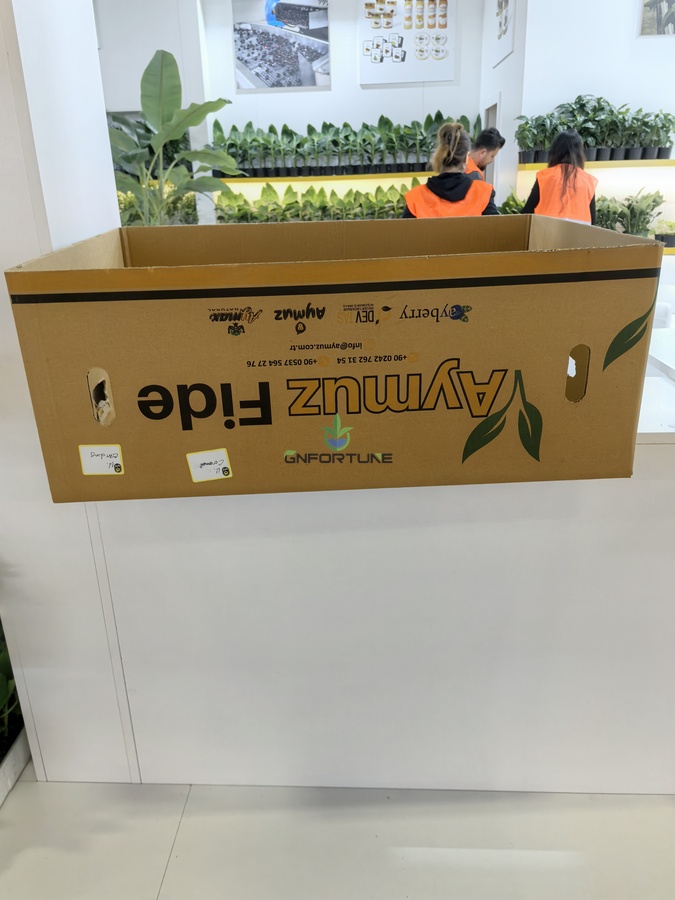
Dense hydroponic basil and culinary herbs growing in a Turkey-based NFT greenhouse project from 2024Head lettuce turns in 30–45 days; basil turns in 21–28 days from a cut-back planting, and a properly pruned plant produces 6–8 productive cuts before it bolts or loses marketable leaf quality. The frequency and repeat-harvest model is the structural reason that an herb line outperforms a one-cut leaf line on per-square-meter revenue by 30–60%, even when the wholesale price per kg is comparable.
| Crop | Days to first cut | Cut interval | Cut count | Channel lifetime | Wholesale price (USD/kg) |
|---|---|---|---|---|---|
| Basil (Genovese) | 28–32 | 14–18 days | 4–6 | 10–14 weeks | 9–14 |
| Mint (Spearmint) | 32–38 | 20–25 days | 5–8 | 14–20 weeks | 10–16 |
| Cilantro | 32–40 | 20–24 days | 2–3 | 8–12 weeks | 8–12 |
| Parsley (Italian) | 40–50 | 25–30 days | 3–5 | 12–16 weeks | 6–10 |
| Dill | 35–42 | 22–26 days | 2–3 | 8–12 weeks | 8–12 |
Cilantro and dill are notoriously short-lived — bolting is the operator’s constant enemy — but mint and basil can produce for 14–20 weeks of clean cuts. Automated NFT configurations push these numbers higher; manual dosing and inspection fall behind on the basil second cut.
The line of credit for an herb farm: the wholesale channel rarely pays more than USD 14/kg for basil, but a chef-direct channel running twice a week can clear USD 22/kg if the cut quality and the variety name are right. Know your market before you scale.
Basil on NFT: Spacing, EC, and the Pinching Method
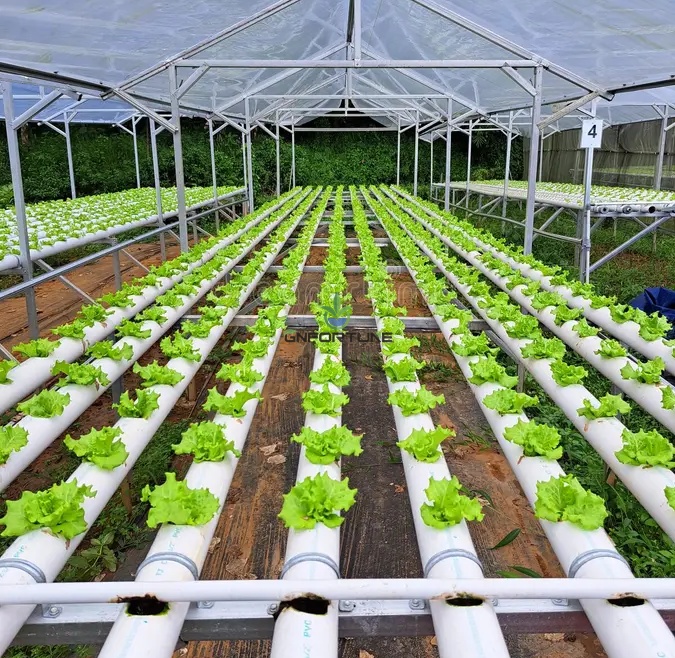
Hydroponic baby lettuce and leafy greens growing in NFT round pipes, illustrating the configuration used for culinary herbsBasil is the most forgiving hydroponic herb to start with, but it has a few requirements that the line must respect or the operator will see leaf-quality collapse at week 6:
- Spacing: 20 cm × 20 cm centers in the NFT channel. This gives ~25 plants per m² and matches a 4-inch (10 cm) net cup or rockwool cube. Spacing tighter than 18 cm reduces airflow and increases Pseudomonas leaf-spot pressure; spacing wider than 25 cm underutilizes the channel and shifts the economics unfavorably.
- EC: 1.6–1.8 mS/cm in the first 14 days, stepping up to 1.8–2.0 mS/cm at first cut. Above 2.4 mS/cm the leaves turn a deep green, the essential-oil concentration rises, and the post-harvest shelf life falls because the leaves are more pungent and wilt faster.
- pH: 5.5–6.2. Below 5.3 the lower leaves yellow; above 6.5 the iron precipitates and the upper leaves interveinal-chlorose.
- Flow rate: 0.5–1.0 L/min per channel. Higher flow rates are wasted; basil’s uptake at peak transpiration is around 0.3 L/min per m² of canopy.
The pruning method that doubles yield is pinching: at 25–30 cm height, remove the apex above the second true leaf pair. Every pair of axillary buds below the pinch becomes a new shoot, and within 7–10 days the plant forks into 4 productive stems. A single basil plant pinched once yields roughly twice the marketable leaf mass of an un-pinched plant over its lifetime, and the cut quality (leaf size, stem length, aroma) is at least as good. The first pinch must happen at least 7–10 days before the first commercial cut for the fork to be fully established.
Mint and Cilantro: Two Crops That Need Two Configurations
Mint and basil share the same NFT channel, but cilantro rewards a different setpoint and is so bolting-prone that it is worth its own channel in a 2,000+ plant farm:
| Setpoint | Basil | Mint | Cilantro |
|---|---|---|---|
| EC (mS/cm) | 1.6–2.0 | 1.4–1.6 | 1.4–1.6 |
| pH | 5.5–6.2 | 5.5–6.2 | 5.8–6.5 |
| Day temperature | 20–25 °C | 18–22 °C | 16–20 °C |
| Photoperiod | 14–16 h | 14–16 h | 12–14 h |
| Spacing (cm) | 20 × 20 | 20 × 20 | 18 × 18 |
| Bolting trigger | Rare under 28 °C | None | Above 22 °C or under long days (16 h+) |
Mint is forgiving: cool temperatures, moderate EC, and normal NFT flow rates produce a steady cut. Cilantro is the operator’s puzzle: it bolts above 22 °C day temperature or under photoperiods above 14 hours. The standard commercial workaround is short-day cilantro: dim the lights to 12 hours or run a black cloth for the last 4 hours of the photoperiod, and keep the day temperature below 20 °C. This pushes the bolt window out to 8–12 weeks of clean cuts instead of 4 weeks.
Light Recipe: 14–16 Hour Photoperiod
Herbs on NFT want the same PPFD range as fruiting crops because what they are storing is essential-oil-bearing leaf, not vegetative biomass — slightly higher light drives higher oil concentration, which drives aroma, which drives repeat buyers in chef channels:
- Basil: 14–16 hour photoperiod at 250–350 µmol/m²/s PPFD.
- Mint: 14–16 hour photoperiod at 200–280 µmol/m²/s PPFD.
- Cilantro: short-day (12 hour photoperiod) at 150–200 µmol/m²/s PPFD.
For most commercial herb lines, the same LED fixtures used on a tomato NFT line work for basil with the photoperiod dialed in. For microgreens crops the light recipe is different — herbs want higher intensity, longer photoperiod, and a cooler canopy temperature than the microgreens the same room would otherwise produce.
Post-Harvest: Cold Chain, Packaging
Herb leaves lose moisture at a higher rate than head lettuce because of their higher surface-area-to-volume ratio. The post-harvest protocol matters disproportionately:
- Pre-cool the cut leaves within 30 minutes. Hydrocool to 4–6 °C or use a blast chiller on a perforated tray. Field heat above 8 °C accelerates wilting.
- Trim and sort by stem length. Chef-direct expects 15–20 cm stems; wholesale supermarket expects 8–12 cm.
- Pack in vented PET clamshells or perforated poly bags. 25–100 g units are the standard; avoid over-packing, which traps ethylene and accelerates senescence.
- Cold chain at 4–6 °C, 95% relative humidity. Basil shelf life under this protocol is 10–14 days; cilantro is 7–10 days; mint is 14–18 days.
A line that skips the pre-cool loses 20–30% of marketable weight to wilting within the first 24 hours. The investment in a hydrocooler or blast chiller returns in month 1.
Common Losses: Damping-Off and Tip Burn
Two loss patterns show up on every herb NFT line that runs past 4 weeks. Both are avoidable with disciplined protocol:
| Symptom | Cause | Fix |
|---|---|---|
| Seedling collapse at week 1–2 | Damping-off (Pythium or Rhizoctonia) | Pre-soak cubes in 0.1% H₂O₂; reduce humidity below 90% in propagation; replace rockwool cubes every cycle; see the pythium root rot guide |
| Marginal leaf burn at first cut | Calcium uptake drop during rapid growth | Raise EC 0.2 mS/cm; reduce flow rate to 0.5 L/min for 24 hours; ensure reservoir temperature is below 24 °C |
| Lower leaf yellowing at week 6+ | Nitrogen depletion in long-cycle channel | Top up reservoir with 50% fresh A/B at week 4; supplement kelp extract if available |
FAQ
Q: Which NFT channel width works best for herbs?
A: 100 mm wide × 50 mm deep is the standard for 4-inch (10 cm) net pots and rockwool cubes; 73 mm channels work for microgreens and propagation but are tight for full-grown basil and mint. The NFT channel size comparison covers the engineering in detail.
Q: Should I run basil and lettuce in the same channel?
A: Not generally. Their EC preferences diverge (basil 1.6–2.0 vs lettuce 1.2–1.6), and a basil plant at the same EC as lettuce will outcompete for light and space within 21 days. Run them on parallel channels with separate reservoirs if at all possible.
Q: How many times can I cut a basil plant before replacing it?
A: 4–6 productive cuts over 10–14 weeks. After cut 6, the stem lignifies and the new shoots are thin and slow. Replant at that point; the new propagation batch will be ready to transplant as the prior channel ends.
Q: Is drip irrigation a viable alternative for herbs?
A: Yes, especially for outdoor or high-tunnel herb production. NFT has the advantage of faster turn-around and denser planting; drip has the advantage of lower capex and tolerance for less-than-perfect water quality. The drip irrigation and Dutch bucket article covers the bucket side of this comparison.
Q: Do herbs need different lighting than leafy greens?
A: Herbs want a slightly higher PPFD (250–350 µmol/m²/s vs 150–200 for greens) to drive essential-oil concentration, and a longer photoperiod (14–16 hours). Basil especially benefits from a longer photoperiod, but cilantro bolts under it.
Sources
- FAO hydroponic herb production compendium — per-crop EC, pH, and photoperiod setpoints.
- USDA AMS herb wholesale market reports — price and channel premiums.
Plan an Herb NFT Line
G&N Fortune can ship an NFT herb line tuned for basil, mint, and cilantro with the right channel width, slope, and reservoir sizing for your climate. Send your crop mix, weekly volume target, and growing room dimensions to /quote/, and our engineering team will return a channel layout, a per-cut economics worksheet, and the BOM for the supporting hardware.
- Microgreens hydroponic growing guide — the 7-day crop that sits downstream of an herb line.
- NFT channel size comparison — the engineering behind the channel width choice.
- NFT hydroponic system — the standard product line for an herb build-out.
- NFT channel installation guide — installation details for the system.
— G&N Fortune Limited · hydroponic equipment manufacturer since 1996 · Reviewed by the engineering team