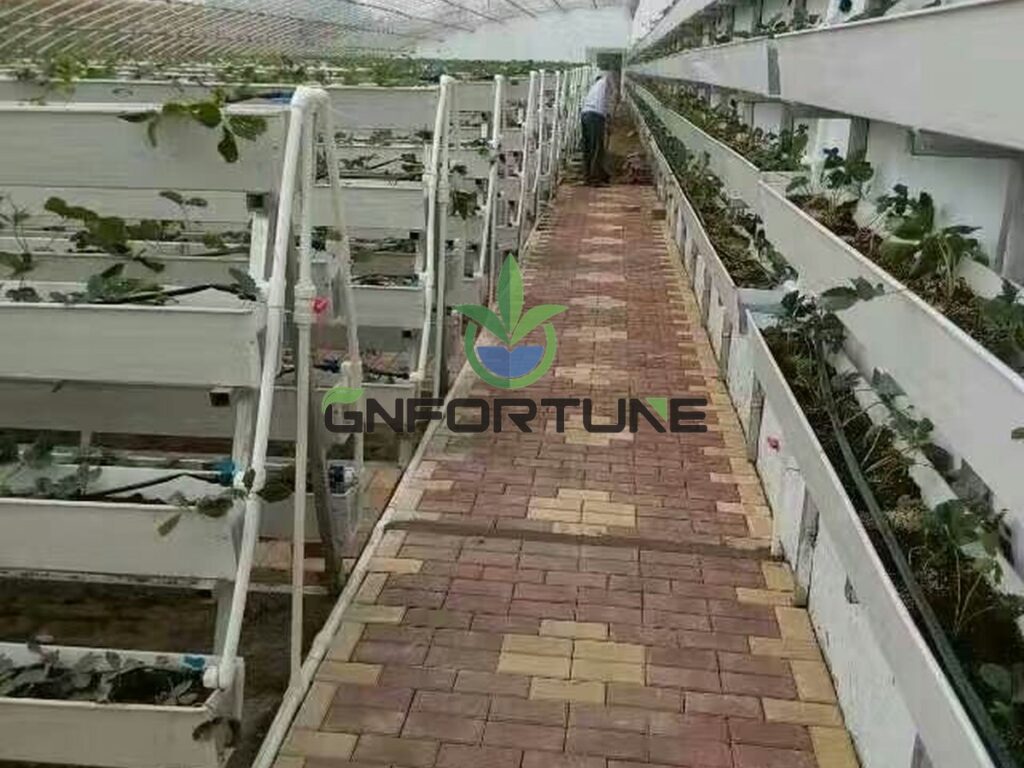
Material arguments about greenhouse mains usually start at price per metre and end in a decade of arguments about leaks. The variables that decide lifecycle cost are less commercial: how each joint reaches full strength, how far the run moves when the house heats up, and how long the farm is dry after a burst. HDPE and PVC behave differently on all three, and the difference is large enough to shape the whole layout rather than just the pipe schedule.
Two Materials, Two Joint Philosophies
PVC-U is joined by solvent cement, which softens the surfaces and fuses them chemically as the solvent evaporates. HDPE is joined by heat: butt fusion melts two pipe ends and presses them together, electrofusion melts a fitting from inside, or a mechanical coupler compresses a seal onto the outside. One joint is a chemical weld made on site with a brush; the other is a thermal weld made with a machine.
That single difference cascades into everything else — cure time, weather tolerance, the number of fittings a run needs, and what a crew can fix at night with the house still planted.
| Criterion | HDPE (PE100) | PVC-U (pressure) |
|---|---|---|
| Joint method | Butt fusion, electrofusion, mechanical coupler | Solvent cement, threaded, gasketed push-fit |
| Joint strength reached | Close to parent pipe once cooled | Rises over hours; full strength after roughly 24 hours |
| Time per joint in the field | 3–8 minutes of machine time plus cooling | 1–2 minutes of work plus a long cure before pressurising |
| Movement per 10 °C over 1 m | Around 0.2 mm | Around 0.05–0.06 mm |
| Repair in a live house | Cut out a section, fuse a spool or clamp a coupler | Cut out, two couplings, cement, cure before refilling |
| Delivered form | Coils up to 100 m in small bores, straight lengths in large | Straight lengths, typically 6 m |
| Usual best fit | Long runs, buried sections, cold stores, movement | Above-ground headers with many fittings and branches |
Joining Greenhouse Mains in Real Weather
Both methods work in a greenhouse; both fail in the same three conditions — dirty surfaces, wind-blown dust and water where the joint is being made.
For butt fusion, the discipline is in the setup: the pipe ends must be square, the oxide layer scraped off completely, the heater faces clean and at the temperature the machine’s chart specifies, and the joining pressure held for the full cool time rather than until the bead looks right. A fusion joint made in a trench with grit on the heater face will pass a pressure test in the afternoon and weep within a season.
For solvent cement, the discipline is in the clock. Primer first, cement applied to both surfaces, a quarter-turn as the pipe seats, then hold until the joint grabs. Cure time depends on diameter and on temperature; below about 5 °C the solvent stops evaporating usefully and cure stretches far beyond the table. Pressurising a house at hour three instead of hour twenty-four is how a main fails at a fitting rather than in the pipe wall.
Threaded PVC connections deserve their own warning: thread sealant choice and torque decide whether the joint survives. The specifics are in the guide to pipe thread sealing, and the demountable options that reduce the number of glued joints altogether are covered in pipe unions and quick couplings.
Thermal Behaviour and Where It Lands
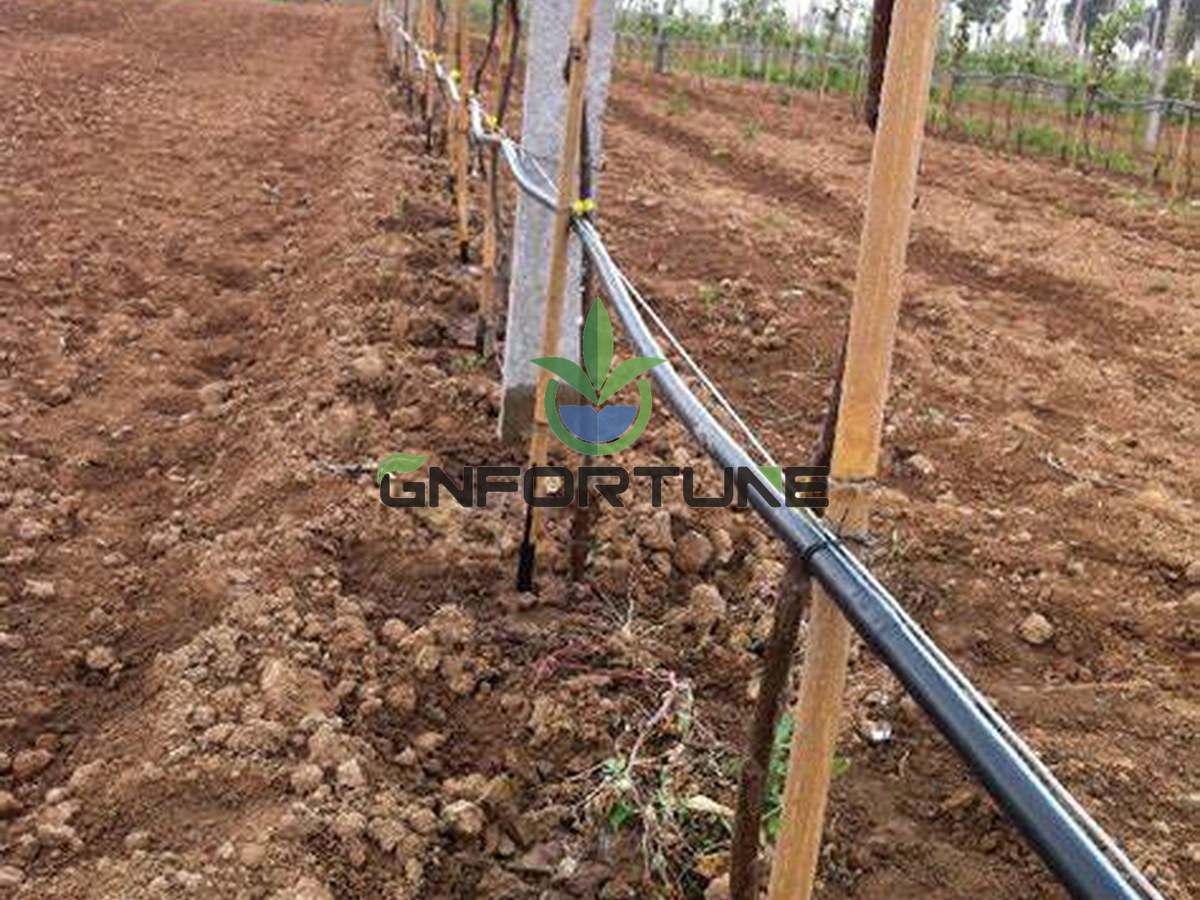
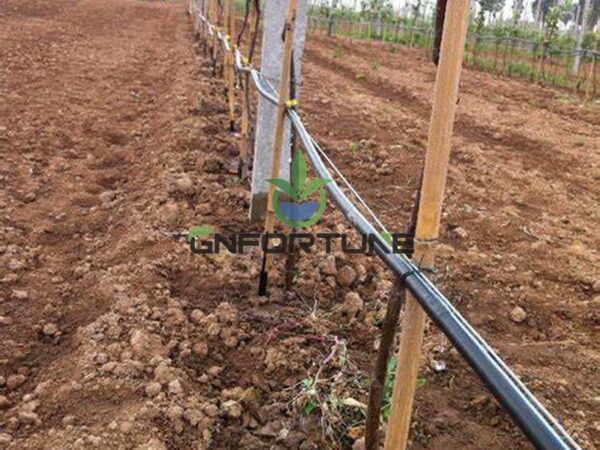
HDPE moves roughly three to four times as far as PVC over the same temperature change. A 60 m above-ground run swinging 30 °C between a cold night and a hot afternoon moves on the order of 35 mm in HDPE, against roughly 10 mm in PVC. Neither figure is a problem by itself; the problem is where the movement is forced to stop.
Fused HDPE can be installed with deliberate slack and anchored at intervals, so movement is distributed along the run and absorbed by the pipe’s own flexibility. A solvent-welded PVC main is stiff, so the same movement concentrates at the fittings and at the transition to a steel structure or a pump flange. That is where the cracks appear, and it is why a PVC main needs expansion provisions that a fused HDPE main can partly do without.
The arithmetic of expansion loops, anchor spacing and clamp type is set out in the article on PVC pipe thermal expansion in a greenhouse. What matters here is the consequence for jointing: the more rigid the material, the more of that calculation has to be solved with hardware rather than with pipe.
What a Repair Actually Costs
On a planted house, downtime is the dominant cost of a burst, not the fitting. This is where the two materials separate most sharply.
- HDPE: isolate the zone, drain the section, cut out the damaged length, and either fuse a spool or bolt on a mechanical coupler. A two-person crew with a coupler on the shelf can restore flow in well under an hour, with no cure wait.
- PVC: isolate, drain, cut out the damaged length, fit two couplings with cement, then wait for cure before refilling. The work is quick; the wait is not, and a house cannot be left dry through a hot afternoon.
- Either material: a repair made without a zone isolation valve becomes a whole-house shutdown. Valve placement is a maintenance decision made at design time.
The practical rule from project work: keep two mechanical couplers for the main diameter, one spare length in each size, and a set of fusion fittings on site before the first crop goes in. A farm that orders a coupler after the failure has already lost the day.
Pressure Rating, Temperature and Derating
Both materials lose pressure capability as temperature rises, and both are usually selected on a rating quoted at 20 °C. A 10 bar PVC-U main at 20 °C is not a 10 bar main at 40 °C in a hot house; the derating factor is substantial and should come from the manufacturer’s table for the specific compound, not from a rule of thumb.
Three specification habits prevent most of the arguments later:
- State the design pressure at the maximum solution temperature the line will see, not at ambient.
- State the SDR or wall thickness, not just the nominal pressure class, so quotes can be compared.
- Ask for UV stabilisation details on any run that sees daylight, and for the food-contact declaration if the line carries nutrient solution. The material compliance side is covered in the linked guide to food-safe materials and certification, and long-term surface degradation in the article on UV ageing of exposed pipework.
Choosing Between Them on a Real Project
The decision is usually made per segment rather than per farm.
- Long supply runs from a sump to a distant house: HDPE, because coils remove joints and the flexibility tolerates ground movement.
- Headers inside the house with many branches: PVC, because a tee every few metres is cheap and fast to cement, and the run is short enough that movement is manageable.
- Transition points: a flanged or mechanical adapter, never a cemented joint between dissimilar materials.
Mixing materials across a site is normal and workable. What fails is mixing joint methods without adjusting the programme: a crew fusing HDPE in the morning and cementing PVC in the afternoon will pressurise both at once, and only one will be ready.
Decide greenhouse mains by joint method and repair route first, then by price. The pipe that costs less per metre is expensive if every failure costs a day of production.
FAQs About HDPE and PVC Greenhouse Mains
Is a fused HDPE joint as strong as the pipe itself?
In good field practice, a butt fusion joint reaches close to parent-pipe strength once fully cooled. The qualifier matters: dirty heater faces, wet pipe ends and short cool times produce joints that pass a quick test and fail later.
How long before a solvent-welded PVC main can be pressurised?
Roughly 24 hours for full strength at moderate temperatures, longer in cold or humid conditions, and the figure varies with diameter and cement type. Follow the cement manufacturer’s table rather than a site habit.
Can HDPE and PVC be joined directly?
Not with cement or fusion. Use a flanged transition, a mechanical coupler rated for both materials, or a short spool with the appropriate adapters on each end. Direct cemented transitions between dissimilar plastics are a reliable leak.
Which material handles thermal movement better?
HDPE, by a wide margin: it moves further but flexes, so movement can be distributed along the run. PVC moves less but is stiff, so the same movement concentrates at fittings unless expansion provisions are designed in.
Do greenhouse mains need insulation in a hot climate?
Where solution temperature matters, yes — an exposed main in full sun gains heat quickly. Insulation also reduces the temperature swing that drives movement, so it addresses two problems at once.
Related Reading
- PVC vs PE Pipe for Irrigation Mains: Which Wins — The material selection argument, before jointing enters the picture
- UV Ageing of Exposed Pipework — What sunlight does to a main left above ground
- Hydroponic Gasket and Seal Materials — Choosing elastomers that survive the same water chemistry
- Greenhouse Pipe Support Hardware — Clamps, anchors and the sliding supports that let movement happen where you want it
Next Step: What to Send for a Quotation
Pipe schedules get priced per metre; installations get priced per joint. Send both, or the quote will only cover the easy half.
Planning a main replacement or a new house? For RFQ or project consultation, send: run lengths and diameters per segment; whether each segment is buried or above ground; design pressure and maximum solution temperature; material preference and joint method; number of branches and valve positions; available access for fusion equipment; repair spares wanted on site; delivery schedule; and the budget band. G AND N FORTUNE LIMITED supplies pipework, manifolds and fittings matched to the system it is quoting, with jointing and spares advice included.