

Grafting Buys You a Root System, Not Vigour Magic
A grafted plant is two plants joined: a scion chosen for fruit quality and a rootstock chosen for its roots. The promise is real — better tolerance to soil-borne disease, improved performance in cold or salty conditions, stronger uptake under stress — but it arrives with added cost, added handling risk and, if the healing stage is managed badly, a crop failure you cannot recover from because there is no time to re-propagate.
This guide is for buyers deciding whether grafted tomato seedlings belong in a commercial hydroponic plan: what grafting does and does not change, which rootstocks exist, what a grafted plant costs once labour and losses are counted, and the healing conditions that decide success.
What Grafting Actually Changes
| Claim | What happens in practice | Confidence |
|---|---|---|
| Disease resistance | Rootstocks carry resistance to specific soil-borne pathogens — certain nematodes, fusarium, verticillium, bacterial wilt — when the named resistance matches your pressure | High, where the resistance matches |
| Cold tolerance | Some rootstocks maintain uptake at lower root-zone temperatures | Moderate; variety-specific |
| Salt tolerance | Certain rootstocks cope better with elevated EC or marginal water | Moderate; useful with brackish supply |
| Much higher yield | Gain is usually modest on its own; grafting preserves yield under stress rather than creating it | Often oversold |
| Longer crop cycle | Stronger root systems can support extended production | Plausible; depends on crop management |
| Better fruit taste | Fruit traits come from the scion, though vigour can change sizing | Indirect only |
In hydroponics specifically, the disease argument is weaker than in soil — you are not fighting a soil inoculum load in a clean slab — but it is not zero. Recirculating systems, reused media and any site with a history of root problems change that calculation quickly.
When It Pays
- Sites with known root disease pressure, particularly where the same house has run solanaceous crops repeatedly
- Marginal water where salt tolerance buys you usable production instead of a write-off
- Cold-season production without full root-zone heating, where low-temperature uptake limits the crop
- High-value long-cycle crops — a large tomato crop running many months amortises the extra plant cost far better than a short one
- Where labour is cheap relative to plant cost and grafting is done in-house
Where systems are clean, water is good, climate is controlled and the cycle is short, ordinary seedlings are usually the better financial choice. A grafted plant typically costs several times what a standard seedling does, and that premium has to be recovered.
Grafting Methods
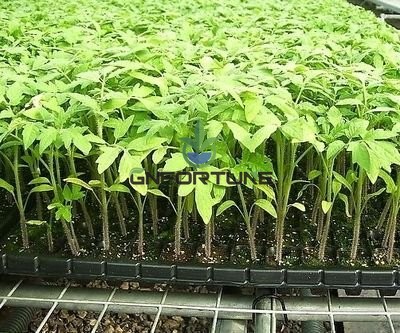
| Method | How it works | Where it suits | Skill requirement |
|---|---|---|---|
| Tube / splice grafting | Both plants cut at an angle, joined with a silicone or plastic clip | Solanaceae where stem diameters match | Low–moderate; the standard entry method |
| Cleft / top grafting | Scion wedged into a split rootstock stem | Sturdier unions, larger plants | Moderate; clean cuts matter |
| Approach grafting | Plants joined while both still rooted, then the unwanted tops and roots are removed | High success rates for beginners | Low success rate is high, but labour per plant is higher |
| Robotic / automated grafting | Machine performs cut and join | Very large programmes | Capital cost; requires standardised plant sizes |
Match stem diameters. Most failures in small programmes trace back to joining plants of visibly different thickness, which leaves vascular tissue misaligned and the union weak even when it appears healed.
The Healing Chamber Decides Everything
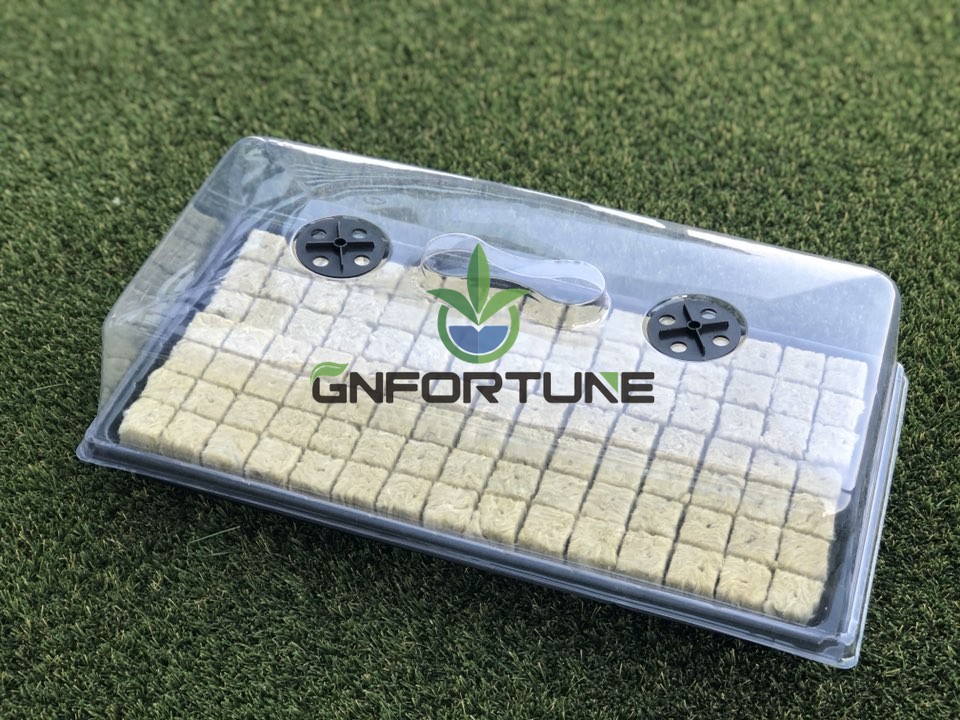
The graft union forms over roughly a week. During that period the plant has no functioning connection between top and root, so the chamber has to keep the leaves alive on humidity alone.
| Parameter | Typical target | Why |
|---|---|---|
| Relative humidity | Very high — commonly stepped down over the healing period | The scion has no functioning roots, so every drop lost must be replaced from the air |
| Temperature | Warm and stable | Drives callus formation and union strength |
| Light | Very low or shaded at first, then increased | Direct light drives transpiration the plant cannot yet support |
| Air movement | Gentle, no direct draft | Uniform conditions without drying leaf surfaces |
| Duration | Roughly a week before hardening begins | Hardening too fast collapses plants; too slow wastes chamber space and stretches schedules |
The visible sign of trouble is wilting scions in the first one to two days. When that happens, raise humidity first and check temperature control second — it is almost never a nutrient problem at this stage.
Cost Per Plant, Honestly
Compare grafted against ungrafted on four lines, not one:
- Seed cost: grafted programmes require both scion and rootstock seed, and rootstock seed is priced differently from standard varieties
- Labour: grafting and healing add handling minutes per plant; even skilled operators add measurable time
- Losses: typical failure rates in the chamber, plus plants lost at hardening — budget for them, do not hope around them
- Schedule: grafting pushes propagation earlier and adds chamber capacity requirements. Chamber capacity is the constraint that catches expansion plans out
Then compare against realistic benefit. If the alternative is a yield loss you can quantify from your own records, the premium is easy to justify. If it is expected because the catalogue said so, ask for a trial block first.
Managing Grafted Plants After Planting
- Plant with the union above the media surface. If the scion touches the slab or media it will root, and scion roots defeat the purpose of the rootstock
- Remove rootstock suckers routinely. Growth from below the union competes with the scion and quietly takes over
- Do not assume higher feed requirements. Stronger roots change uptake patterns; respond to measured run-off and plant response, not expectations
- Keep records by batch. Compare grafted and ungrafted blocks on the same house in the same season — that single trial tells you more than any supplier claim
FAQ
Are grafted tomato seedlings worth it in hydroponics?
Sometimes. The case is strongest where there is disease history, marginal water, low root-zone temperatures or a long high-value cycle. In a clean new system with good water and a short cycle, the premium often fails to pay back.
Do grafted plants yield more?
Not automatically. Grafting tends to protect yield under stress rather than raise the ceiling. Trials on your own site in your own season are the only reliable answer.
Can I graft cucumber and pepper too?
Yes, both are commonly grafted, and melon and eggplant also. Technique and clip size vary with stem diameter, which is why matching plant size matters so much.
What causes most grafting losses?
Humidity failure in the first days and mismatched stem diameters. Both are management issues rather than genetic ones, and both show up inside 48 hours.
How much longer does propagation take?
Budget additional weeks rather than days: extra time for stock seedling coordination, the graft operation itself, and the healing and hardening period. Plan chamber space accordingly.
Can I buy grafted plants instead of doing it myself?
Yes, where propagators serve your region. Buying shifts the labour and chamber risk to the supplier, but adds freight, scheduling lead time and dependence on their specification.
Trial Before You Commit
We supply gutter and Dutch bucket systems sized for either option and can help you set up side-by-side blocks built for comparison. Tell us your crop, water analysis and cycle length and we will quote both configurations. Use the quote form to start.
Related reading: grafting follows on from propagation fundamentals — see commercial propagation and transplanting and variety selection and seed sourcing; for stress conditions see growing with brackish water and root rot in NFT and DWC, and for crop specifics growing tomatoes in Dutch buckets.