

The Growing Is Usually Not the Hard Part
In most African markets, a well-built hydroponic system will produce excellent crops. What determines whether the business works is everything around it: whether the pumps ran last night, whether the next filter cartridge arrives this month, whether anyone can service the controller, and whether the produce reaches a buyer in acceptable condition.
Africa is not one market — conditions differ enormously between countries and even between regions within them. This guide covers the constraints that recur most often for hydroponics in Africa and how successful projects design around them.
Power First, Everything Else Second
| Situation | Consequence | Practical response |
|---|---|---|
| Unreliable grid | Interrupted irrigation and dosing | Backup generation sized to actual runtime need, not symbolic capacity |
| Long outages | Recirculating systems lose root-zone oxygen quickly | Design buffers that keep roots alive; prioritise redundancy on the pump set |
| Voltage instability | Pump motors and electronics damaged | Protection on sensitive equipment and on the pump starter |
| Expensive diesel | Running costs dominate unit economics | Evaluate solar with storage against realistic outage patterns |
| Limited sanctioned load | Expansion plans blocked later | Apply for adequate capacity at the outset; upgrades are slow |
The recurring mistake is sizing backup generously on paper and discovering that fuel logistics — not generator capacity — is the constraint. Budget fuel storage and delivery as part of the power system.
Logistics: Lead Times That Shape Everything
- Freight plus clearance plus inland transport can take considerably longer than the manufacturing itself
- Port congestion and seasonal delays should be assumed rather than hoped away
- Inland roads and last-mile access constrain how much you can bring at once and what size loads suit your site
- Duty and tax treatment varies substantially between countries and can dominate equipment decisions
- Consolidate shipments. Running out of a single fitting should not force an expensive expedited consignment
- Hold a larger spares inventory than you would in a market with fast delivery — it is cheaper than downtime
Water Supply and Quality
- Test at source and seasonally. Bore quality can shift between wet and dry seasons
- Salinity and sodium drive both crop choice and recipe design in many regions
- Turbidity after rain events increases filtration demand sharply
- Storage buffers both supply interruption and quality variation — worth sizing generously
- Treatment before dosing is usually cheaper than managing poor water inside the system
Heat, Water Use and Crop Choice
| Condition | Implication | Response |
|---|---|---|
| High sensible heat and strong radiation | Very high transpiration demand | Evaporative cooling where humidity allows; shading; adequate irrigation capacity |
| Water scarcity in some regions | Recirculation becomes essential, not optional | Closed-loop designs with proper treatment and monitoring |
| High humidity coastal zones | Cooling performance falls, disease pressure rises | Airflow-led design and tolerant varieties |
| Strong insolation | Good growing light, higher cooling and UV load | UV-stabilised materials and realistic cooling capacity |
Skills and Support
- Assume you are building capability, not hiring it. Plan training into budgets and timelines
- Choose equipment that can be maintained locally even if it is not theoretically optimal
- Standardise components so that one spare part serves many positions
- Write procedures locally in the working language, with photographs where useful
- Plan for technician turnover — systems that depend on one person’s knowledge will fail eventually
Realistic First-Phase Scale
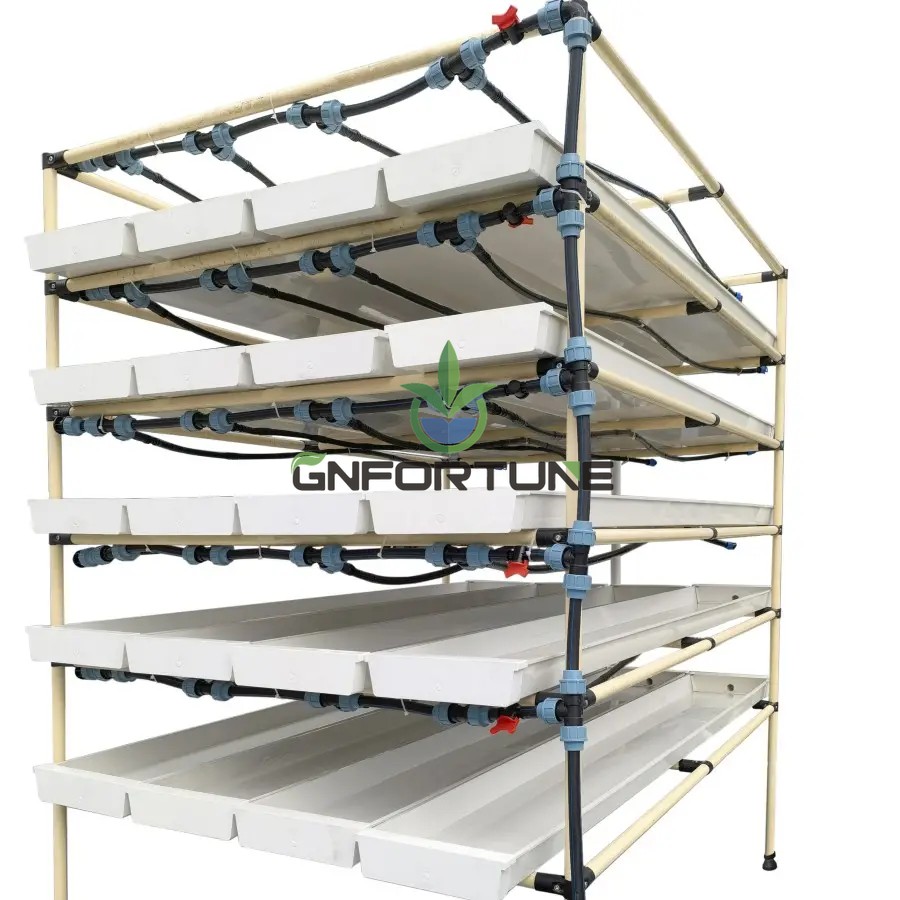
The failures we see cluster at both extremes. Very small pilots rarely generate enough revenue to be taken seriously and get neglected; very large first phases have no room for learning. A practical middle path:
- Enough area to supply one confirmed buyer reliably rather than a speculative area looking for buyers
- Simple enough to operate with the team you actually have, not the team you plan to recruit
- Designed to be copied — the second block should be a repeat, not a new design
- Serviced by equipment with local support wherever that is available
- Backed by a spares and consumables plan covering at least the first year
Business Model Reality
- Identify the buyer before building. Premium retail, hospitality and export each demand different specifications and consistency
- Cold chain determines how far you can sell. Without it, your market radius shrinks sharply
- Import substitution arguments work where produce is currently flown or imported — that is where the strongest pricing sits
- Currency and payment risk belong in the financial model, particularly for imported inputs
- Development funding and support programmes exist in many markets; check eligibility before assuming commercial finance is the only route
FAQ
Is hydroponics viable across most of Africa?
Technically in most places, commercially only where power, water, skills and a buyer line up. Those four constraints decide outcomes more than climate does.
How important is backup power?
Fundamental where the grid is unreliable. Size it against realistic outage duration, confirm fuel logistics, and make sure critical pumps are on the protected supply.
Can equipment be sourced locally?
Structures, tanks and some consumables often yes. Pumps, sensors and specialised components are usually imported — plan freight and clearance time accordingly.
What size should a first project be?
Large enough to serve a confirmed customer, small enough to survive early mistakes. Designing the second phase as an exact copy of the first usually beats an ambitious bespoke design.
Does recirculation make sense here?
Where water is scarce or expensive, generally yes. It requires more water treatment competence and monitoring, which should be budgeted rather than assumed.
Which crops are most practical?
Leafy greens and herbs suit many markets and have short cycles. Fruiting crops offer higher value but require more climate control and pollination management.
Plan Around the Constraints
We supply growing systems configured for unreliable power and long logistics chains, including larger first-fill spares packages. Send your site data, power situation and crop plan through the quote form.
Related reading: compare constraints with other markets — Saudi Arabia and the UAE, Mexico and Latin America, India and container-based systems for remote sites; also see risk management and power failure.