Farm Irrigation Hose and Layflat Pipe: Buying Specs
Hose is the part of an irrigation order that gets specified last and fails first. A farm irrigation hose has to hold working pressure under sun and grit, carry the couplings your crew already uses, and store through an off-season without cracking. Three numbers decide whether a bulk order performs: working pressure and burst margin, coupling standard and material, and coil length against the way the set is moved. This guide compares the hose types buyers actually order and sets out the specification to confirm on each line of a quotation.
Where Hose Beats Rigid Pipe on a Farm
Hose wins where the water path changes. Seasonal blocks, rotated portable sets, travelling guns, temporary supply from a dam or a canal, and any line that gets moved by hand rather than trenched are hose jobs.
Rigid pipe wins where the route is permanent. Buried mains, pump houses, greenhouse head assemblies and long fixed runs do better in PVC-U or PE, and the PVC vs PE mainline comparison covers that decision.
The middle case is common on mixed farms: a buried PE main to a valve point, then hose from the valve to the moving set. That arrangement puts the couplings under the most use, which is where bulk orders should spend the money.
Layflat vs Suction vs Delivery Hose
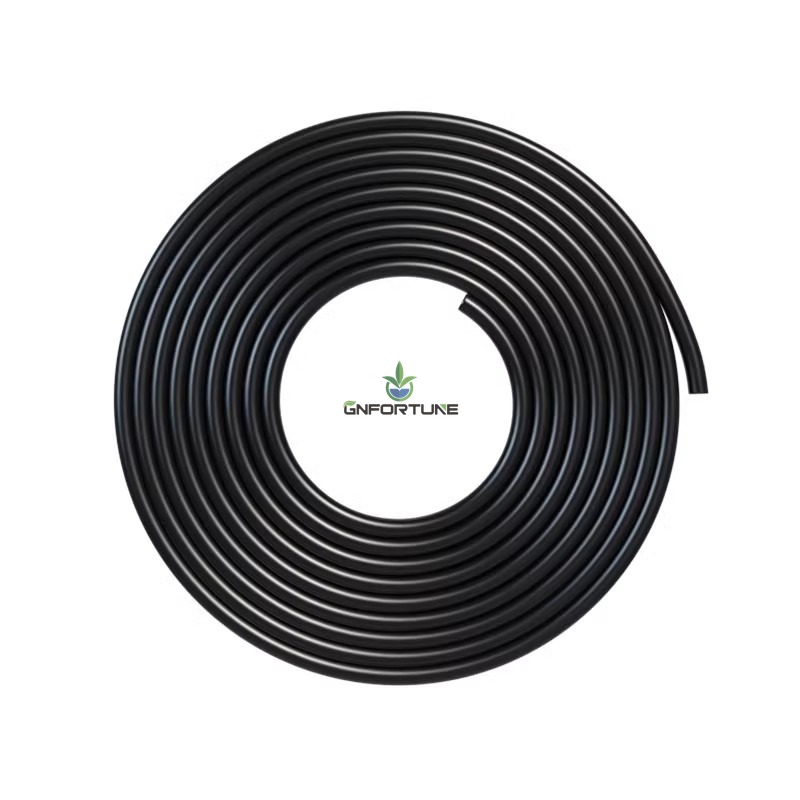
Three products are sold as farm hose, and they are not interchangeable. Layflat carries pressure and drains flat; suction hose resists vacuum and collapses on discharge; PE delivery pipe is a semi-rigid pressure line in coil form.
| Type | Construction | Pressure | Best use | Limitation |
|---|---|---|---|---|
| Layflat hose | PVC, nitrile or TPU cover over a woven jacket | 2 to 10 bar working | Portable mains, gun feed, temporary transfer | Punctures and kinks; needs full drain-down before storage |
| Suction hose | Rigid helix with steel or PVC spiral | Vacuum rated, low positive | Pump inlet from dam, tank or canal | Collapses if used on the discharge side; short lengths only |
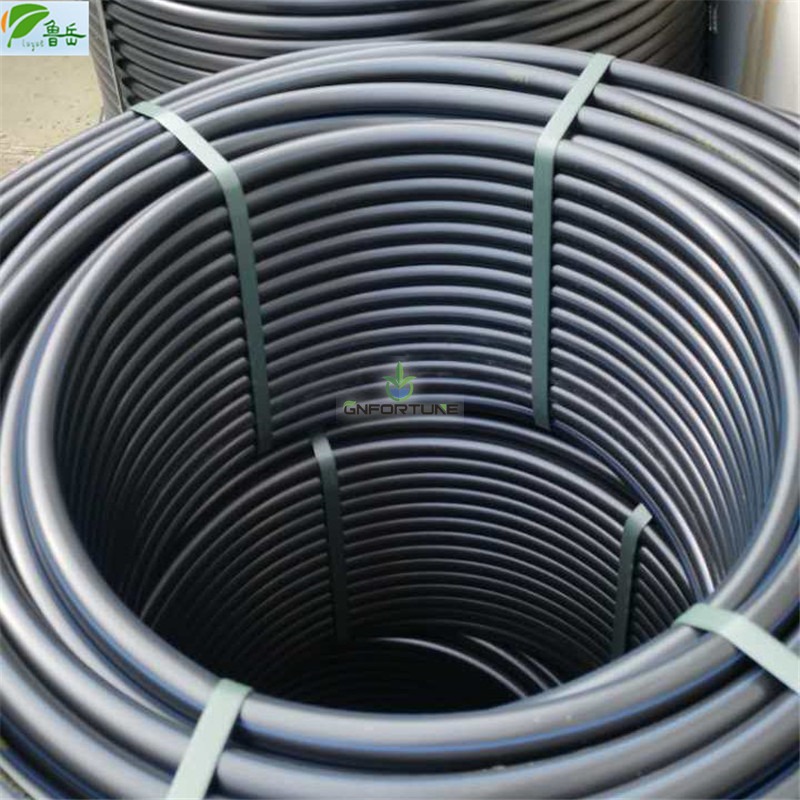
| PE delivery pipe | Solid-wall PE in coils | PN6 to PN16, commonly PN6 to PN10 for delivery | Semi-permanent surface or buried supply | Not portable; needs fittings and tools to join |
Layflat is the one to specify carefully, because cover material sets both price and service life. PVC layflat is the cheapest per metre and suits seasonal sets; nitrile and TPU covers cost more and survive dragging, sun and repeated reeling.
Suction hose is a short, specific item: a few metres on the pump inlet, sized to the inlet thread, with a strainer on the end. Ordering it long does not make it a delivery line.
Pressure Ratings and Burst Margin
The working pressure on the jacket is the number to buy against, and it is quoted at a reference temperature, usually around 20°C. Pressure capacity falls as temperature rises, so a hose rated 6 bar at 20°C will not hold 6 bar in a hot afternoon on dark soil.
- Burst margin: a burst pressure of roughly two to three times working pressure is normal for quality layflat. A supplier quoting only a burst figure, or only a working figure, is not giving you both.
- Surge: closing a zone valve quickly sends a pressure wave up the line. Where zones switch by solenoid, allow margin above the steady-state calculation.
- Temperature derating: ask for the pressure rating at the maximum water and ambient temperature on site, not just at 20°C.
- Diameter and flow: a 2 inch line at 2 m per second carries roughly 14 m³/h; doubling the diameter roughly quadruples the flow at the same velocity and loss.
The pressure question is also a pump question. If the pump duty point sits close to the hose rating, the hose spends its life at the top of its range, and a slightly larger diameter costs less than an early replacement.
Couplings: Camlock, Bauer, Threaded
Couplings are the line item that decides whether a hose order installs on day one. They are also the item most often quoted generically, which is how a container arrives with two incompatible standards.
| Coupling | Common sizes | Materials | Where it is used | Watch out for |
|---|---|---|---|---|
| Camlock, cam and groove | 1/2 to 6 inch | Aluminium, stainless, polypropylene | Quick connects on layflat and pump sets | Gasket material; aluminium corrodes with fertilizer |
| Bauer or lever lock | 2 to 8 inch | Galvanised steel, stainless | Field hose and transfer lines | Lever wear and seal rings; confirm the pattern matches existing sets |
| Threaded BSP or NPT | 1/2 to 4 inch | Brass, stainless, polypropylene | Pump, filter and manifold connections | Thread standard must match the rest of the site |
| Compression or barbed with clamps | 16 to 110 mm | Polypropylene, stainless clamps | PE delivery pipe and laterals | Clamp type and whether they are included |
Match the coupling to the fluid and to the crew. Aluminium camlocks are light and cheap but pit quickly where fertilizer passes through; stainless costs more and lasts; polypropylene suits chemical and fertilizer transfer at lower pressure. Sizing and thread standards are set out in the pipe fittings and sizing guide.
Storage, UV Life and Winter Drain-Down
Hose fails in storage more often than in service. Sun, residual water and sharp folds shorten life far faster than pressure does.
- UV: PVC layflat left in the open typically lasts a few seasons; stored under cover it lasts considerably longer. Ask for the UV package and the expected outdoor life in writing.
- Drain-down: drain and reel before freezing weather. Water left in a coil freezes, splits the cover and stiffens the jacket.
- Handling: avoid dragging over stones and sharp folds at the reel; most field failures start as a scuffed cover or a kinked jacket.
- Storage: coils stacked off the ground on racks, out of direct sun, away from rodents and from fuel or solvent storage.
The equipment lifespan comparison treats hose and couplings as consumable parts with a planned replacement cycle, which is the right way to budget them.
Ordering: Lengths, Reels and Spares
Hose orders go wrong on quantity and on accessories rather than on the hose itself. Couplings, clamps, gaskets and repair sections are what a crew runs out of.
Price the couplings before you price the hose. On short runs a pair of stainless camlocks can cost more than the length of hose between them, and a quotation that bundles hose and couplings into one per-metre figure hides that. Ask for hose, couplings, clamps and gaskets as separate lines with counts, then compare suppliers on the total installed cost of a 50 m set.
- Coil lengths: 25, 50 and 100 m are standard; specify the lengths the set actually uses so joins stay off the drag path.
- Coupling count: two per length, plus 5 to 10% spare, plus repair couplers for field fixes.
- Clamps and gaskets: two clamps per coupling and a gasket for every coupling, both as separate lines.
- Fitting standard: camlock, Bauer or threaded, with the matching half included on both ends of every length.
- Reels and racks: whether they are included, and whether they suit the coil length ordered.
- Packing: coils per carton or pallet, weight per metre, and a carton count that matches the packing list.
Assembled sets remove the compatibility risk. A hose and coupling set supplied as one package ships with matched ends, clamps and gaskets counted against the same lengths, which is what makes a bulk order installable the week it lands.
Frequently Asked Questions
What pressure rating should farm layflat hose have?
A: Match the working pressure to the pump duty point with margin for surge, and confirm a burst pressure of roughly two to three times that figure. Ratings fall as temperature rises.
Can suction hose be used on the discharge side?
A: No. Suction hose is built to resist collapse under vacuum and is not rated for discharge pressure; use layflat or PE delivery pipe on the outlet.
Which coupling material suits fertilizer transfer?
A: Stainless or polypropylene. Aluminium camlocks are light and cheap but corrode where fertilizer solution passes through them.
How long does layflat hose last outdoors?
A: A few seasons in continuous sun for PVC covers, longer for nitrile or TPU, and considerably longer for any hose stored under cover. Figures vary by region and season.
How many spare couplings should I order?
A: Two per length plus 5 to 10% spare, with a gasket per coupling and a few repair couplers for field fixes.
Request a Hose and Coupling Quote
A farm irrigation hose order is straightforward once the three specifications are fixed: pressure and burst margin, coupling standard and material, and coil lengths against the way the set is moved. Everything else is packing detail.
Send pump duty point, required lengths, coupling standard already in use and whether the set is seasonal or permanent, and the team will return a hose specification with coupling counts. To request a hose and coupling quote, include the ambient temperature range on site.