

Atmospheric CO2 sits near 420 ppm, but the photosynthesis curve in dense hydroponic canopies flattens well above that. A closed greenhouse in mid-summer can pull ambient below 250 ppm inside the leaf zone — the opposite of what most growers assume — and only active CO2 enrichment lifts it back. Done right, CO2 enrichment for a hydroponic greenhouse adds 10–25% to fruit weight and tightens the cropping interval; done wrong, it costs the project the marginal kWh and adds safety risk. This guide covers crop ppm targets, three enrichment sources a buyer will be quoted, how to size the system to the greenhouse, and why vent interlocks matter more than the equipment.
Why Ambient CO2 (Around 420 ppm) Is Rarely Enough
C3 crops — every leafy green, tomato, cucumber, pepper, and strawberry grown in hydroponics — saturate their photosynthetic rate somewhere between 800 and 1200 ppm under bright light. Above ~1200 ppm, returns flatten and the marginal CO2 mostly costs ventilation and energy. The important nuance is what happens inside a closed canopy:
- Photosynthesis draws CO2 down faster than outside air diffuses in. Mid-day in a dense tomato canopy, leaf-zone CO2 can drop below 250 ppm even with open vents, and further still when vents close for humidity or heat control.
- Ventilation compensates only when wind speed is high. Low air-change greenhouses (1–2 air changes per hour in winter) cannot keep ambient at 420 ppm without active enrichment.
- Light is the multiplier. Adding CO2 below ~200 μmol/m²/s PAR wastes gas — the plant cannot use it. Above that threshold, CO2 converts photons into dry matter at a higher rate.
One-line rule of thumb: if your canopy is over 200 μmol/m²/s of PAR and your vents are cycling shut for any meaningful part of the photoperiod, you are leaking yield to CO2 depletion — full stop. The fix is enrichment; the question is which source.
Target CO2 Levels by Crop
Crop targets narrow into a tight band, but leaf and fruiting crops split slightly on the ceiling:
| Crop | Daytime target (ppm) | Maximum useful (ppm) | Notes |
|---|---|---|---|
| Lettuce, leafy herbs | 800–1000 | ~1200 | Diminishing returns above 1000; saves gas to cap lower |
| Strawberry | 800–1000 | ~1200 | Pair with tight vent control to hold the setpoint |
| Tomato | 800–1100 | ~1300 | Standard in commercial Dutch glasshouses |
| Cucumber | 800–1000 | ~1200 | Slightly lower ceiling than tomato; stomata sensitive to humidity shock |
| Pepper | 800–1100 | ~1200 | Long season; consistent setpoint delivers consistent fruit |
Night-time target is the outside ambient level — around 420 ppm. Enriching in the dark burns gas for no photosynthesis and invites condensation issues. Most controllers switch enrichment off the moment light drops below the sensor threshold (typically 50–80 μmol/m²/s).
Enrichment Sources: Bottled CO2, Gas Burners, and Fermentation
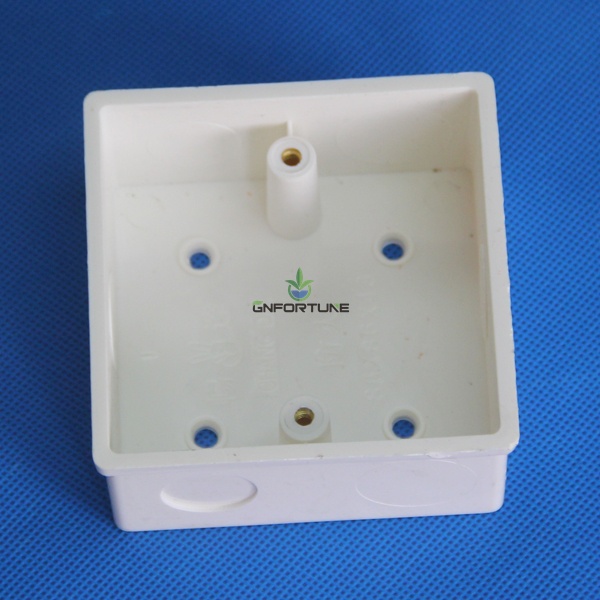
Waterproof PVC junction box housing CO2 enrichment control valve and sensor wiringThree sources a buyer will be quoted in commercial proposals:
| Source | CO2 purity | CAPEX (relative) | OPEX (relative) | Best for |
|---|---|---|---|---|
| Liquid CO2 from bulk tank with vaporizer | 99.9%; food-grade | High (tank lease + vaporizer + pipe) | Low; pay per kg of CO2 delivered | Sites already running fertigation; cleanest and safest option at small-to-medium scale |
| Propane or natural-gas burner (on-site combustion) | ~3–5% CO2 in flue gas, with water vapor and trace NOx/ethylene | Medium (burner unit + gas supply + flue duct) | Very low per kg CO2 generated | Large acreages with adequate flue venting; cold-climate projects where burner heat is a winter bonus |
| Fermentation (sugar or compost-based) | Mixed; uncontrolled purity | Lowest | Negligible | Small greenhouses or research benches only — never spec’d commercially |
Liquid CO2 is the default for projects under ~2 ha: it is clean, easy to meter, and the safety profile is simple. Burners become economic at larger scale when the combustion heat can offset winter heating, but they require a dedicated flue and ethylene/NOx scrubbing if the greenhouse houses any ethylene-sensitive crop. Fermentation cannot reliably hit setpoint ppm in a commercial bay and is rarely quoted past trial scale.
Sizing a CO2 System for Your Greenhouse Volume
The sizing math has three parts: the air volume you are enriching, the rise in ppm you want to achieve per hour, and the leakage rate that pulls ppm back down. A worked example for a 1 ha tomato greenhouse (8 m ridge, 4 m gutter, ridge-and-furrow):
- Volume: 10,000 m² × (8 + 4)/2 ≈ 60,000 m³ of airspace.
- Target rise: from 400 to 1000 ppm = +600 ppm, equivalent to 0.06% of air volume, or ~36 m³ of pure CO2 per hour to enrich the whole airspace once.
- Leakage compensation: through vents and seams, plan on adding 30–50% on top of stoichiometric demand, so the practical burner or vaporizer size lands at ~50–55 m³/h of pure CO2 delivery.
Translation to a bulk-tank bill: 1 ha tomato over an 8-month season at 16 h/day enrichment; figures vary by region and vent cycling, but Dutch growers regularly consume 25–40 tonnes of liquid CO2 per hectare per year. Always spec the vaporizer for the highest hourly flow you may run, not the average — that is what determines bottle refill pressure drops.
Control Strategy: CO2 Concentration Must Interlock With Venting
The single most important control detail is that CO2 injection and venting are opposite acts — injecting while the vents are open blows the gas straight out the side wall. A working setup links the CO2 output to three signals:
- PAR or sunrise sensor. CO2 enrichment is gated to “lights on or sun above threshold.” Most controllers disable enrichment below 50–80 μmol/m²/s measured PAR.
- CO2 ppm sensor at canopy height. Setpoint band typically 100–200 ppm wide; lower bound 800–1000 ppm depending on crop, upper bound 1200–1500 ppm for safety and gas savings.
- Vent position feedback. When the vents open beyond a defined percentage (commonly 30–50%), CO2 injection pauses until vents close and ppm falls below the setpoint. This is the interlock that decides whether the system actually saves money.
The audit finding we see most: the CO2 system runs on a timer and the vents run on a thermostat. The two never talk, and by mid-afternoon the operator is enriching against an open side wall. A $300 CO2 sensor and a single relay is the difference between paying for gas and getting it into the leaves.
Two practical control patterns: (a) “enrich-first, vent-second” — vents stay locked to temperature dead-band as long as the CO2 setpoint is below target, opening only as a last resort for heat; (b) “vent-first, recover-after” — open vents for temperature, then re-enrich when they close. Pattern (a) is the higher-yield setup; pattern (b) is easier to retrofit on a greenhouse with existing vent controls and is the common compromise.
When CO2 Enrichment Does Not Pay Back
Not every greenhouse benefits. The boundary cases we walk through with buyers before they commit:
- Venting more than 50% of the photoperiod. A semi-open shade house in a tropical climate pushes the enriched air out faster than the burner can inject. Enrichment is wasteful here.
- Poorly sealed covers. Aging polyethylene film leaks faster than the controller can compensate; the CO2 budget disappears into purchase orders.
- Light-limited seasons. Below 8 mol/m²/d natural DLI, the plant cannot use the elevated CO2 — payback collapses. Drop enrichment in mid-winter and pick it back up as days lengthen.
- Empty bays. Half-planted greenhouses cannot use the gas the controller is delivering; turn zones off when benches are out of crop.
Safety and Sensor Placement
CO2 is non-toxic at enrichment levels but a workplace hazard above occupational exposure limits. Two thresholds matter:
- 5,000 ppm (8 h TWA). Above this, the workspace is unsafe for extended occupation. The CO2 sensor in the headhouse should latch an alarm well before this point.
- 30,000 ppm. Immediate danger to life. No commercial greenhouse should approach this if the controller is functioning.
Sensor placement: at canopy height near the center of the bay, away from direct CO2 injection nozzles, with a second guard sensor in the headhouse where workers enter. Calibrate every 6–12 months against outdoor air (assume 420 ppm reference) or with bottled span gas. NDIR sensors last longer than electrochemical cells in the humid greenhouse environment.
FAQ
How much CO2 does a hydroponic plant use per day?
A: A fruiting crop at full canopy uses 5–8 g/m²/h during bright daylight. A 1 ha greenhouse can consume 30+ tonnes of liquid CO2 per season.
What ppm is best for lettuce?
A: 800–1000 ppm during the photoperiod. Above 1000 ppm, returns flatten and gas cost rises without yield gain.
Is a CO2 burner safe in a greenhouse?
A: Yes, with proper flue and combustion air. Specify a burner rated for greenhouse use and route exhaust outside the structure to avoid ethylene contamination.
Can CO2 enrichment fix low light?
A: No. CO2 only helps when PAR is high enough for the plant to use it. Pair enrichment with proper supplemental lighting; do not substitute one for the other.
How long does a bulk CO2 tank last?
A: A 30-tonne bulk tank at the worked example above lasts 8–12 months for a 1 ha tomato bay. Schedule refills before the low-level alarm, not after.
Build a CO2 Plan That Stays Inside the Bay
Send your greenhouse footprint, ridge height, target crop, and current vent strategy through the quote form, and our engineering team will return a source choice, a sizing calc, a sensor and controller wiring plan, and a vent-interlock spec. If your greenhouse is in a hot climate, pair this with the cooling pad and fan brief; for closed-environment retrofits, the turnkey greenhouse build page covers the structural scope the controller sits inside.