Seals are among the cheapest lines on a hydroponic bill of materials and one of the most common reasons a farm loses solution. Gasket material hydroponics decisions are rarely made at quotation stage, which is why the same drips return after every clean-out: a tank lid that weeps, a filter cap that seeps, a union needing another quarter turn each month. The elastomer decides how long a seal keeps its shape under nutrient salts, sanitiser, ultraviolet light and daily temperature cycling.
This guide compares EPDM, NBR, silicone and FKM from a purchasing angle: what each one tolerates, where it breaks down, and which numbers belong in a specification. It is written for procurement teams and project engineers buying components for commercial farms, where a failed seal costs labour and downtime rather than a cheap replacement.
Where Seals Actually Sit on a Commercial Farm
Most seal complaints trace back to a short list of positions. Each one sees a different combination of pressure, temperature and chemical contact, so one material bought for all of them gives mixed results.
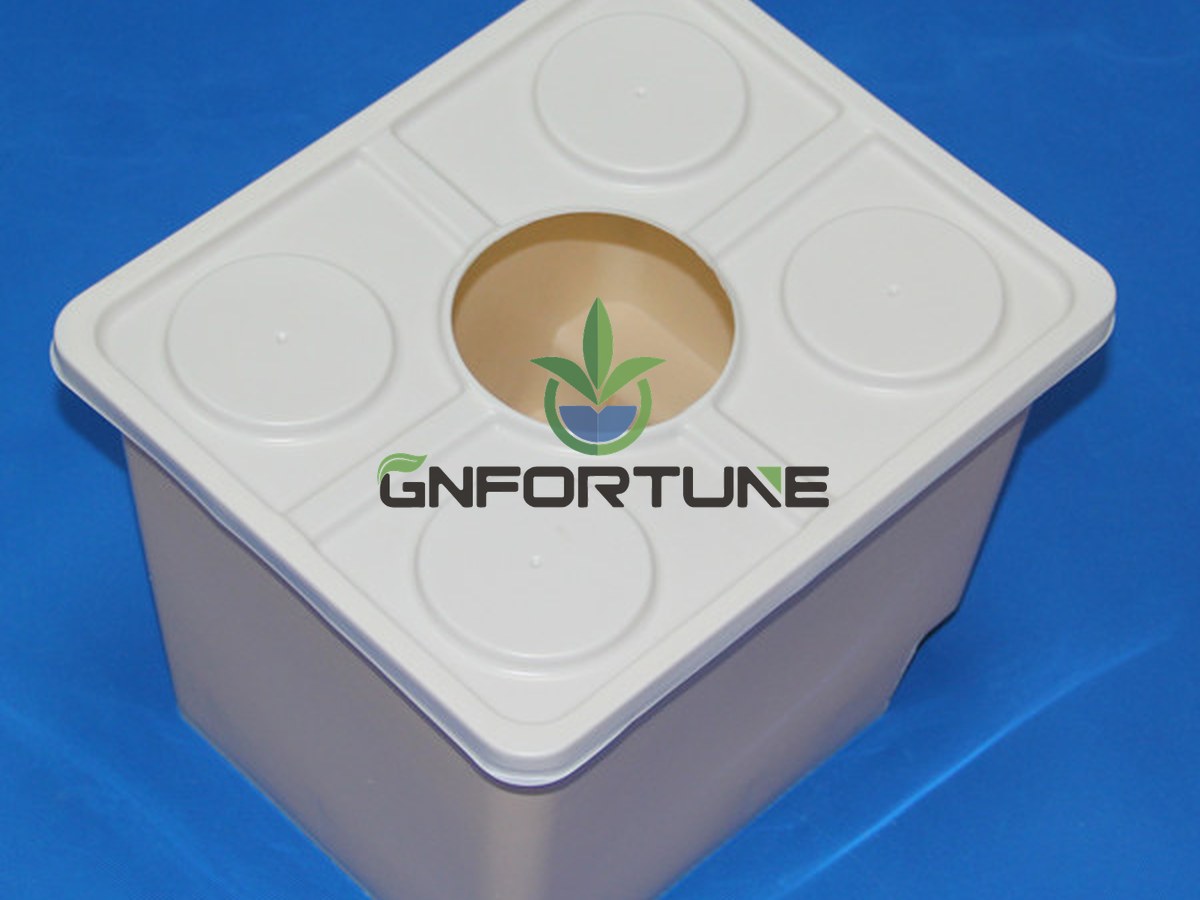
- Tank and reservoir lids: low pressure, large diameters, frequent opening. Recovery from repeated compression matters more than pressure rating.
- Filter housing caps: moderate pressure with regular dismantling, so abrasion and handling damage count.
- Unions and flanges: steady compression plus thermal movement, where overtightening distorts the seal.
- Channel lids and access covers: light loads but constant light and splashed solution, so ultraviolet ageing dominates.
- Pump and valve internals: pressure, temperature and continuous immersion together.
The usual pattern is that one position lasts and another does not, depending on which exposure dominates on that site.
Gasket Material Hydroponics: What the Seal Has to Survive
A seal in hydroponic service carries four loads at once: chemical, thermal, ultraviolet and mechanical. Gasket material hydroponics selection is mostly about ranking those four for each position.
The chemical side is more aggressive than it first appears:
- Nutrient salts and pH drift: recirculating solution sits in an acidic band and concentrates as water is transpired. Seals that tolerate water can still harden in concentrated feed.
- Sanitisers: peracetic acid, hydrogen peroxide and chlorine dioxide at clean-out strength sit far above any residual level.
- Acid flushing: short periods well below normal pH, used to dissolve scale.
- Oils and greases: present around pumps and valve stems, and the exposure that rules EPDM out in specific locations.
Temperature matters because elastomers stiffen as they cool and soften as they warm. A lid seal loaded on a hot afternoon and relaxed overnight cycles every day, and a material with poor elastic recovery takes a permanent set within a season.
EPDM, NBR, Silicone and FKM Compared
EPDM is the default for water and nutrient contact, NBR is the choice where oils are present, silicone covers wide temperature ranges and food-contact positions, and FKM is reserved for aggressive chemical duty at a much higher price. Buyers should confirm the compound grade with the supplier rather than relying on the family name, because fillers and cure systems change performance considerably.
| Factor | EPDM | NBR | Silicone | FKM |
|---|---|---|---|---|
| Nutrient solution and water | Strong, common default | Acceptable, verify grade | Strong | Strong |
| Oils, fuels and greases | Poor, swells and softens | Strong, its main advantage | Poor to moderate | Strong |
| Oxidising sanitisers | Good at typical dose, confirm concentration | Moderate, can harden | Good, confirm grade | Strong |
| UV and weathering | Good | Moderate, needs cover | Good | Good |
| Temperature window | Wide, suits greenhouse range | Moderate | Widest of the four | Wide, high end |
| Compression set resistance | Good at moderate heat | Good | Moderate under sustained load | Good |
| Tear and abrasion resistance | Good | Good | Poor, tears easily | Moderate |
| Relative cost | Low | Low | Moderate | High |
| Typical farm position | Tank lid gasket, channel covers | Pump and oil-adjacent seals | Food-contact and wide-swing positions | Aggressive chemical dosing lines |
Two cautions follow from that table. EPDM and NBR sit close in price, so a supplier may substitute one for the other unless the specification names the material. Silicone tears easily, which makes it a poor choice for a groove that gets pried open with a tool at every clean-out.
Compression Set: The Failure Mode Buyers Miss
Compression set is the permanent loss of thickness a seal takes after long squeezing. Once a seal has taken a set it no longer pushes back on the flange, so the joint seeps even though nothing has cracked or torn. This is the mechanism behind most leaks described as new last season.
The sequence on a farm usually runs:
- The seal is seated unevenly and the cover is tightened hard to stop an initial drip.
- Over months of warm days the material takes a set at that compressed thickness.
- When the system cools, the seal no longer rebounds far enough to follow the flange.
- A slow weep appears, and the response is to tighten further, which accelerates the next cycle.
Asking for a compression set figure tested at a stated temperature is one of the cheapest quality gates available. A planning range buyers commonly work to for general-purpose EPDM is a set value in the region of 20 to 30 percent after 22 hours at 70 °C, but the figure has to come from the supplier’s test report for that specific compound.
The test temperature should reflect the site’s summer peak: seals near a heated dosing skid or on a sun-exposed roof tank need the higher-temperature figure.
Hardness, Thickness and Groove Fill
Hardness is quoted in Shore A and describes how much a seal resists indentation. Softer compounds seal uneven surfaces at lower bolt load; harder compounds resist extrusion and handling damage.
For most static hydroponic joints, a mid-range value around 60 to 70 Shore A suits moulded faces, while softer grades around 40 to 50 suit large lids that cannot be pulled down hard. Three specification items prevent most fit problems:
- Groove fill percentage: confirm the intended range with the supplier rather than guessing from diameter.
- Thickness tolerance: sheet-cut gaskets vary more than moulded rings, which matters where a lid sits on a machined face.
- Mating face finish: a scored flange leaks with any material, and that is worth checking at inbound inspection before the part is installed.
Colour is not a specification: black EPDM, black NBR and black silicone look identical in a storeroom, so only labelled packaging or a part number tied to a certificate keeps stock traceable.
Documents and Checks Before You Place the Order
The purchasing checks that change outcomes are simple: name the material on the order line, ask for a compound datasheet, and request a material certificate for anything touching recirculating solution.
- Material named by family and grade, not by colour or by a vague “oil resistant”.
- Shore A hardness and thickness with tolerance stated.
- Compression set figure with test temperature and duration.
- Continuous service temperature range, checked against recorded site extremes.
- Chemical compatibility statement covering the sanitisers used at clean-out concentration, alongside any material compliance expectations.
- Sample or first-article check on moulded rings before a bulk run.
Where a seal sits inside a filter housing or a nutrient tank set, ordering it as a named spare with the equipment is far cheaper than identifying it two years later from a worn sample.
Service Life and Replacement Planning
Seal life is best planned as an inspection interval rather than a fixed replacement date, because exposure varies widely between positions. Enclosed seals in cool pipework often outlast the equipment around them, while exposed lid seals in a high-ultraviolet house may need attention within one to three seasons.
- Group seals by exposure: enclosed, splashed, and directly lit.
- Check the splashed and lit groups at every cycle clean-out for flattening, cracking and surface chalking.
- Keep a labelled spare for each size, stored flat, dark and cool.
- Record which material went where, so a failure pattern traces to a compound.
Clean-out practice deserves a note. Strong oxidising sanitiser left in contact longer than the label suggests shortens life with any material, and seals removed for cleaning should be rinsed and kept out of direct sun.
The gasket material hydroponics buyers regret is rarely the cheapest option; it is the one chosen without knowing the exposure in that position.
FAQs About Gasket Material in Hydroponics
Which gasket material suits nutrient solution best?
EPDM is the common default for water and nutrient contact, with silicone used where a wider temperature range or specific food-contact documentation is needed. Confirm the compound grade and the sanitiser concentration with the supplier before ordering.
Can EPDM and NBR be swapped?
Not safely. NBR exists for oil and grease exposure, which is where EPDM breaks down, while EPDM generally handles weathering and oxidising sanitisers better. Swapping changes which position fails, not whether something fails.
Why does a seal leak after one season when it looks intact?
Compression set is the usual cause. The material has taken a permanent thickness loss and no longer pushes back on the flange, and tightening further makes the next cycle worse rather than better.
What hardness should a tank lid gasket be?
A softer compound suits large lids that cannot be pulled down hard, while mid-range hardness suits moulded faces. The right value depends on flange flatness and available clamping load, so confirm both with the equipment supplier.
How many spare seals should a farm order with the equipment?
Enough to cover the first planned clean-out cycle plus one set of the longest lead-time sizes. Seals are cheap to ship inside a container and disproportionately expensive to ship alone later.
Related Reading
- Hydroponic Nutrient Tank Set — Tank and lid hardware, and where the sealing interfaces sit in a tank package
- Irrigation Filtration: Screen vs Disc vs Sand Filter — Filter housing types and the seal positions each one carries
- Critical Spare Parts for Hydroponic Farms: A Downtime-Based Stock List — How seals rank against other parts on a downtime-based spares list
- Hydroponic Spare Parts Inventory: Annual Maintenance Plan — Fitting consumable seals into an annual maintenance and stocking plan
Next Step: What to Send for a Quotation
Seal pricing only becomes comparable when the material is named. A request that says “gaskets” attracts quotes for three different elastomers at three different prices, and the cheapest one is usually the one that swells. Naming the compound is what turns a generic seal order into a gasket material hydroponics specification that can be checked at goods-in.
Specifying seals or a full component package? For RFQ or project consultation, send: system scale and number of zones; pipe sizes and material requirements; thread or connection standard; seal positions and counts; growing media and crop; operating temperature range and water quality; sanitisers used and their clean-out concentration; spare ratio required; delivery schedule; and the budget band. G AND N FORTUNE LIMITED supplies NFT channels, tank sets, Dutch bucket and gutter systems with matching hardware, quoted to those parameters.