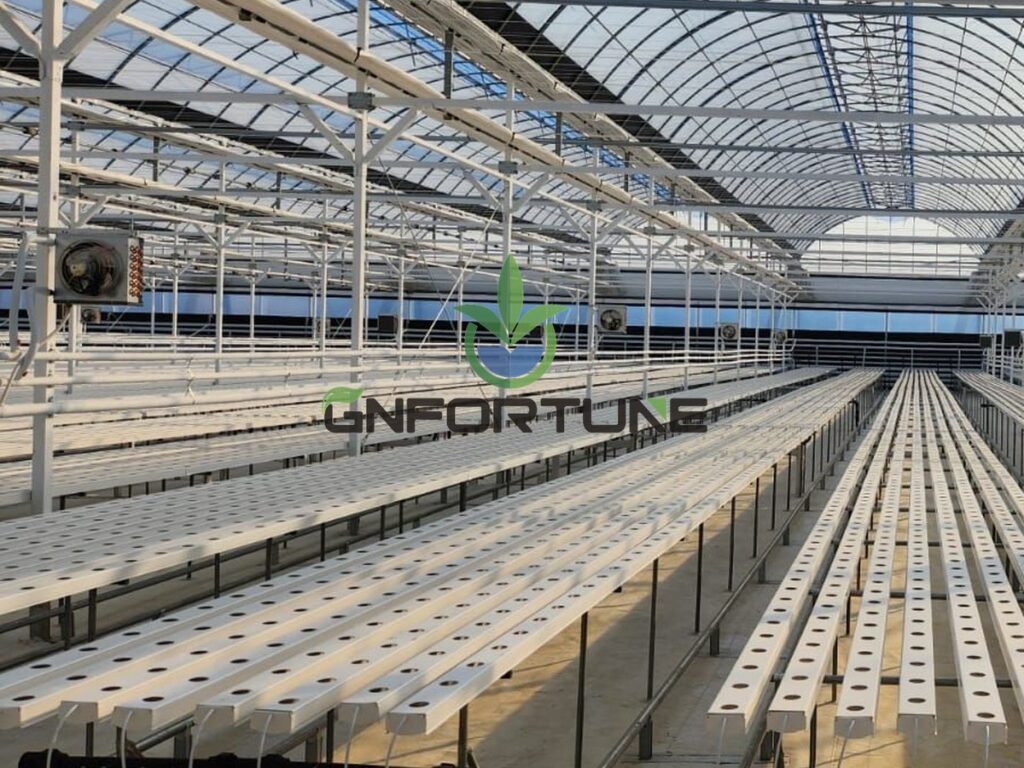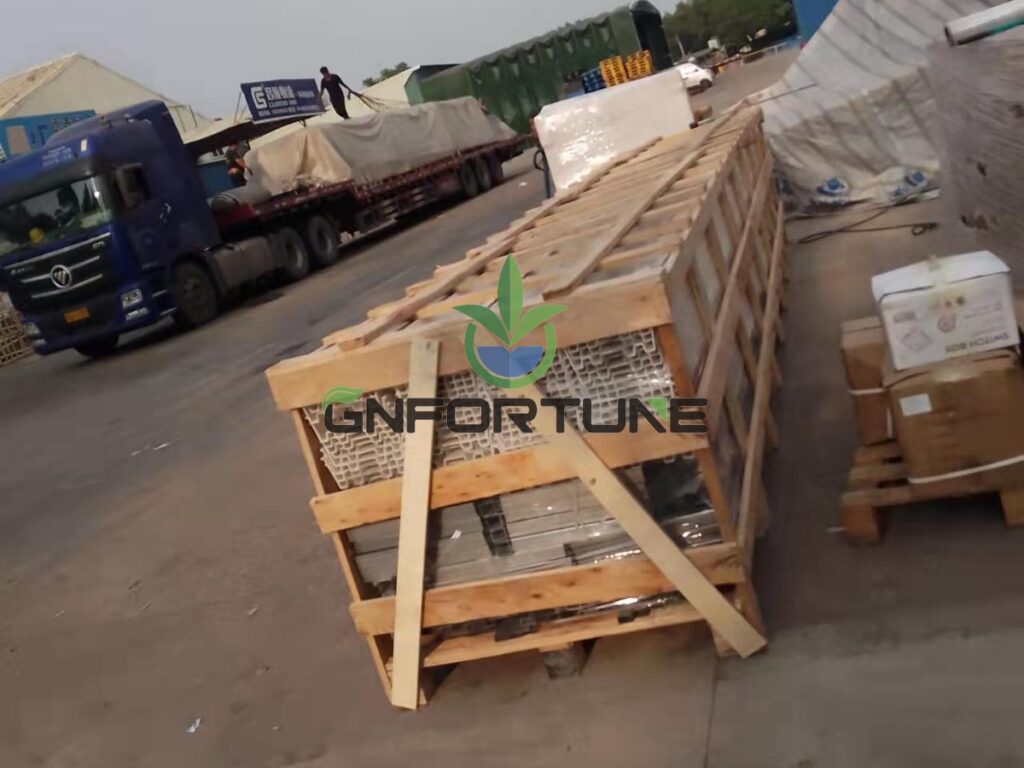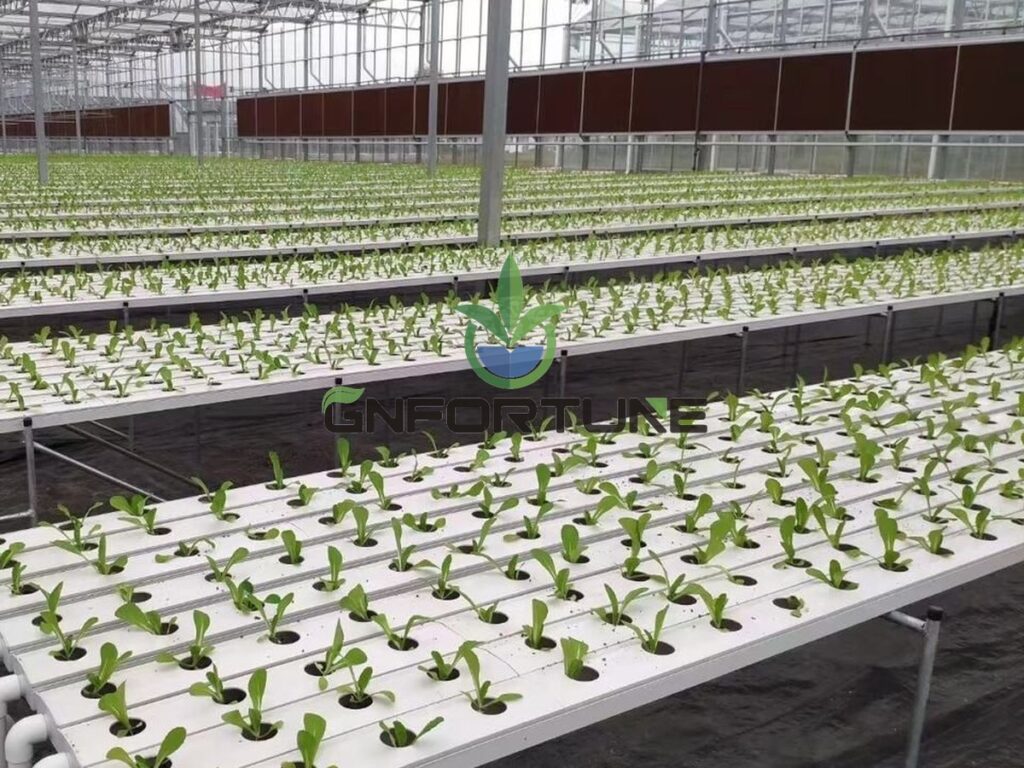
Most first budgets for a hydroponic project are built by multiplying a small farm’s order by ten. That method produces a list that is right on channels and wrong on almost everything else. Pumps, filtration, tank sets and controllers step up in discrete units, spares behave as a percentage, and a few lines only appear once a site passes a certain size. A hydroponic equipment list by scale has to be built in three groups rather than one multiplier, and this article sets out the ratios to start from, what changes between 1,000, 5,000 and 10,000 m², and the lines that consistently get missed.
The figures below are planning ranges with stated premises. They are for shaping an enquiry, not for ordering; every one should be replaced by a layout-specific count once the bay drawing exists.
Why a Bill of Materials Does Not Scale by Multiplication
Because the list contains three different kinds of line, and only one of them is linear. Crop-facing hardware scales with growing area, service hardware steps in units, and a third group appears only above a size threshold.
- Linear lines — channel run, supports, net pots, grow bags or buckets, emitters, distribution pipe, media. Double the growing area and these roughly double.
- Stepped lines — pumps, filter stations, tank sets, dosing units, controllers, sensor packages. These change in whole units as zones are added, so a 5,000 m² farm is not five times a 1,000 m² farm on these lines.
- Threshold lines — duty/standby redundancy, backup power, a dedicated packing and cooling area, on-site water treatment, and a formal spares holding. Below a certain size these are optional or shared; above it they are unavoidable.
Getting the second and third groups wrong is what causes short shipments and change orders. A site that ordered pumps by area rather than by zone discovers the problem during commissioning, when the cost of fixing it is highest.
How to Read a Hydroponic Equipment List by Scale: The Ratios
Start from growing area, not greenhouse footprint, then apply a ratio per square metre. Growing area is the figure that carries plants; aisles, service zones and packing space sit outside it.
Two conversions come first: greenhouse footprint to growing area, and growing area to the crop-facing counts. Premises matter more than the numbers, so each ratio below carries the assumption behind it.
| Line | Planning ratio | Premise |
|---|---|---|
| Growing area from footprint | 0.55–0.75 of gross | Single-layer benching at ground level, aisles and service zone included |
| Growing area from footprint, multi-tier | 1.4–2.0 of floor | Two to three cropped tiers, rack aisles included |
| Channel run metres | 0.8–1.4 m per m² | Straight runs at 200–250 mm centres; check the channel size comparison for the profile you intend to use |
| Channel supports or hangers | 0.7–1.0 per m of run | Support spacing of 1.0–1.5 m under full wet load |
| Net pots or plant sites | 20–30 per m² | Lettuce-class crop; herbs run higher, vine crops far lower |
| Grow bags | 1.0–1.6 per m² | Two to three plants per bag at 2.5–3.5 plants per m² |
| Dutch buckets | 2–3 per m² | One plant per bucket, vine crop spacing |
| Slab length | 1.0–1.5 m per m² | Two to three plants per slab |
| Distribution pipe | 0.3–0.6 m per m² | Sub-main and manifold runs, excluding the pump room |
| Recirculating tank volume | 20–50 L per m² | NFT with a return tank sized for pump run time and dump cycles |
These ratios should be treated as a first pass to be replaced by counts from the layout drawing. Where a supplier quotes from ratios rather than from a drawing, the quote is an estimate and should be labelled as one.
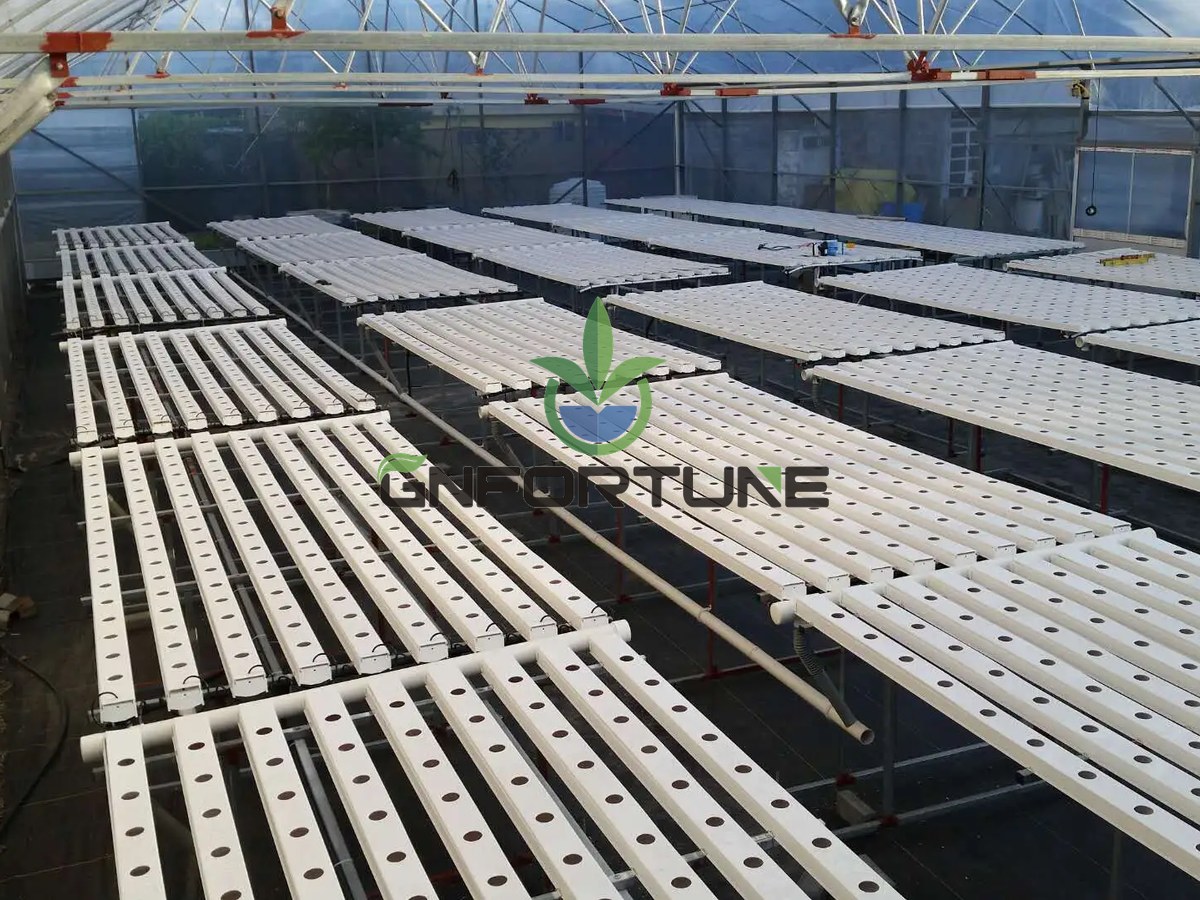
What Changes Between 1,000, 5,000 and 10,000 m²
The crop-facing counts stay proportional; the service lines and the site facilities do not. The table below shows how the same ratios resolve into different hardware at three sizes, assuming NFT leafy production on a single layer.
| Line | 1,000 m² | 5,000 m² | 10,000 m² |
|---|---|---|---|
| Irrigation zones | 1–2 | 3–5 | 6–10 |
| Duty pumps | 1, plus 1 standby | 2–3, plus standby | 4–6, plus standby |
| Nutrient tank sets | 1 | 2–3 | 4–6 |
| Filtration stages | 1 | 2 | 2, with higher capacity |
| Dosing channels | 1 | 1–2 | 2, run as duty/standby |
| Controller and sensor sets | 1 | 2–3 | 4–6 |
| Spares allowance on consumable lines | 3–5% | 2–4% | 2–3% |
| Packing and cooling | Bench, shared cold room | Dedicated packing room | Grading line plus cold chain |
| Backup power | Usually none | Sized for pumps and controls | Sized for pumps, controls and cooling |
Three patterns explain most of the differences. Zoning multiplies the control hardware rather than the pipe: every additional zone needs its own valve, gauge, sensor set and flushing point. Redundancy moves from optional to expected, because a pump failure on 10,000 m² affects a week of production rather than a bed. Spares fall as a percentage of the order but rise in absolute value, and they should be ordered with the first shipment rather than later.
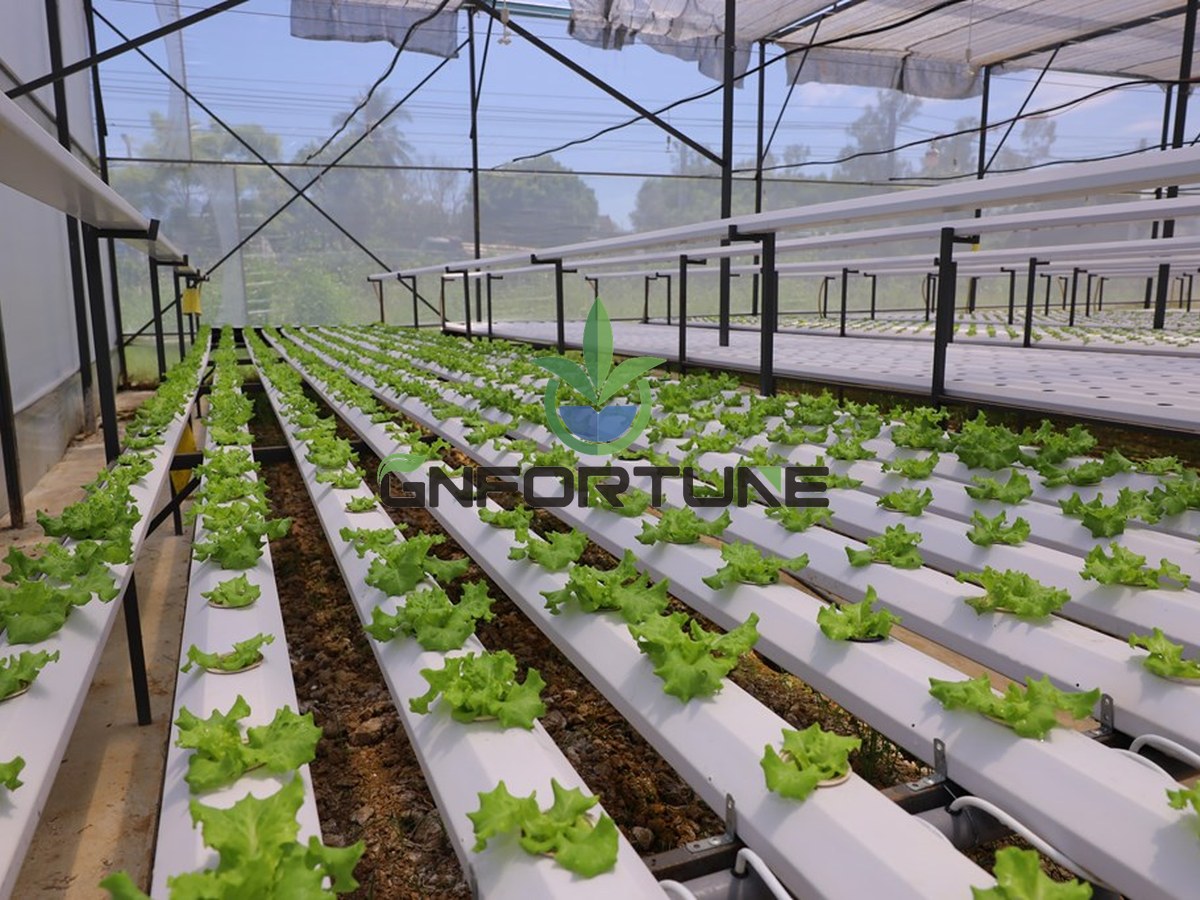
At 10,000 m² the handling side also becomes a capital line. Harvest volume per day sets the size of the packing room, the cooling capacity and the crate fleet, none of which appear in an equipment list built from ratios.
The Lines Buyers Under-Count
The under-counted items are mostly small, unglamorous and needed on installation day. They are also the reason a “complete” package turns out to be incomplete.
- Fixings and connectors — end caps, couplers, tank connectors, unions, clamps, brackets. Count them per joint, not per order.
- Isolation valves and gauges — one per zone plus one per pump, and gauges on both sides of each regulator.
- Spare crop-facing stock — spare channel lengths, emitters, net pots and gaskets held on site from day one.
- Commissioning consumables — calibration solutions, filter elements, sanitiser, test fittings, spare probes.
- Electrical spares — breakers, contactors, fuses and a spare controller output module.
- Handling equipment — harvest crates, trolleys, packing benches, and bin or bag storage.
- Water treatment — treatment capacity has to match peak demand, and is usually specified after the growing system is fixed.
- Freight and packing — container utilisation changes the landed cost per metre; the arithmetic is set out in the guide to container loading and MOQ maths.
A simple discipline helps: keep the under-count list as a separate page in the BOM and tick it off at quotation stage rather than at goods-in.
Turning Ratios into Comparable Quotations
Send the same list, in the same units, to every supplier, and require unit rates rather than only totals. Normalising the list is the only way two bids can be compared.
- State growing area, bay layout and system type at the top of the document, so every bidder prices the same farm.
- List each line with a unit — metres, pieces, sets, kilowatts — and leave the quantity column to the supplier where the drawing is theirs.
- Require the spares and consumables lines to be priced separately, never folded into a package total.
- Ask for ex-works and landed figures on the same list, so freight is visible rather than hidden.
- Set a validity period and a delivery schedule, because both affect price more than most buyers expect.
The method for writing this up is covered in the guide to RFQs that get comparable quotes. A hydroponic equipment list by scale only saves money once it reaches suppliers in a form they can all price the same way.
FAQs About Scaling Equipment Lists
Can I just multiply my 1,000 m² order by five?
Only for the crop-facing lines. Pumps, tank sets, controllers and filtration step up in units as zones are added, and packing, cooling and backup power only appear above certain sizes.
How much spare channel should I order?
A planning range of 2–5% of total run metres is common, higher on a first installation where cutting errors and layout changes are likely. Confirm against your own layout and installation method.
Should growing area or greenhouse footprint drive the counts?
Growing area. Footprint includes aisles, service zones and packing space, which carry no plants; using footprint inflates every crop-facing line.
When does redundancy become necessary?
When a single failure would cost more than the standby unit. In practice that point arrives around the size where a farm runs more than one irrigation zone and has staff on shift rather than on call.
Do suppliers quote from ratios?
Some will, and those quotes are estimates. Ratios are for shaping the enquiry; once a layout drawing exists, quantities should come from the drawing and the supplier should confirm them.
Related Reading
- Hydroponic System Design: A Buyer’s Guide to Layouts and Specs — The layout decisions that turn ratios into actual quantities
- Commercial Hydroponic System Cost: Breakdown by Scale and System Type — Where the money goes at each farm size and system type
- What’s in a Complete Hydroponic System Package — The line items a full package should contain before you add options
- Hydroponic Equipment Lead Times: The Full Path — How order size and specification affect when equipment actually arrives
- Comparing Hydroponic Equipment Quotations: How to Normalise Bids — How to put two bids on the same units before comparing totals
Next Step: What to Send for a Quotation
A usable quote starts from the site and the crop. The list follows from those, not from a catalogue.
Building a BOM or checking one? For RFQ or project consultation, send: greenhouse dimensions and available growing area; crop and target plant density; system type (NFT, Dutch bucket, slab, gutter or mixed) and preferred channel size; number of irrigation zones if known; target weekly or annual output; local climate range and raw water analysis; automation level requested; packing and cooling capacity on site; delivery schedule; and the budget band. G AND N FORTUNE LIMITED supplies NFT channels, container systems and matching components quoted to those parameters.