Most requests for quotation fail before anyone prices them. The technical specification hydroponic equipment buyers attach to the RFQ is usually a product description — a model number, a quantity and a photograph — where the supplier needs a requirement: dimensions with tolerances, materials with grades, duty conditions, and the test that decides acceptance. Suppliers fill gaps with assumptions, and two honest suppliers assume different things, which is why quotations arrive that cannot be compared line by line.
Equipment spec writing is not paperwork. It is the document that decides whether three quotes describe the same product, and whether a dispute about wall thickness or UV life has an answer a year later.
Performance vs Prescriptive Spec: What Each Buys You
A performance spec states the outcome and how it will be verified; a prescriptive spec states the construction. Neither is better in the abstract — they place risk in different hands, and the right answer for hydroponic hardware is usually a hybrid.
| Factor | Performance spec | Prescriptive spec |
|---|---|---|
| What it states | Outcome plus test method | Material, dimensions, construction |
| Quote comparison | Harder; solutions differ | Easy; like for like |
| Verification | Needs a real test | Checked with a tape and a micrometer |
| Design risk | Sits with the supplier | Sits with the buyer |
| Best for | Pumps, control, treatment units | Channels, tanks, fittings, structures |
Write prescriptively where the part is a commodity and the failure mode is physical — wall thickness, material grade, UV stabilisation, thread standard. Write performance clauses where the supplier holds the engineering: duty flow and head, dosing accuracy, control response. A performance clause with no test method is not a requirement.
Where a brand name is unavoidable, add the measurable attribute it stands for. A named valve with no pressure rating is a preference; the same clause with a pressure differential and a body material is a specification.
Technical Specification Hydroponic Equipment: The Numbers It Must Carry
Anything that can be measured should be written down, because an unmeasured requirement becomes a negotiation at delivery. The list below is the set that most often decides whether a quote is real.
| Parameter | What to write | What happens when it is missing |
|---|---|---|
| Dimensions and tolerances | Cross-section, length, hole spacing, tolerance | Lids, caps and brackets stop fitting |
| Material and grade | Polymer or metal grade, virgin or recycled | Reclaimed material at virgin price |
| Wall thickness | Minimum, and where measured | Sections deform under load |
| UV stabilisation | Stabiliser type, expected service life | Brittle parts after one summer |
| Pressure and temperature | Operating range and rating | Bursts outside the assumed range |
| Chemical resistance | Sanitiser, concentration, contact time | Stress cracking after first clean-out |
| Flow and slope | Flow per outlet, slope range, run length | Capacity guessed on both sides |
| Load rating | Distributed and point load, support spacing | Sagging rafts, gutters and benches |
| Electrical and ingress | Voltage, frequency, plug standard, IP rating | Equipment that cannot be certified |
| Certification and documents | Certificates, language, test reports | Shipment held at customs |

Tolerances and Acceptance: The Part Most Specs Omit
A dimension without a tolerance is not a requirement. State the tolerance, the measuring method, the temperature at which it is measured, and who decides when the result is disputed.
Extruded polymer moves with temperature, so a length tolerance is meaningless unless the measurement temperature is fixed. Thickness should be given as a minimum at its thinnest point rather than nominal, and the sample size stated rather than left to the inspector.
- First article approval: one approved sample before production, retained as the reference for the batch.
- Golden sample: signed and kept by both sides, which settles most arguments faster than correspondence.
- Inspection point: at the factory before loading, at arrival, or both — and named, because each has a different cost and remedy.
- Remedy: replacement, repair or price adjustment, with a time limit, since “we will sort it out” is not enforceable anywhere.
- Who pays for testing: stated per test, including third-party testing where a certificate is required.
Operating Conditions Buyers Leave Out
Equipment is quoted against conditions. Where the conditions are absent, the supplier assumes a mild greenhouse and a clean water supply, and the price reflects that assumption rather than the house you are building.
- Water chemistry: pH, EC, hardness and any disinfectant residual.
- Sanitiser regime: product, working concentration and contact time.
- Temperature range: in the house, in the solution, and in transport and storage.
- Pressure range and surge: working pressure plus what happens at pump start and valve closure.
- Support and mounting: bracket spacing and rail type, which set real load rather than catalogue load.
- Duty cycle: hours per day, starts per hour, seasonal peaks.
- Crop and system type: NFT, DWC, Dutch bucket or substrate gutter, plus abrasive media.
These clauses cost nothing to write and change the price materially. A buyer who states a sanitiser concentration and a temperature range gets a material recommendation he can hold the supplier to; one who does not gets whatever the catalogue offers.
A specification for RFQ should carry the same duty conditions as the equipment datasheet, so the two can be read side by side during evaluation.
Spec Mistakes That Make Quotes Uncomparable
The failures repeat across projects, and almost all of them are omissions rather than errors.
- Model number only, with “or equivalent” and no attributes to compare against.
- No duty conditions, so each supplier prices a different environment.
- No tolerances, so the cheapest quote wins on the loosest reading.
- No acceptance test, which turns delivery into an argument about opinion.
- Scope boundary missing between supply, installation and commissioning.
- Packing, labelling and documents unspecified, where loading and customs delays start.
- Spare parts and consumables excluded, discovered only after start-up.
- Quantity left open-ended, so price breaks are assumed differently.
Two are worth watching closely. “Or equivalent” without measurable attributes is the commonest reason a low quote describes a different product. An open quantity band is the second: suppliers price the band they prefer.
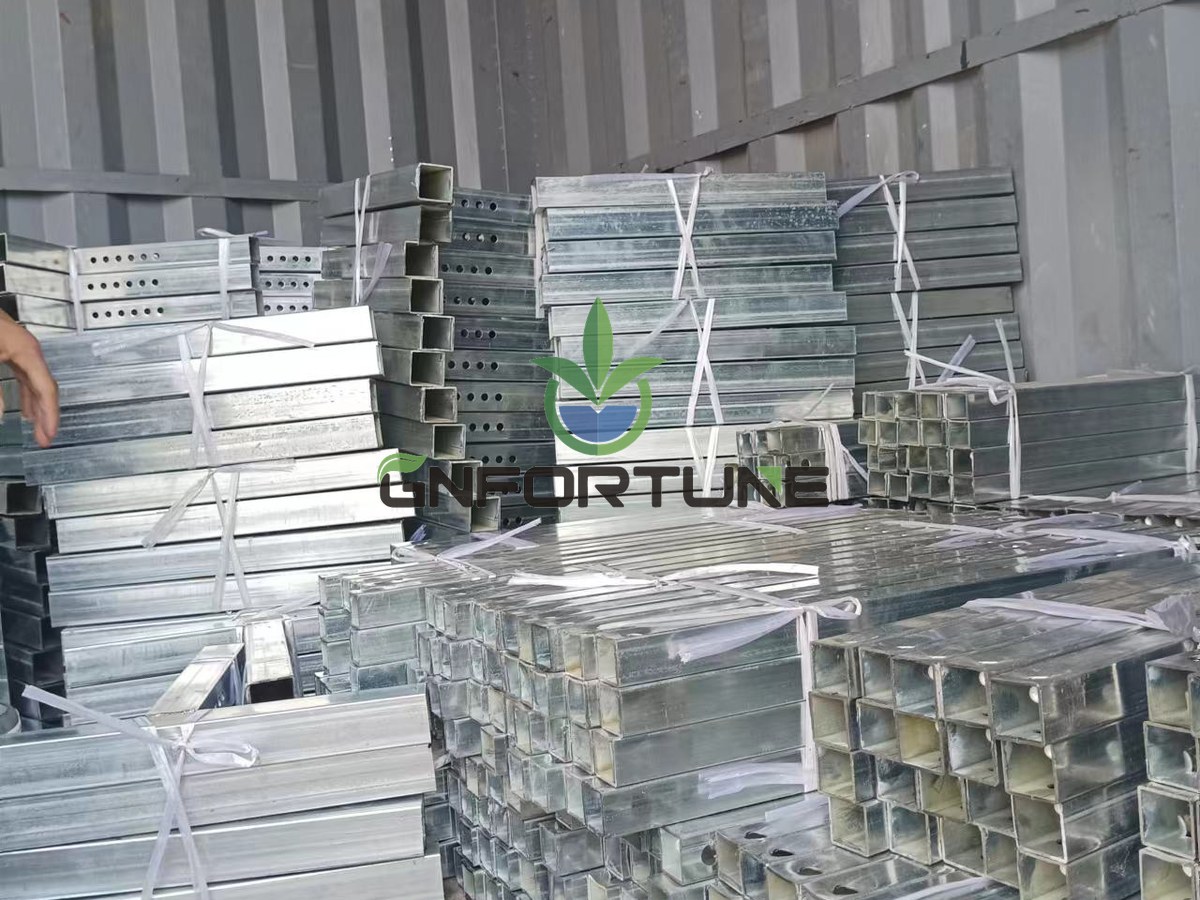
What Detail Does to the Quotation
Detail does not raise the price on its own; it removes the room suppliers need to price risk. A vague inquiry produces a wide spread of quotations, and that spread is the visible cost of the missing clauses.
- Vague line: “NFT channel, 100×50 mm, 2,000 m” — quotes differ by material, wall thickness, UV package and length.
- Specified line: extruded channel, 100×50 mm ±1 mm, minimum wall 2.5 mm at any point, UV-stabilised, food-contact certificate, 3 m lengths, measured at 20 °C — quotes differ mainly on logistics.
The second takes longer to write and minutes to compare. The first takes minutes to write and weeks to reconcile.
A Workable Structure for a Hydroponic Equipment Technical Specification
Use the same eight sections on every technical specification hydroponic equipment enquiry. Suppliers learn where to look, and your own team can reuse the document on the next project.
- Scope and exclusions — what is supplied, what is installed, what is not included.
- Applicable standards and certification — with the issue year where it matters.
- Materials and construction — grade, finish, colour, stabilisation, food-contact status.
- Dimensions, tolerances and drawings — drawing number and revision referenced.
- Performance requirements — each with a test method and acceptance value.
- Duty conditions — water, chemistry, temperature, pressure, electrical, load, duty cycle.
- Documentation, packing and spares — language, certificates, labels, pallet configuration, spare list.
- Inspection, acceptance, warranty and remedies — where, how, by whom, on failure.
Ask suppliers to quote clause by clause, with deviations listed explicitly rather than absorbed silently. A compliance table returned with the quotation shows where the specification was unrealistic before money is committed.
FAQs About Hydroponic Equipment Specifications
Should we write a performance spec or a prescriptive one?
Both, in different clauses. Prescriptive for commodity hardware where failure is physical; performance for pumps, dosing and control where the supplier holds the design. Always attach a test method to a performance clause, or it cannot be enforced.
How much detail is too much?
Too much means specifying manufacturing method or internal geometry the buyer does not need to control. Anything affecting fit, life, safety or acceptance is fair game, and writing it costs less than the argument it prevents.
Do tolerances really need to be stated?
Yes. A nominal dimension lets each supplier choose its own tolerance, which is how the cheapest quote wins. State the tolerance, the measuring point and the temperature, and keep a signed sample as reference.
Can we simply name a model and add “or equivalent”?
Only if you also list the attributes that define equivalence: material, wall thickness, rating, certification and acceptance test. Without those, the clause invites a substitution you cannot reject later.
What if no supplier can meet one clause?
Find out before the order, not after. Ask for a deviation list with the quotation; if every supplier deviates from the same clause, the clause is probably wrong for the market rather than the suppliers being incapable.
Related Reading
- How to Write an RFQ That Gets Comparable Quotes — the enquiry process around the specification
- Commercial Hydroponic FAQ: MOQ, Wholesale, Shipping & Customization — the parameters that separate channel quotes
- Hydroponic Supplier Factory Audit: The Checklist Buyers Use Before Placing an Order — checking that a supplier can build to the spec
- Hydroponic System Commissioning: Installation Sequence, Testing and Site Acceptance — turning spec clauses into witnessed tests
- Hydroponic Equipment Warranty, After-Sales and Spares Clauses: What to Negotiate — what the specification has to support for a claim to hold
Internal links for the titles above are configured at publication.
Next Step: What to Send for a Quotation
A technical specification hydroponic equipment enquiry is only as good as the project data behind it. Send it as a numbered document so suppliers can answer clause by clause, and include the site conditions that decide material and rating.
Preparing an equipment enquiry? For RFQ or project consultation, send: greenhouse dimensions and usable growing area; system type and layout drawing; crop plan and target weekly or annual output; quantities by item with packing and labelling needs; local climate range and raw water analysis; sanitiser products and concentrations; power standard and automation level; delivery schedule and destination port; and the budget band. G AND N FORTUNE LIMITED supplies NFT channels, DWC systems, tanks and irrigation components quoted to those parameters, with a compliance table returned alongside.