Most quotations for NFT channels arrive as a price per metre, and most buyers compare them as a price per metre. That unit answers the purchase question and ignores the one a farm asks three seasons later: how many service years did this channel deliver, and what did each of those years cost? Working out nft channel cost per year takes more information than a per-metre quote volunteers.
It is written for buyers and engineering teams specifying 100×50mm and 73×62mm sections in container loads rather than cartons.
Why Price per Metre Is the Wrong Unit
Price per metre tells you what leaves the budget at order placement. It says nothing about year four, when lids no longer seat and a cracked section has to be cut out inside a turnaround window.
Three properties of the purchase make per-metre comparison misleading:
- The asset is rarely replaced all at once. Partial replacement costs more per metre, because the bay is occupied.
- The failure mode is gradual. UV degradation, bowing and loss of lid grip arrive as a slow decline, so nothing triggers a review.
- The channel meets labour every cycle. A profile that is awkward to lift or reseat costs crew time several times a year.
Comparing unit prices assumes every channel on the market delivers identical service years. They do not, and the specification sheet is where the difference is written.
What Goes Into Channel Lifetime Cost
Channel lifetime cost is acquisition plus every cost the channel generates in service, divided by service years. Most farms record the first line and lose the rest, which is why the annual figure surprises the first time it is calculated.
| Cost line | What to record | Where it is usually missed |
|---|---|---|
| Acquisition per metre | Channel, lid, end caps, outlets, freight and duty to site | Lids and caps quoted separately, so the headline number is not the full channel |
| Installation labour | Hours to hang, level and connect, plus brackets | Charged to the construction budget, not to the channel asset |
| Cycle handling loss | Length scrapped at each clean-out and consumables used | Never recorded; shows up as a spares pile that shrinks too fast |
| Replacement and downtime | Removal, disposal, re-hang and the weeks a bay cannot be planted | The largest lines and the least often quantified |
Replacement labour and downtime are what turn a modest difference in unit price into a large difference in annual cost. A channel lasting eight years instead of five at fifteen percent more per metre is usually cheaper per year before downtime is even counted.
Wall Thickness and UV Load Decide the Service Life
Of all the specifications on an extrusion drawing, nominal wall thickness and the UV stabilisation package have the largest effect on service years. Both are cheap to specify and hard to verify after delivery.
Wall thickness works two ways: stiffness against bowing between hangers, and material reserve to tolerate handling and cleaning. A profile quoted at a nominal figure should be confirmed at its minimum, because corners and the base radius run thinnest — and they are where cracks start.
UV behaviour is the second half. Degradation shows first as chalking, then colour shift, then brittleness, and high-radiation regions, thin film and aggressive sanitiser programmes all compress that sequence. The process side is set out in the article on how PVC NFT channels are extruded, wall thickness and UV stability.
When two quotations sit side by side, the practical question is not which channel is thicker on paper. It is whether each supplier will state a measured minimum and describe the UV package in terms checkable on arrival.
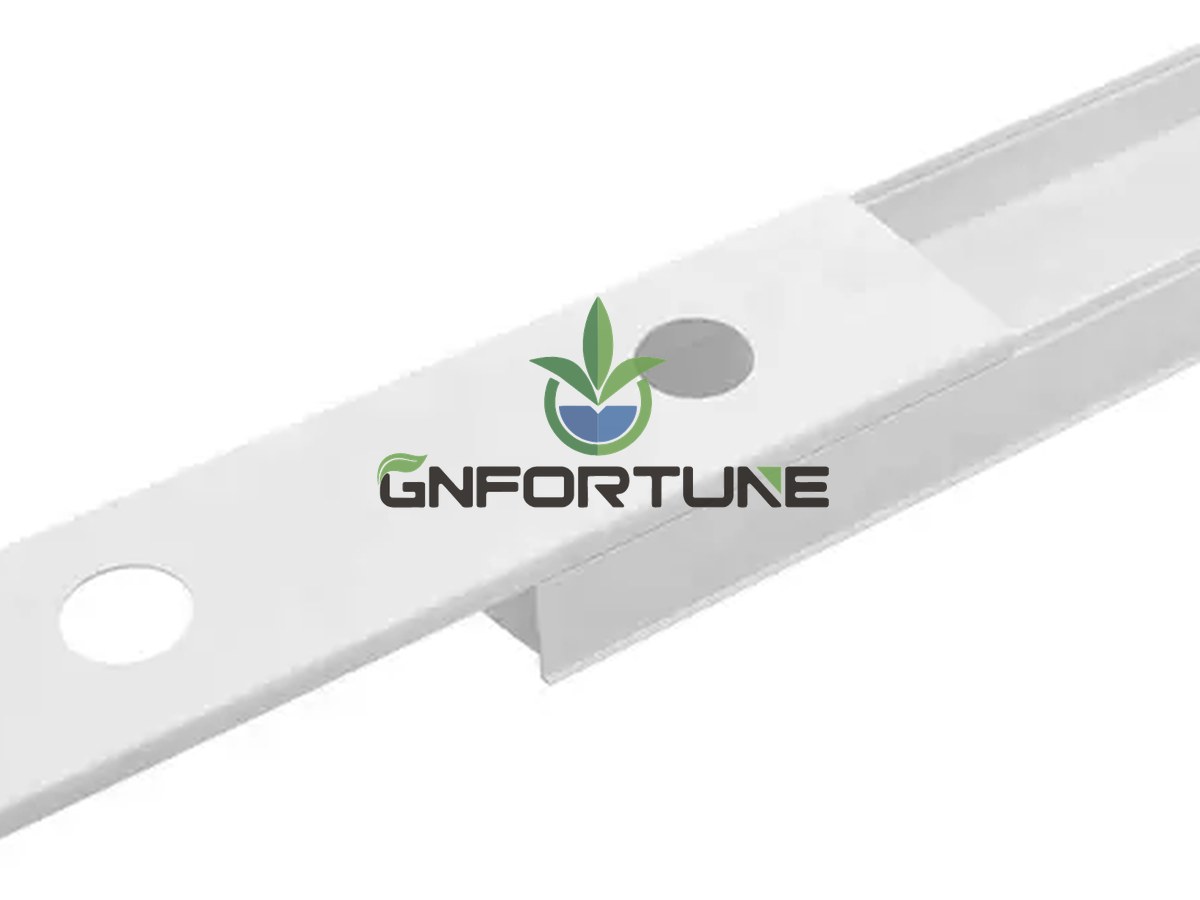
Cleaning and Disassembly: the Loss Nobody Invoices
A share of channel stock is lost during turnaround rather than in service. It is never purchased separately, so it never appears in the per-metre comparison either.
Lids are lifted, sections are handled and stacked, and a small proportion cracks, splits at an end or loses its lid grip. Profiles that must be opened every cycle lose more than profiles allowing a flush-through clean-out, and crews working to a fixed turnaround window lose more than crews with slack time.
As a planning figure rather than a measured one, a handling-loss band of 1–3% of installed length per clean-out cycle is a reasonable starting assumption for a lidded 100×50mm channel opened each cycle, widening where the sanitiser is aggressive or the crew is new. Farms that record scrapped length for two or three cycles end up with a tighter number of their own.
The design features that move that band:
- Lid lifted every cycle — grip wear and end cracking; confirm how the retention behaves after repeated opening.
- Flush-through clean-out possible — the channel stays in place and the loss band narrows.
- Thin wall at bracket contact — stress whitening and cracking; confirm the hanger contact design.
How to Set a Replacement Cycle Without Guessing
Set the cycle from inspection triggers and your own records rather than a figure in a brochure. Service life depends on radiation, film type, sanitiser programme and handling quality, and those differ too much between sites for a universal number.
A planning band is still needed for budgeting. For UV-stabilised uPVC under film in a temperate climate, a band of 5–10 years is a common starting assumption, shorter under high radiation or aggressive cleaning. Replace the band with site data once two or three seasons of records exist, and record the installation date per bay rather than per project, because partial replacement makes one project date meaningless. Inspect annually against fixed triggers:
- Chalking or colour shift that marks the hand.
- Cracking at ends, corners or bracket contact points.
- Permanent bowing between hangers when the channel is empty.
- Brittleness in cold weather, usually at the ends first.
Two consecutive inspections showing the same trigger advancing is the point to schedule replacement. The same pattern applied to pumps, valves and controllers appears in the article on hydroponic equipment lifespan.
Spares Ratio, Lead Time and the Cost of a Stopped Bay
The most expensive channel in a project is the one not in stock when a bay is ready to plant. Spares policy is part of ownership cost, not an inventory detail.
A planning band of 1–3% of installed length suits many single sites, rising where the site is remote, the profile is unusual or the lead time to port is long. The capital in a few hundred metres of channel is small against the margin lost while an empty bay waits.
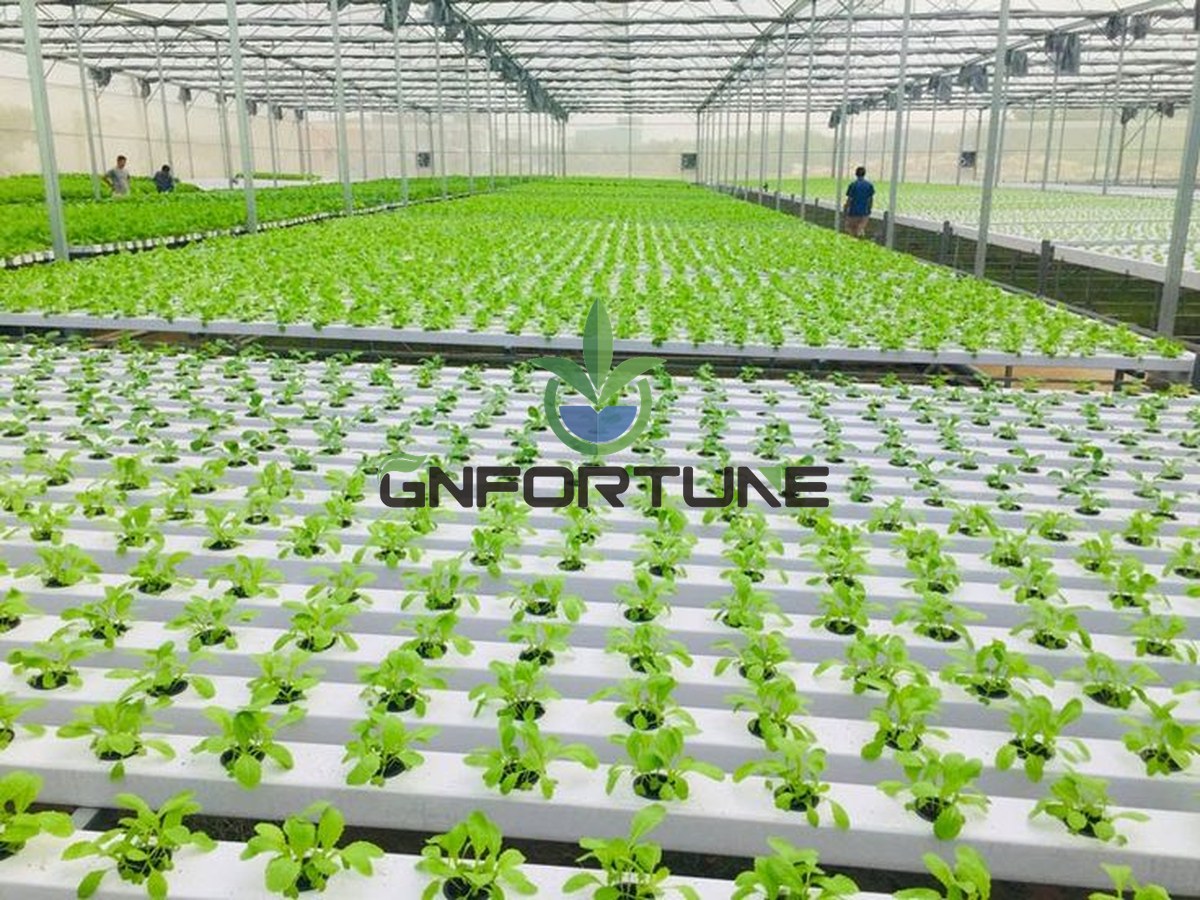
Downtime is worth pricing explicitly. Work out the weekly gross margin of one bay, estimate the realistic wait for a replacement section, and set that beside the difference between two quotations. One incident usually exceeds the entire saving from the cheaper profile.
Order pattern matters as much as stock level. Consolidating into fewer, larger shipments cuts freight per metre and keeps a bay supplied from one production run, the reasoning behind most bulk channel orders.
Turning a Quote Into NFT Channel Cost per Year
Ask every supplier for the same seven pieces of information and the comparison becomes arithmetic rather than judgement. A quotation that will not supply them is offering a price, not an ownership cost.
- Nominal and minimum wall thickness, with the measurement points stated.
- Material specification and a description of the UV package.
- What is included per metre — lid, end caps, outlets, brackets.
- Warranty term in years, and what voids it: sanitiser, cleaning method, radiation.
- Recommended spares ratio for your installed length and lead time.
- Freight and packing basis, ex-works or delivered.
- Confirmation that replacement channel matches the original profile.
The annual figure is then acquisition, installation, handling loss, consumables and spares divided by service years, with an allowance for downtime risk added on top. Buyers who run this once usually keep running it, because it shows which specification is worth arguing about.
FAQs About NFT Channel Cost per Year
How do you calculate cost per year for a hydroponic channel?
Add acquisition, installation, cleaning losses, consumables and spares, divide by expected service years, then add an allowance for downtime risk. Unit price is one line in that sum, not the answer. Treat the result as a budgeting figure until site records replace the planning band.
Is a thicker wall always the better purchase?
Not automatically. Extra thickness pays off where hanger spacing is wide, handling is rough or radiation is high, and adds weight where the profile is fully supported and rarely disturbed. Match thickness to hanger spacing and cleaning method.
What shortens a channel’s service life most in practice?
UV exposure and aggressive cleaning. Chalking and brittleness almost always precede cracking, and the first cracks appear at ends, corners or hanger contact points. Local radiation and film type move this significantly.
Should the whole house be replaced at once?
Usually not. Partial replacement by bay spreads capital and keeps production running; full replacement makes sense when a profile is discontinued or when most bays reach the same trigger together. The risk to watch is mixing profiles, which creates lid and hanger incompatibility.
How much spare channel should we hold?
A planning band of 1–3% of installed length suits many single sites, higher for remote locations or unusual profiles. The right number is the one that covers your realistic replacement wait. Store it out of direct sun.
Related Reading
- NFT Channel Sizes: 100×50mm vs 73×62mm Compared — How the two common sections differ on capacity, support and crop fit before the cost comparison starts
- How PVC NFT Channels Are Extruded: Wall Thickness, UV Stability and the Tolerances That Matter — What the extrusion process decides about wall thickness and long-term UV behaviour
- Hydroponic NFT Channels Wholesale: Bulk Buying Guide — Order consolidation, container maths and how freight changes the effective per-metre price
- Hydroponic Equipment Lifespan: 10-Year vs 3-Year Parts — Replacement planning for pumps, valves and controllers alongside the channel asset
- Comparing Hydroponic Equipment Quotations: How to Normalise Bids — Putting two bids in the same units before the annual cost is calculated
Next Step: What to Send for a Quotation
Quoting a price per metre takes a length and a profile. Quoting nft channel cost per year takes the operating conditions the channel will actually see, which is why the request for quotation should carry them from the start.
Planning a channel purchase or a replacement programme? For RFQ or project consultation, send: greenhouse dimensions and available bay area; crop and target plant specification; channel profile and quantity in metres; target weekly or annual output; local climate range and raw water analysis; cleaning and sanitiser regime; automation level requested; delivery schedule; and the budget band. G AND N FORTUNE LIMITED supplies 100×50mm and 73×62mm NFT channels from a 5,000㎡ factory with a 2,400㎡ trial greenhouse.