Aphids are usually the first pest a new hydroponic greenhouse learns to live with, and leaf miners and spider mites are rarely far behind. Soilless production removes soil-borne disease pressure, not insects: a warm, continuously planted house with soft new growth and no natural enemies suits all three. This guide covers aphids hydroponic greenhouse identification at the bench, the conditions that trigger each pest, and scouting thresholds a commercial crew can actually run. Thrips and whitefly thresholds, predator release rates and the wider IPM framework sit elsewhere.
Written from the operations side: what shows up on commissioning walks and weekly pest rounds at farms running lettuce, herbs and Asian greens in NFT channels.
Why These Three Dominate in Soilless Production
Very little inside a protected house interrupts them. An outdoor crop loses aphids to rain, wind, predators and rotation; take those away and add stable warmth, and all three become predictable rather than occasional.
- Continuous young growth: staggered planting always supplies the tender tissue aphids and mites prefer.
- Few natural enemies: unless predators are released deliberately, nothing hunts them — screening excludes beneficials as effectively as pests.
- Stable warm microclimate: dry, still air suits mite development and lets colonies build unseen.
- Uniform genetics: one cultivar across hundreds of square metres is an unbroken food source.
None of that makes an outbreak inevitable. It makes one likely wherever pest rounds are not routine.
Aphid Identification at the Bench
Look for the evidence rather than the insect: cast white skins, honeydew on lower leaves, ants working the plants and cupped new growth all read from standing height. Sooty mould follows honeydew, and on bagged whole-leaf product that alone can cost the grade.
Inspect the growing point, the underside of the two youngest leaves, and the inner wrapper leaves of heading types. Winged aphids warrant action — they usually appear once a colony is crowded, and they are how the pest moves down the aisle.
Virus risk is why waiting for visible colonies fails. Several species transmit non-persistent viruses during short probing feeds, so a plant can be infected before an insect is ever seen; on virus-sensitive crops, greenhouse pest identification matters less than exclusion.
Have the first serious find identified to species. Registered options and sensitivity differ, and a wrong call costs a cycle.
Leaf Miner Damage: Reading the Mines
The mine is the diagnosis. Larvae feed between the leaf surfaces, protected from contact sprays, so once trails appear the damage is done and the insect is nearly unreachable.
Serpentine trails or blotch mines leave both epidermes intact, unlike chewing damage or thrips rasping, which leaves unstructured silvery scarring.
Practical leaf miner control in a greenhouse rests on three things: strip mined leaves during routine passes so larvae leave the house, break the cycle at crop change so pupae do not carry over, and release parasitoids that reach larvae sprays cannot.
Set the threshold from the buyer’s specification — trails a processing customer ignores can fail a bagged premium pack.
Spider Mites: Microclimate Before Chemistry
Mites tell you about the climate before they tell you about product choice. Development accelerates in warm, dry air, so populations start where temperature is highest and humidity lowest — near a heater outlet, along an air inlet, or on plants already stressed by drought or a failing root system.
Stippling comes first, then bronzing, then fine webbing at the growing point. A 10–20× lens confirms the mites; without one, early symptoms are routinely filed as nutrient deficiency or heat stress.
Two responses beat any spray: correct the hot spot through airflow and humidity, and keep predatory mites established before rather than after the problem appears.
Avoid broad-spectrum pyrethroids. They remove predators faster than mites and can stimulate mite reproduction, which is the usual route to a secondary outbreak in a house that looked clean a week earlier.
| Pest | Signature | Where to look | First response |
|---|---|---|---|
| Aphids | Cast skins, honeydew, cupped new growth, ants | Growing point, youngest leaf underside | Rogue hot blocks, confirm species |
| Leaf miners | Serpentine trails or blotch mines | Mid-canopy and outer leaves | Strip mined leaves, release parasitoids |
| Spider mites | Stippling, bronzing, fine webbing | Leaf underside, growing point | Fix the hot spot, release predators |
A Scouting Threshold Your Crew Will Actually Run
Write it as a percentage of plants affected inside a block, not as insects per leaf. Crews can count infested plants along a fixed route; nobody counts aphids per leaf at walking pace, and a number nobody collects is not a threshold.
As a planning range for summer leafies on a weekly round, many farms act at 5–10% of plants carrying live colonies, tightening to 2–5% where product ships whole and any insect presence fails the grade, and loosening toward processing markets. An aphid scouting threshold set in isolation from the buyer’s specification is decoration.
Method matters more than the figure: a fixed route, 20–50 plants per block, the same growth stage each week, and results written down with the date. Sticky cards flag the first aphid and leaf miner flight, showing presence and trend rather than density.
Where the Pressure Enters
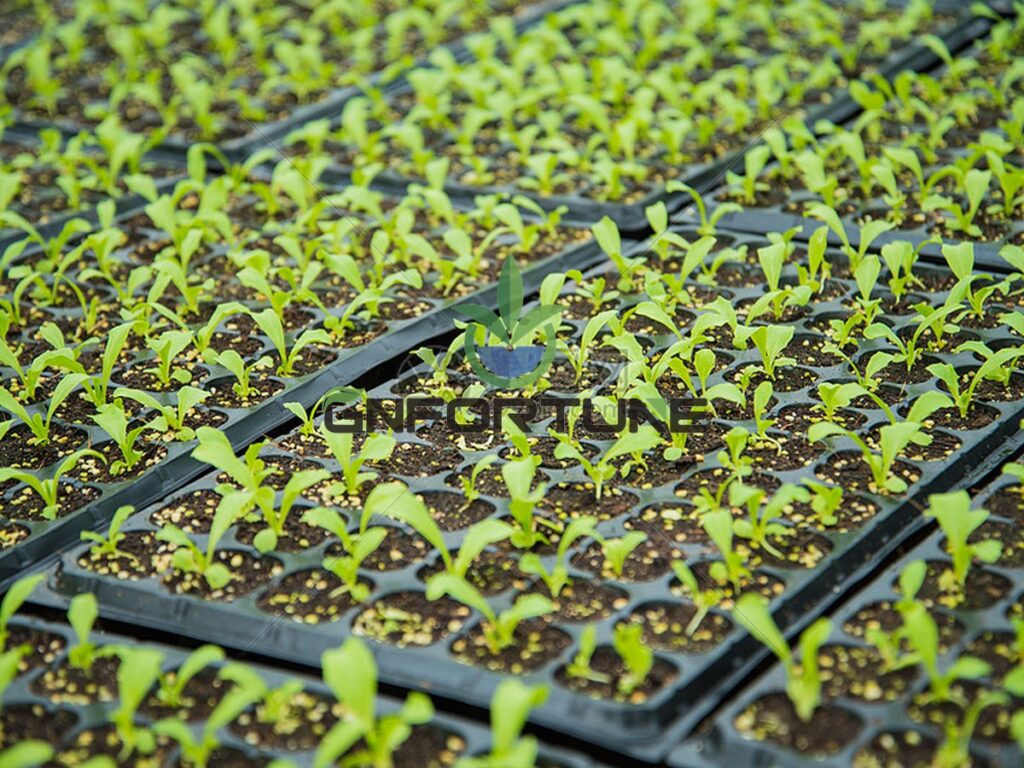
Most introductions arrive rather than emerge. Hold incoming plugs apart from production for several days and inspect them first — that is how mined larvae and hitchhiking mites arrive. Keep insect mesh maintained rather than assumed, since failures start where film meets frame; the detailing is set out in Sealing Greenhouse Openings for Pest Exclusion. Keep cull piles away from air intakes, and do not let the same tools serve a dirty block and a clean block in one hour.
Aphids Hydroponic Greenhouse: Containment Before Chemistry
Start with the smallest action that could work. Spraying a house for two hot rows is expensive, disrupts whatever predators are established, and is rarely necessary.
- Mark affected plants and a buffer ring around them.
- Bag heavily infested plants out of the house rather than tipping them into an open bin.
- Treat the marked area, then re-count in three to five days against the same threshold.
- Confirm registration and pre-harvest interval against the picking schedule — see MRL compliance — and rotate mode-of-action groups.
Check compatibility with your biological control supplier before applying anything at all. Cycle-end sanitation then does more for next month than any single application.
Preventing a Secondary Pest Outbreak After an Application
The spray usually works; what follows is where farms lose ground. With predators gone, mites or leaf miners can rebuild unchecked two weeks later. Prefer selective products, stage applications so refuges remain, plan re-release dates in advance and keep scouting for two to three weeks afterwards. Repeated use of one mode-of-action group is the slower version of the same failure.
An aphids hydroponic greenhouse programme succeeds on routine rather than heroics: weekly rounds, a written threshold, and small fast containment while the problem is still two rows wide.
FAQs About Aphids, Leaf Miners and Spider Mites
Are aphids worse in a hydroponic greenhouse than in soil?
Not intrinsically — the insects and the registered options are the same. What differs is that nothing interrupts them: no rain or cold check, no reservoir of soil predators, and a continuous supply of young growth, so populations build steadily instead of collapsing.
How often should sticky cards be read?
Weekly as a minimum and twice weekly through summer, replacing cards once they are dusted or saturated. Counts show adult flight activity and trend, so use them to direct scouting rather than to trigger an application.
Why does our mite problem worsen after spraying?
Usually because the product removed predators faster than mites, or stimulated mite reproduction. Check what was applied, whether it was compatible with released agents, and re-scout for two to three weeks — that is when the flare appears.
Do leaf miners justify an insecticide application?
Often not, because contact sprays rarely reach larvae inside the leaf. Leaf removal, a clean break at crop change and parasitoids address the life-cycle stage that matters; decide any adult-targeted application with your advisor.
Should the whole house be treated once aphids are found?
Rarely. Treat the marked area plus a buffer, then re-count, which preserves predators and keeps residue and cost contained. Whole-house applications belong to the point where hot spots exceed what your weekly rounds can hold.
Related Reading
- Thrips and Whitefly Scouting: Thresholds and Control Windows — The other two pests on the monitoring card
- IPM for Hydroponic Greenhouses: A B2B Playbook — The wider programme these routines sit inside
- Biological Control: Release Rates, Monitoring and QA — Compatibility and re-release planning around sprays
- Sealing Greenhouse Openings for Pest Exclusion — Where these pests get in, and what to seal first
- Pesticide Residues and MRL Compliance — Registration, pre-harvest intervals and residue limits
Next Step: What to Send for a Quotation
Exclusion, sanitation access and air movement are decided on the drawing, long before the first pest round. A house that cannot be walked block by block, drained and cleaned between cycles will keep re-introducing the same three pests regardless of how good the aphids hydroponic greenhouse routine is.
Planning a new house or a retrofit? For RFQ or project consultation, send: greenhouse dimensions and usable growing area; crop mix and cultivars; target weekly or annual output; local climate range and raw water analysis; screening and door arrangement required; number of independent zones wanted for isolation during a pest event; automation level; delivery schedule; and the budget band. G AND N FORTUNE LIMITED supplies NFT channels, Dutch bucket and gutter systems with matched greenhouse packages, quoted to those parameters.