Aeroponic seed potato production runs on one simple idea: hang the plant in air, keep its roots permanently wet with a fine nutrient mist, and tubers form in the dark along the exposed stolon zone. That removes substrate, removes soil-borne pathogens from the tuber surface, and lets one clean harvest pull every tuber from a plant at once. It also removes the buffer that soil gives you. A misting pump that stops for twenty minutes starts a crop loss, and that single fact decides more procurement decisions than any yield figure.
Below is what a commercial project needs to specify: the system blocks, the root environment, realistic output per plant, and the acceptance checks to run before signing.
What minituber production is and who buys it
Minitubers are the first tuber generation grown from tissue-culture plantlets — the bridge between the sterile lab and field seed: too small to plant commercially, large enough to count, grade and multiply into the next generation. Seed potato multiplication on minitubers delivers uniform, virus-tested starting material.
The buyers are seed potato programmes, cooperatives, development agencies and large farms that want to stop buying certified seed every season. What they buy is not a growing machine but a controlled environment: a known cultivar, a known tuber count and a known size class across one batch.
That framing matters commercially. If a project only needs to grow its own field potatoes, a substrate or field scheme is cheaper. An aeroponic potato system earns its cost when tuber size distribution and disease-free status are worth more than raw volume.
Why aeroponics instead of substrate for seed potato
Substrate minituber systems work and remain the mainstream option. Buyers move to aeroponics for specific reasons, and the trade-offs come with them.
| Factor | Aeroponic system | Substrate minituber system |
|---|---|---|
| Harvest labour | Plants lifted, tubers collected in one pass | Plants pulled from substrate, tubers washed and separated |
| Water use | Low volume, recirculated mist | Substrate irrigation volume per plant |
| Root-zone buffering | Almost none — failure is fast | Substrate buffers short stoppages |
| Downtime tolerance | Minutes | Tens of minutes |
| Capital and control complexity | Higher | Lower |
Tubers stay clean and unwounded, which suits programmes running regular pathogen testing, and plants establish quickly from small plantlets in well-oxygenated air. Against that, the crop depends on a powered spray system running continuously, and a pump failure affects every plant in the chamber at once.
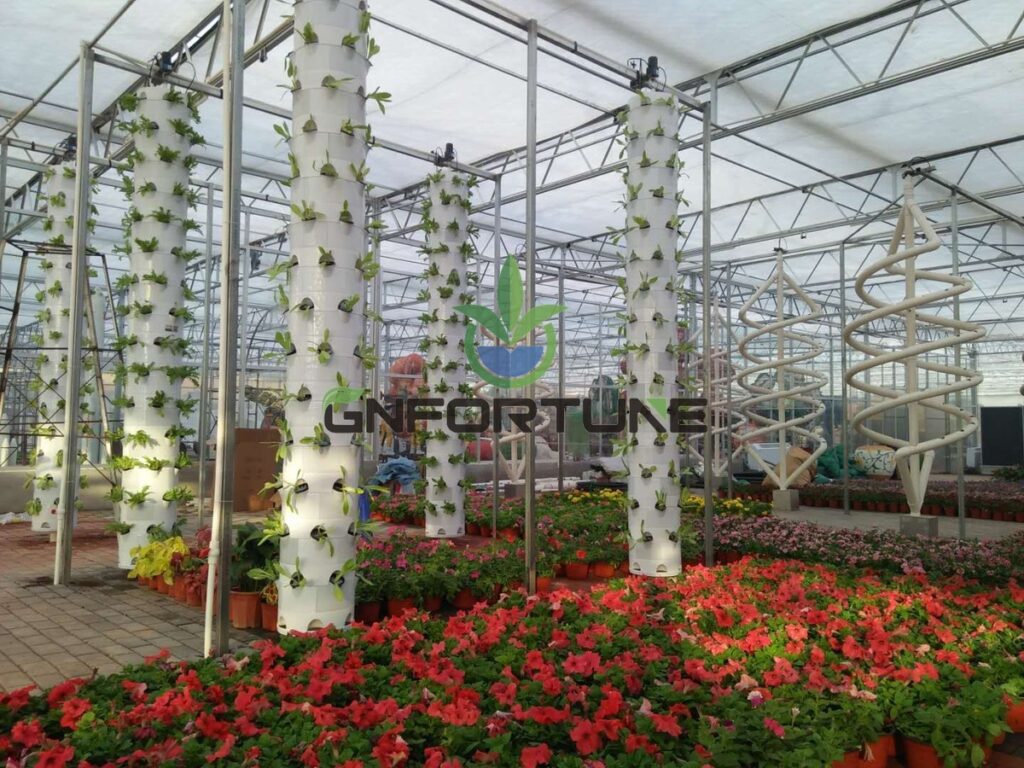
System components: root chamber, misting, nutrient, lighting
A minituber production system has six blocks, and buyers should be able to price each of them separately rather than receiving an opaque package.
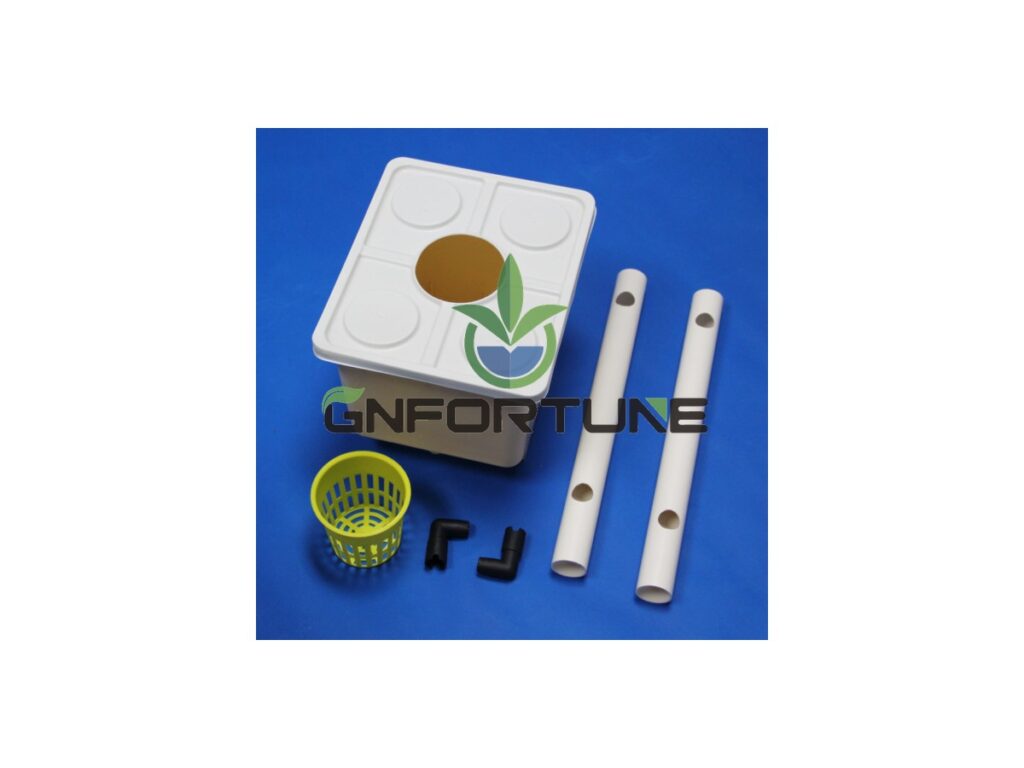
- Root chamber. The opaque-sided enclosure where roots hang and tubers develop. It must exclude light completely at the tuber zone, seal without dripping onto the floor, and be drainable for sanitation between batches.
- Misting circuit. Pump, filter, pressure gauge, manifold and nozzles. Nozzle count and spacing determine whether coverage is uniform; this is the component to inspect most closely.
- Reservoir and nutrient. Sized buffer volume, mixing tank, EC and pH control, with a drain path that returns overspray rather than wasting it.
- Support and plant sites. Net pots, collars or rubber grips that hold a plantlet without crushing the stem, spaced for airflow between plants.
- Lighting. Side and top lighting positioned so no foliage shades the lower sites, since the lower plant sites are the ones that set back.
- Control and monitoring. Timer or variable-speed drive for the pump, plus sensors and logging for reservoir temperature, pH and EC.
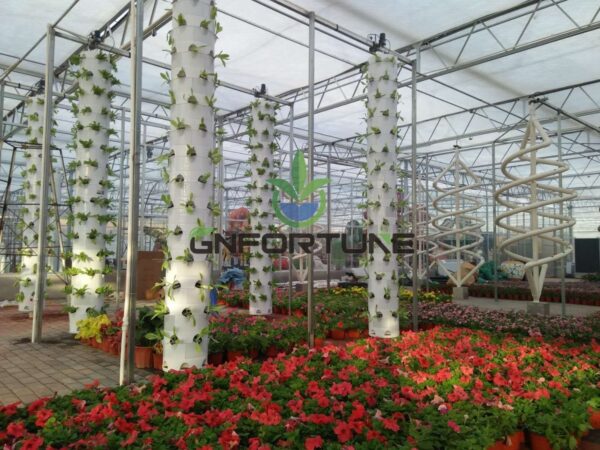
Our article on aeroponic tower components breaks the kit down part by part, and the equipment reference that follows it lists what a supplier should be able to price separately.
Misting cycle, EC and root-zone environment
The root zone misting cycle is the operating variable that decides the crop. Roots need to stay damp and air-exposed, so the cycle is short and frequent rather than intermittent and long: a mist-on period of a few seconds repeated every few minutes through the light period, with the exact figure set by nozzle output and chamber volume. Ask the supplier for the duty cycle for your chamber, not a generic interval.
Conditions that need an explicit setting rather than an assumption:
- Night misting. Roots must not dry after dark, so many installations keep a reduced or continuous night cycle. Confirm what the controller does when the light goes off.
- Reservoir temperature. Cool nutrient supports tuber initiation; warm water pushes plants towards vegetative growth. This is the variable that most often costs tuber count.
- EC and pH. Set the plantlet stage and the tuber bulking stage separately rather than running one set point all cycle.
- Photoperiod. Long days are commonly used in potato nursery hydroponics to build plant size early; confirm the response with the variety supplier.
How aeroponic towers work in practice — mist, pumps and uptime — is covered in our guide to tower mechanics.
Output per plant, batch planning and labour
Output per plant is quoted across a wide range, so treat any single number with suspicion. Counts depend on cultivar, plantlet quality, light, spacing, cycle length and how long the crop is held before harvest — a benchmark to test in your own climate, not a specification to sign against.
Two ways to improve commercial output without touching the system: more plants per chamber volume, and overlapping batches so harvest labour spreads instead of concentrating. Both have limits. Overcrowding cuts light to the lower sites, and a staggered calendar means two cohorts share one mist circuit — so a single fault hits both.
Labour breaks into planting, crop maintenance, harvest and grading, and cleaning between batches. Cleaning is underestimated most often, because a chamber that cannot be opened and reached turns sanitation into a slow, half-done job.
G AND N FORTUNE LIMITED supplies tower modules, misting circuits and reservoirs as one matched package, built from our own extruded and injection-moulded parts and run in our 2,400 m² test greenhouse before shipment. Every aeroponic seed potato production enquiry is quoted to the chamber count and the reliability specification you confirm.
Buyer checks: nozzle redundancy, uptime, sanitation, spare parts
Run these checks before shipment or acceptance. Most are cheap to verify and expensive to discover later.
- Nozzle coverage and redundancy. Watch the actual spray pattern on a running chamber, not the nozzle spacing on the drawing. Ask how the system behaves if one nozzle blocks, and what the failure indication is.
- Uptime design. Confirm pump redundancy, duty pump changeover, filtration stage and fault alarm. A single-pump layout without alarm is a real risk in a nursery that cannot afford a lost week.
- Pressure and flow verification. Ask for measured pressure at the last nozzle in the furthest chamber, not average pressure. Pump selection assumptions are covered in our article on pump sizing, flow rate, head pressure and redundancy.
- Sanitation access. Walk into a chamber with the door open and ask staff to demonstrate cleaning. Confirm the drain path and what chemical routine the chamber material tolerates.
- Spare parts and documentation. Get a list with lead times: nozzles, seals, sight glasses, control board, pump itself. Check who services the system locally and whether drawings are handed over.
A supplier who will not run a chamber test with you present is telling you something. Compare the equipment list against our aeroponic system equipment reference, and see how towers fit a wider layout in our vertical growing systems overview.
FAQs About Aeroponic Seed Potato Production
How many minitubers does one plant produce?
Published figures vary widely by cultivar and system, so treat any vendor number as a benchmark, not a guarantee. Establish your own figure with a trial batch before committing to a commercial schedule.
Can an aeroponic system run without a backup pump?
Technically yes, but every plant in the chamber dries at the same time when the pump stops. Specify duty/standby pump changeover and a fault alarm for commercial production, and confirm the changeover time in a test.
How often should the misting cycle run at night?
Roots must stay damp and tuber bulking continues after dark, so many installations run a reduced or continuous night cycle. Ask what the controller does with the photoperiod signal and check it against your own targets.
Do aeroponic minitubers need sterilisation between batches?
Clean chambers and sanitise the mist circuit between batches to prevent cross-contamination between cultivars. Confirm the chamber material and drain path are compatible with the sanitiser you intend to use.
Is an aeroponic potato system cheaper than a substrate minituber system?
Usually not on capital cost. The case rests on labour per tuber, water use, tuber cleanliness and size control, so compare total cost per graded tuber rather than equipment price alone.
Related Reading
- How Aeroponic Towers Work: Mist, Pumps, and Uptime — How mist, pumps and uptime behave in a working aeroponic system
- Aeroponic System Equipment: Nozzles, Pumps, Uptime — Nozzle, pump and uptime specification for aeroponic equipment
- Aeroponic vs Hydroponic vs Aquaponic: Which System for Your Business? — Where aeroponics sits against hydroponics and aquaponics for a business
- Hydroponic Sanitisers Compared: Peracetic Acid, Hydrogen Peroxide and Chlorine Dioxide — Sanitiser options compared, and what each one leaves behind in the root chamber
- Incoming Inspection of Seeds and Growing Media: Batch Acceptance on a Commercial Farm — Batch acceptance checks for seed and growing media on a commercial farm
Next Step: What to Send for a Quotation
Seed potato quotations depend on volume, cultivar handling and the reliability specification you want.
Send us: (1) annual minituber volume and plantlets per batch; (2) cultivar count, and whether several varieties run at once; (3) floor area in m² and planned structure; (4) climate data with summer peak and winter design temperature; (5) water pH, alkalinity and hardness; (6) power reliability and backup provision; (7) automation level, including pump redundancy and alarms; (8) delivery and commissioning dates; (9) budget range. Request a Project Consultation to run a trial batch against your target figure first.