Incoterms for Equipment Orders: FOB, CIF and DDP Compared
Incoterms for equipment orders decide three things before a single carton moves: who pays for each leg, who carries the risk on each leg, and who handles the paperwork. FOB, CIF, DAP and DDP are the four terms in most hydroponic equipment quotations, and the difference between them is rarely the number on the quote. A CIF price sitting 6% above an FOB price can come out cheaper once insurance, destination charges and clearance are counted. This article walks through the risk transfer points, the cost lines each term leaves with the buyer, a landed-cost sheet to compare them on, and the questions worth asking a forwarder.
The Four Incoterms for Equipment Orders
FOB, or Free On Board, puts export clearance and loading on the seller and everything else on the buyer: main carriage, insurance, discharge, import clearance and inland delivery. CIF, or Cost Insurance Freight, adds ocean freight and minimum marine insurance to the destination port, paid by the seller, but keeps the risk transfer at the load port. DAP, Delivered At Place, has the seller carry the goods to a named place, with the buyer still clearing import and paying duty. DDP, Delivered Duty Paid, moves everything to the seller, import clearance and duty included.
Two further terms are worth recognising. EXW leaves export clearance with the buyer, which rarely works when the factory files export documents in its own name; FCA is the cleaner substitute. For containerised equipment, FOB and FCA behave almost identically in practice.
Where Risk Transfers on a Route
Risk transfer catches buyers out because it does not move with the cost. Under both FOB and CIF, risk passes when the goods are on board at the load port, so a container damaged in transit is the buyer’s problem even though the seller paid the freight. Insurance therefore matters more than the term.
Term
Risk transfers
Main carriage booked by
Insurance
Import clearance and duty
FOB
On board at load port
Buyer
Buyer
Buyer
CIF
On board at load port
Seller
Seller, minimum cover
Buyer
DAP
At named place, before unloading
Seller
Seller
Buyer
DDP
At named place
Seller
Seller
Seller
What Each Term Includes, and What It Quietly Excludes
Every term leaves gaps, and the gaps are where the second invoice appears. Terminal handling, documentation fees, demurrage and detention, and the inland leg from the discharge port are the lines most often assumed included and most often billed separately.
Term
Buyers assume it includes
Usually excluded
FOB
Loading and export formalities
Origin terminal handling, bill of lading fee, any documentation beyond export clearance
CIF
Freight and full cover to the door
Destination terminal handling, demurrage and detention, war risk, storage beyond free time
DAP
Delivery into the site
Unloading, duty and taxes, customs bond, permits for oversize loads
DDP
Every cost to the door
Unloading, site access, crane or forklift, and in many markets VAT or sales tax
Compare landed cost, not the line on the quotation.
A CIF number is roughly an FOB number plus freight and minimum insurance, and it says nothing about destination charges, duty or delivery. Two quotations on different terms are not comparable until both are rebuilt line by line into a landed-cost sheet.
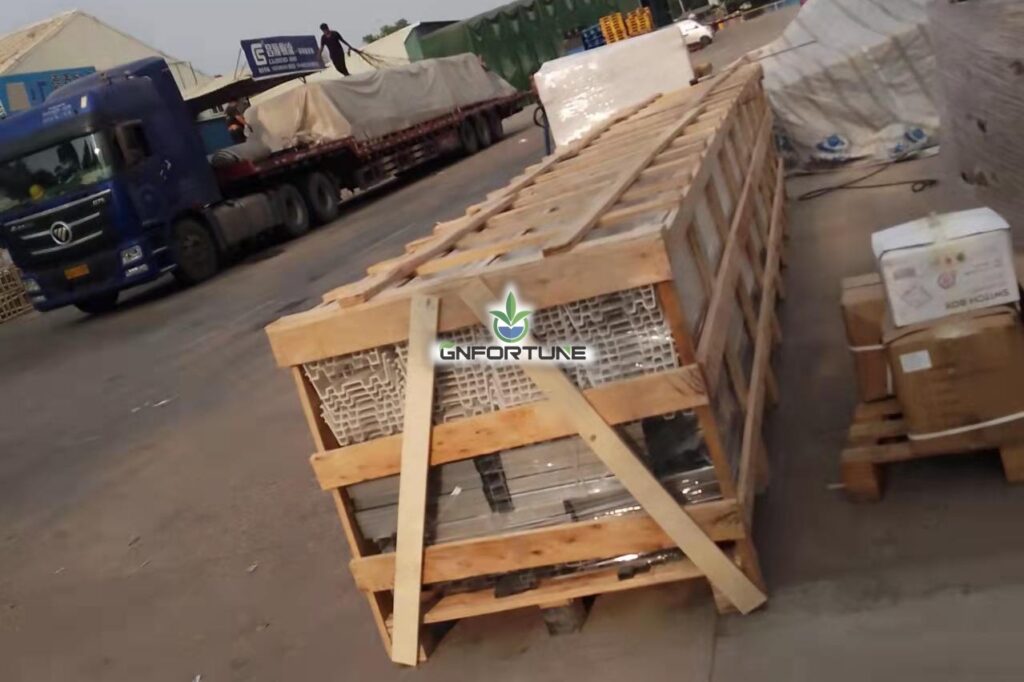
Wooden crates of gutter channels staged for container loading at a factory yard
Landed-Cost Sheet: Line by Line
The comparison works only when both quotations are rebuilt on one sheet: a line per cost element, marked against each term, with buyer-side lines filled from a forwarder quotation rather than estimates.
Cost line
FOB
CIF
DDP
Goods value and packing
Seller
Seller
Seller
Inland haulage and export clearance
Seller
Seller
Seller
Ocean freight
Buyer
Seller
Seller
Marine insurance
Buyer
Seller
Seller
Destination terminal handling
Buyer
Buyer
Seller
Customs clearance, duty, taxes
Buyer
Buyer
Seller
Inland delivery and unloading
Buyer
Buyer
By agreement
Typical magnitudes for a 20 ft container of equipment: ocean freight runs 4 to 12% of invoice value depending on lane and season, insurance premiums sit near 0.3 to 0.6% of insured value, destination terminal handling and documentation run into the low hundreds per container, and duty depends on the HS classification, covered in the notes on HS codes and customs clearance for equipment. Container utilisation changes the freight basis altogether, so the container loading and MOQ calculation belongs next to this sheet.
Why DDP Quotations Can Mislead
DDP looks like the safest option and is often the least transparent. Import clearance needs a party registered as importer of record at the destination, and a factory without that registration is either subcontracting clearance to a forwarder or quoting a price it cannot deliver. Ask who the importer of record will be and whether the buyer gets the duty receipt and customs entry.
The second issue is what the price hides. A seller quoting DDP has priced freight, insurance, duty and clearance risk into one figure, and that premium is neither visible nor negotiable afterwards. DDP also removes options such as using the buyer’s own broker or a bonded warehouse. Where a supplier quotes DDP without naming the broker or giving a tax registration at destination, treat it as a red flag. Payment mechanics interact with the term too; the payment terms guide for equipment orders covers what to align with each shipment milestone.
Mixing Terms on Split Shipments
Containerised equipment and air-freighted spares rarely travel on one term, and that is normal. A common structure is FOB or CIF for the container loads and DAP at the arrival airport for spares, with each contract line naming its own term and place. What matters is that the invoice, packing list and bill of lading match the term on that line, since customs reads the documents rather than the contract; the shipping documents checklist covers the fields to verify.
Watch two things when terms are mixed. First, two customs values for one order invite questions, so keep the split justified and documented. Second, insurance placed by the seller under one term and by the buyer under another can leave a gap at handover; the freight insurance and damage claims guide sets out how to close it.
Questions to Ask Your Forwarder
Which charges are billed at destination? Terminal handling, documentation, delivery order and any agency fee, quoted per container.
How many free days before demurrage and detention? Typically 4 to 7 days at many ports, and the daily rate after that is a real cost.
Is the routing direct or transshipped? Transshipment adds days and a second handling.
What insurance clauses apply, and at what percentage of value? Minimum CIF cover is often far below the value of the cargo.
Who is the importer of record under DDP, and does the buyer get the duty receipt? If not, the clearance is not the buyer’s to audit.
Ask these before the term is fixed, not after the quotation arrives. Incoterms for equipment orders are a cost allocation first and a legal label second: once the sheet is built and the documents match it, the choice between FOB, CIF and DDP stops being a guess and becomes arithmetic. Buyers working through a first import may find the wider import checklist for hydroponic equipment useful alongside it.
Frequently Asked Questions
What is the difference between FOB and CIF? A: Risk transfers on board at the load port under both; CIF adds that the seller pays freight and minimum insurance to the destination port.
Does CIF insure the cargo for the whole journey? A: Cover runs to the destination port on minimum terms, commonly Institute Cargo Clauses C at 110% of invoice value, which excludes most handling damage.
Is DDP the safest choice for a first import? A: Not always. DDP puts clearance and duty on the seller, who may lack importer-of-record status at destination, and it hides the cost structure.
Who pays import duty under each term? A: The buyer under FOB, CIF and DAP, and the seller under DDP, though VAT and local taxes are frequently billed to the buyer regardless.
Can one order carry two different terms? A: Yes, one term per shipment line, provided each line names the term and place and the transport documents match it.
Request FOB and CIF Quotations for Comparison
The quickest way to settle the argument is to see both numbers against the same sheet. Incoterms for equipment orders become comparable only once freight, insurance, destination charges and duty are written out for the same container plan.
Why commercial projects choose a decoupled aquaponics system: separate RAS and plant loops, independent nutrient control, cost and risk compared with single-loop aquaponics.
Add bays while crops keep moving: tie-in points, utility stub-ups, phasing by bay, quarantine between zones and the commissioning handover that avoids drift.