
Plant Factory vs Greenhouse: When a Sealed Room Pays
The plant factory vs greenhouse decision is usually framed as a technology choice. On a balance sheet it is a swap: free daylight traded for control, paid for in electricity and capital per square meter. A sealed room gives year-round output, repeatable quality and a site-independent schedule. A greenhouse gives photons at no running cost, plus weather at both ends of the range. This article sets out the capital and energy figures that separate the two, the crops where each pays, and a checklist keyed to climate and power price.
Definitions: Sealed Room, Hybrid, Greenhouse
Three configurations cover nearly every commercial project. Locking the definitions down first avoids comparing a heated tunnel with a purpose-built insulated room.
| Model | Envelope | Light source | Typical configuration |
|---|---|---|---|
| Vented greenhouse | Film, polycarbonate or glass, roof vents | Daylight, sometimes supplemental LED | Single growing layer, pad-fan cooling, seasonal plan |
| Semi-closed greenhouse | Glass or twin-wall, screened vents | Daylight plus supplemental LED | Single layer, mechanical dehumidification, heat buffer |
| Sealed plant factory | Insulated opaque shell in a warehouse or box | LED only | Four to eight tier racks, full HVAC and CO2 control |
The middle category matters, since it is where most investment lands. A semi-closed house keeps most of the daylight benefit while removing the extremes that cost money: peak summer heat and winter humidity nobody can vent away without losing heat.
Plant Factory vs Greenhouse Capex per Square Meter
Capital should be compared per square meter of productive area, not per square meter of building footprint, otherwise the tier count hides the real cost. Ranges below cover a working commercial specification.
| Cost line | Greenhouse, per m² bed | Sealed room, per m² tier | Comment |
|---|---|---|---|
| Shell and site | 80 to 250 | 150 to 400 | Includes retrofit inside existing buildings |
| Structure and racking | 20 to 60 | 200 to 550 | Multi-tier frames dominate |
| Lighting | 0 to 60 | 180 to 450 | Supplemental fixtures vs sole-source LED |
| HVAC and dehumidification | 30 to 120 | 220 to 500 | Latent removal sized to transpiration |
| Irrigation and fertigation | 60 to 150 | 60 to 150 | Similar in both models |
| Total | 250 to 550 | 900 to 2,200 | Indicative range only |
Two corrections before using those figures. Multiply the sealed-room tier number by tier count to reach cost per square meter of floor, which is what a landlord cares about. The retrofit line swings widely too: floor loading, power service and fire egress can add more than the growing equipment, as set out in the guide to container and warehouse retrofit requirements.
Energy: Lighting kWh and HVAC Loads
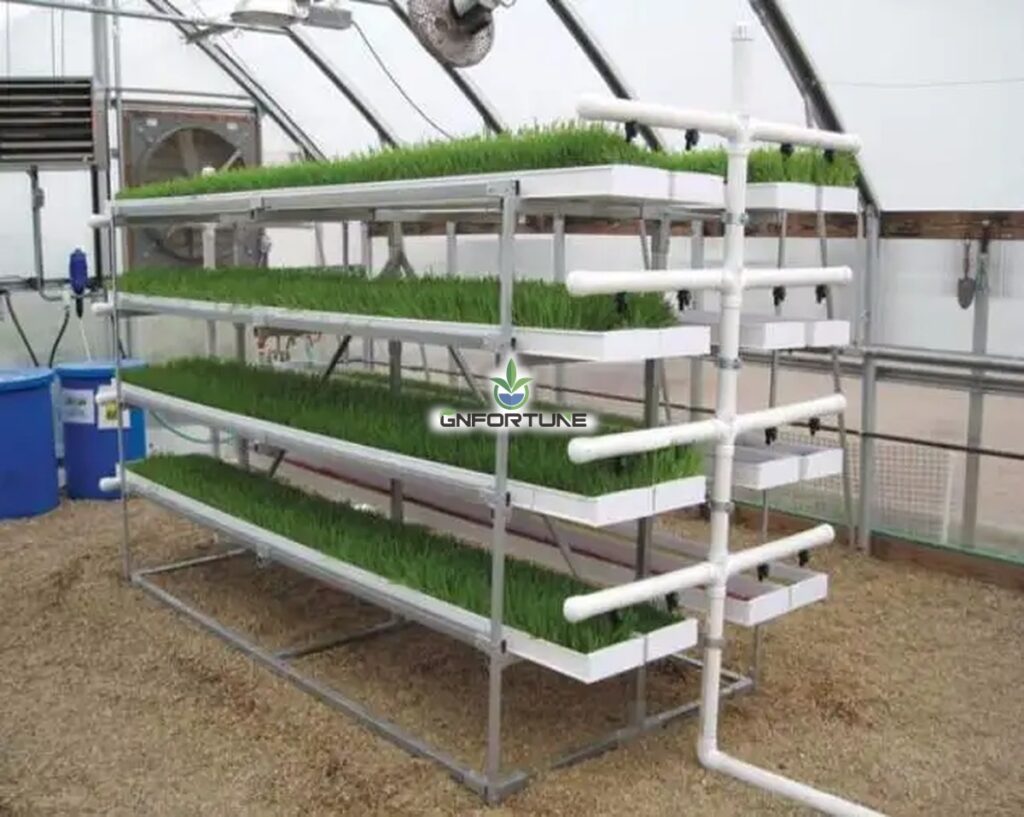
Energy separates the models for good. A greenhouse buys daylight and spends on heating and ventilation. A sealed room buys every photon from the grid, then removes the heat those photons create.
| Crop | Greenhouse, kWh per kg | Sealed room, kWh per kg | Comment |
|---|---|---|---|
| Head lettuce, temperate | 3 to 9 | 18 to 32 | Greenhouse figure rises with winter heating |
| Head lettuce, hot climate | 6 to 14 | 20 to 35 | Cooling load dominates the greenhouse case |
| Baby leaf and microgreens | 4 to 10 | 12 to 22 | Short cycles suit stacked production |
| Culinary herbs | 5 to 12 | 20 to 38 | High light recipes push sealed-room load |
Lighting sets the floor for the sealed room. A lettuce recipe at 200 to 250 micromol per square meter per second over a 16 to 18 hour photoperiod needs roughly 200 to 350 watts per square meter of fixture power, so efficacy is the most leveraged buying decision in the project; the units sit in the guide to PPFD and DLI and the datasheet traps in the LED grow light spec sheet guide. That power becomes heat, removed by cooling and dehumidification sized as set out in the article on sealed plant room dehumidification.
Climate Control: What a Sealed Room Buys You
A sealed room buys uniformity. With no daylight, no venting and no infiltration, the setpoint that produced last week’s crop produces the same crop next week, which is exactly what a supermarket specification wants.
The trade is worth stating plainly: you are paying a permanent energy bill to remove variability that a greenhouse operator manages with vents and shading.
Uniformity is only worth what a buyer will pay for it. Where contracts specify head weight, color and shelf life tightly, and where rejections trace back to weather weeks earlier, the sealed model is defensible. Where the buyer pays commodity lettuce prices and accepts cosmetic variation, the same capital sits idle for years.
Three practical gains follow: no pest ingress path, no applications driven by weather pressure, and predictable staffing because every week looks like the last. Against that sits a permanent cooling dependency, where a chiller failure becomes an emergency in hours rather than days. Power resilience deserves the same weight as farm energy planning, since the model assumes continuous supply.
Labour and Workflow Differences
Labour changes shape rather than simply falling. Vertical stacked production moves work to bench height, removes bending and lifting from floor beds, and makes ergonomics better; it also adds vertical transport, which is the constraint most layouts underestimate.
- Tasks per unit: more acts per kilogram with every tier added, though walking distance falls.
- Skill mix: sealed rooms need controls technicians a small greenhouse contracts in only occasionally.
- Shift pattern: year-round output steadies headcount, replacing seasonal peaks with a permanent roster.
- Pack house link: the tier layout pays only if packing absorbs a steady daily volume.
Rack geometry is the lever: aisle width, lift height and transfer method decide how fast a team turns a tier over. Options are set out in the guide to vertical growing systems: racks, walls and towers.
Which Crops Pay in Each Model
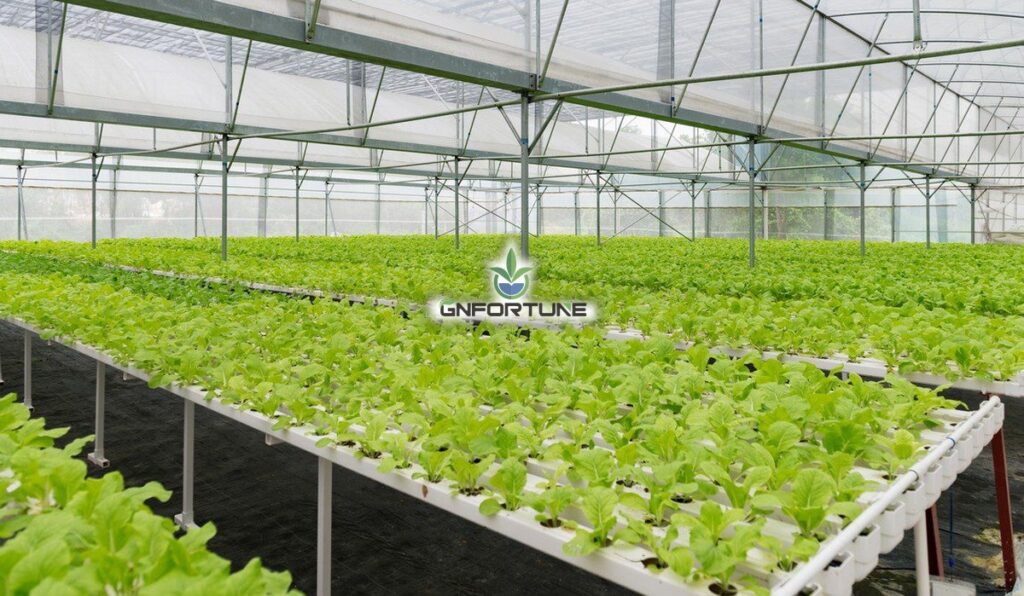
Crop choice decides the answer faster than technology. Short-cycle, low-light crops suit sealed rooms; anything vining or needing a large canopy generally belongs under glass or film.
- Microgreens and baby leaf: seven to twenty-one day cycles and low light recipes suit stacked production.
- Transplants and plugs: predictable schedules and controlled hardening make propagation a strong first step.
- Culinary herbs: basil rewards clean, controlled production, though high light recipes raise the energy bill.
Greenhouse economics stay stronger for vine crops, which need three-dimensional space that stacking cannot give cheaply, and for head lettuce where daylight covers most of the requirement.
Decision Checklist by Climate and Power Price
Run through these before committing either way. Two of them usually settle it.
- Power price: below roughly 0.06 per kilowatt-hour a sealed model can be modelled seriously; above roughly 0.15 few leafy programs survive a sensitivity test.
- Climate: hot-humid or cold-dark regions penalize vented houses and narrow the gap; mild sunny regions widen it.
- Contract terms: fixed weekly volume and tight specifications support the sealed model; spot sales do not.
- Power reliability: repeated interruptions argue for a greenhouse, or redundant supply at extra capital.
- Capital horizon: sealed rooms commonly model five to ten year simple payback; anything shorter should be stress-tested.
Model both against your own figures rather than an industry average. Realized price per kilogram and the cost of electricity at the hours lights actually run move the result most, and both are often taken optimistically at feasibility stage.
Frequently Asked Questions
Which model has lower capital per unit of capacity?
A: A greenhouse, at 250 to 550 per square meter of bed against 900 to 2,200 per square meter of tier, before multiplying by tiers.
How much electricity does sealed room lettuce use?
A: Commonly 18 to 32 kilowatt-hours per kilogram produced, with lighting responsible for most of it and dehumidification for much of the rest.
Does a sealed room always give better quality?
A: It gives more repeatable quality. That only converts to revenue where the buyer specification rewards consistency and rejects cosmetic variation.
Can an existing warehouse be converted?
A: Yes, subject to floor loading, power service, drainage, insulation and fire egress. Retrofit work often costs more than the growing equipment installed inside it.
Which crops suit vertical tier production?
A: Microgreens, baby leaf and young plants suit it best. Vine fruiting crops need canopy volume that stacking does not provide cheaply.
The plant factory vs greenhouse answer comes down to power price, climate and what the offtake contract rewards. A sealed room hydroponics project makes sense when consistency is priced in; otherwise daylight is the cheapest input available and should be used first.
Run the Numbers Against Your Site
To send your site power price and target crop and we will run the sealed room vs greenhouse numbers with you, include annual volume targets, the offtake specification and building dimensions, plus the tariff structure if lights run on a time-of-use plan.


