Cilantro, Parsley and Mint: Herbs Beyond Basil
Most commercial herb houses are laid out around basil, then asked to add cilantro, parsley and mint. Those three do not behave like basil, and a hydroponic herbs commercial programme that treats them the way loses money on all three: cilantro bolts, parsley takes two months before the first cut, and mint takes over any channel it shares. This article sets out what each crop actually needs — temperature ceiling, media depth, cut height and cycle — and how to allocate bench area between them without redesigning the house.
Why These Three Behave Differently
The differences are botanical, not cosmetic. Cilantro is a fast annual that runs to seed; parsley is a slow biennial grown as an annual with repeated cuts; mint is a spreading perennial that propagates by runners and rhizomes. Each one wants a different crop duration and a different level of containment.
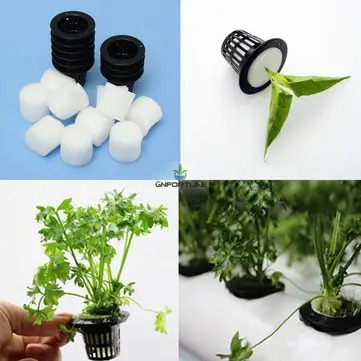
- Cilantro: short crop, one or two cuts, sensitive to heat and day length. Treat it as a fast leafy crop with a hard temperature ceiling.
- Parsley: long establishment, long productive life, many cuts. Treat it as a standing crop that occupies bench area for months.
- Mint: indefinite life, aggressive roots, frequent cuts. Treat it as a contained crop with its own water path.
Basil sits between them: warm-loving, cut repeatedly, and happy in a shared NFT channel. Once you put cilantro on the same bench at the same settings, bolting starts; put mint in the same channel and root mass becomes the problem.
Cilantro: Bolting, Cooling and Cut Timing
Cilantro hydroponics is mostly a temperature management problem. Bolting is triggered by day temperatures above roughly 24 to 26 °C combined with lengthening days, and once a plant runs to seed the leaf is unmarketable as fresh cilantro.
Hold 18 to 22 °C day and 12 to 16 °C night, and where the house cannot hold that, shade and root-zone cooling buy more than ventilation alone. Sow direct into the channel or into plugs at 50 to 100 mm spacing, run EC at 1.2 to 1.8 mS/cm, and cut at 150 to 200 mm of height.
Cycle length is 30 to 45 days from sowing in warm conditions, longer in winter light. A second cut is possible if the first cut is taken above the growing point, but most programmes sow a fresh block and take one clean cut, because regrowth leaf is smaller and the stem fraction rises.
Parsley: Slow Germination and Double-Cut Cycles
Parsley punishes anyone who plans by lettuce timelines. Germination typically takes 15 to 25 days, and the seed benefits from a soak of 12 to 24 hours in clean water before sowing, plus a steady 20 to 25 °C at the media surface. On site we often see the first failure here: trays pulled at day ten and written off as a bad seed lot.
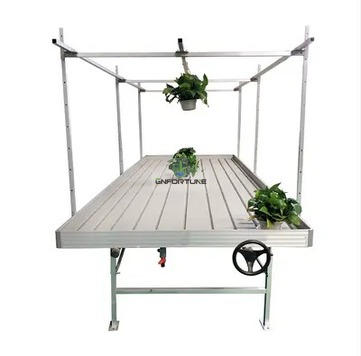
Establishment then runs five to seven weeks before transplant, and the first cut lands 60 to 80 days after sowing. After that it is a standing crop: cut every four to six weeks, four to eight cuts per plant over a six to nine month productive life, then replace.
| Parameter | Cilantro | Parsley | Mint |
|---|---|---|---|
| Day / night temperature | 18 to 22 / 12 to 16 °C | 18 to 24 / 12 to 16 °C | 18 to 26 / 14 to 18 °C |
| EC | 1.2 to 1.8 mS/cm | 1.4 to 2.0 mS/cm | 1.6 to 2.2 mS/cm |
| Sowing to first cut | 30 to 45 days | 60 to 80 days | 45 to 60 days |
| Cut height above base | 150 to 200 mm plant height | 25 to 40 mm above the crown | 30 to 50 mm above the crown |
| Cuts per crop | 1, occasionally 2 | 4 to 8 over 6 to 9 months | Every 3 to 4 weeks, indefinite |
| Spacing | 50 to 100 mm | 120 to 180 mm | 150 to 250 mm in pots |
Cut height is the variable crews get wrong. Parsley regenerates from the crown, so cutting below about 25 mm removes the growing point and the plant either dies or stalls for weeks; cutting at 40 to 60 mm leaves stem in the bunch and reduces the leaf fraction buyers pay for.
Mint: Containment and Root Spread
Mint is the one herb that should not share a recirculating loop with anything else. Rhizomes and runners move along the channel, roots fill the cross-section, and within a season the channel is blocked and neighbouring plants are crowded out.
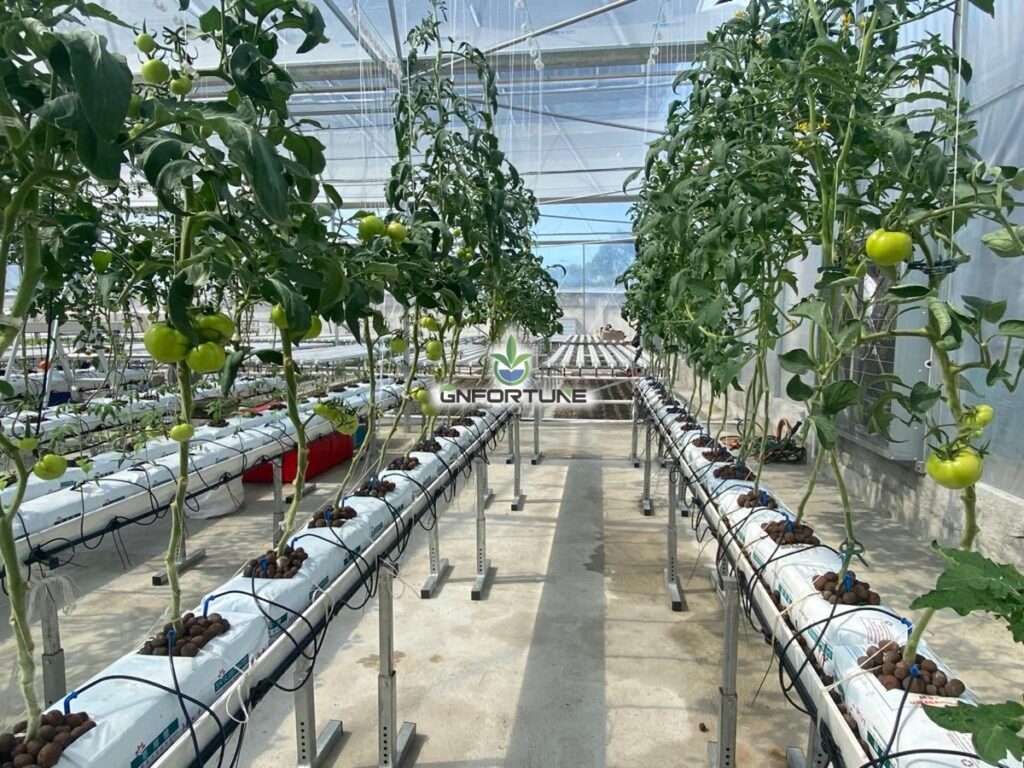
- Grow it in containers: pots, Dutch buckets or slabs, one cultivar per unit, with a physical barrier between units.
- Keep the return separate: a dedicated tank, or drain-to-waste, so root fragments and exudates do not reach the lettuce or basil loop.
- Cut often: every three to four weeks at 30 to 50 mm above the crown, since mint regrows vigorously and long growth becomes woody.
- Replace on a schedule: plan a full reset every 12 to 18 months, because old stools lose vigour and carry disease.
Mint in a shared NFT channel is the failure mode we keep meeting on herb farms, and it always ends the same way. Roots bridge the channel, flow drops at the far end, the plants nearest the inlet drown in root mass while the tail end dries, and the fix is to strip the channel and start again — during a delivery week.
Bench Allocation: One Crop or Mixed?
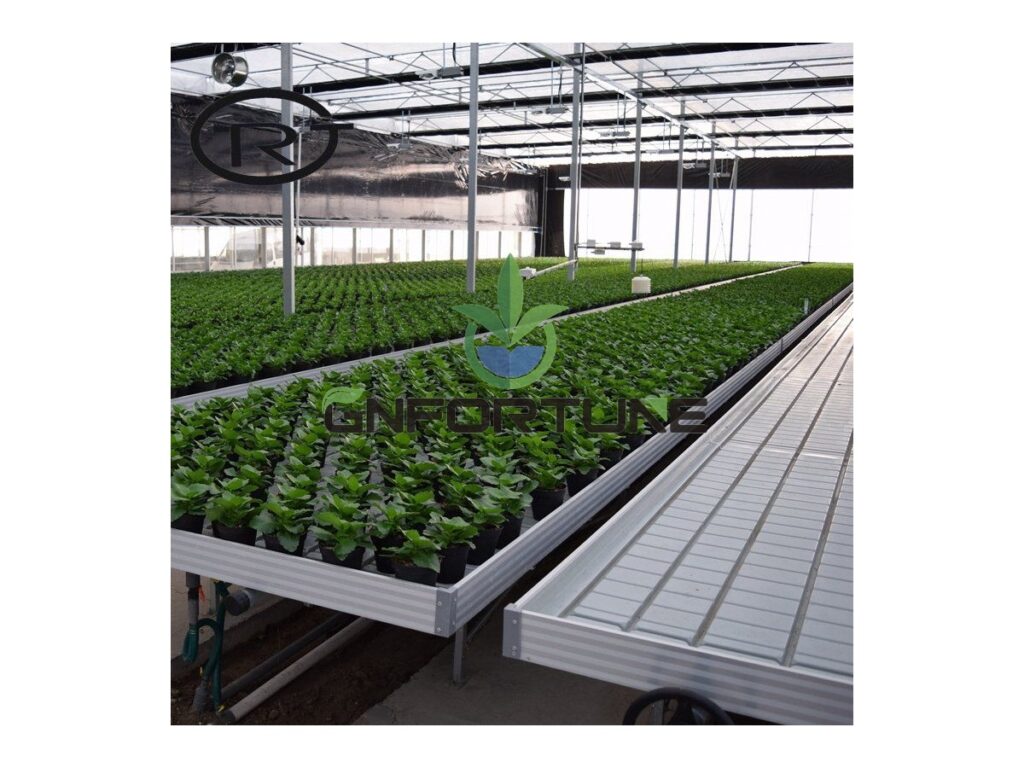
Bench allocation follows the water and the calendar, not the crop list. Herbs sharing a tank must share an EC band and a harvest rhythm; herbs on different cycles should sit on different benches with different tanks.
| Layout | Suited to | Tank / loop | What it costs |
|---|---|---|---|
| Single-crop bench | Parsley standing crop, mint blocks | Own tank and feed programme | More tanks, simplest control |
| Mixed bench, one band | Cilantro with basil at similar EC | Shared tank, matched EC | Fewer tanks, tighter scheduling |
| Container zone | Mint, and any cultivar trial | Separate return or drain-to-waste | Extra floor per plant |
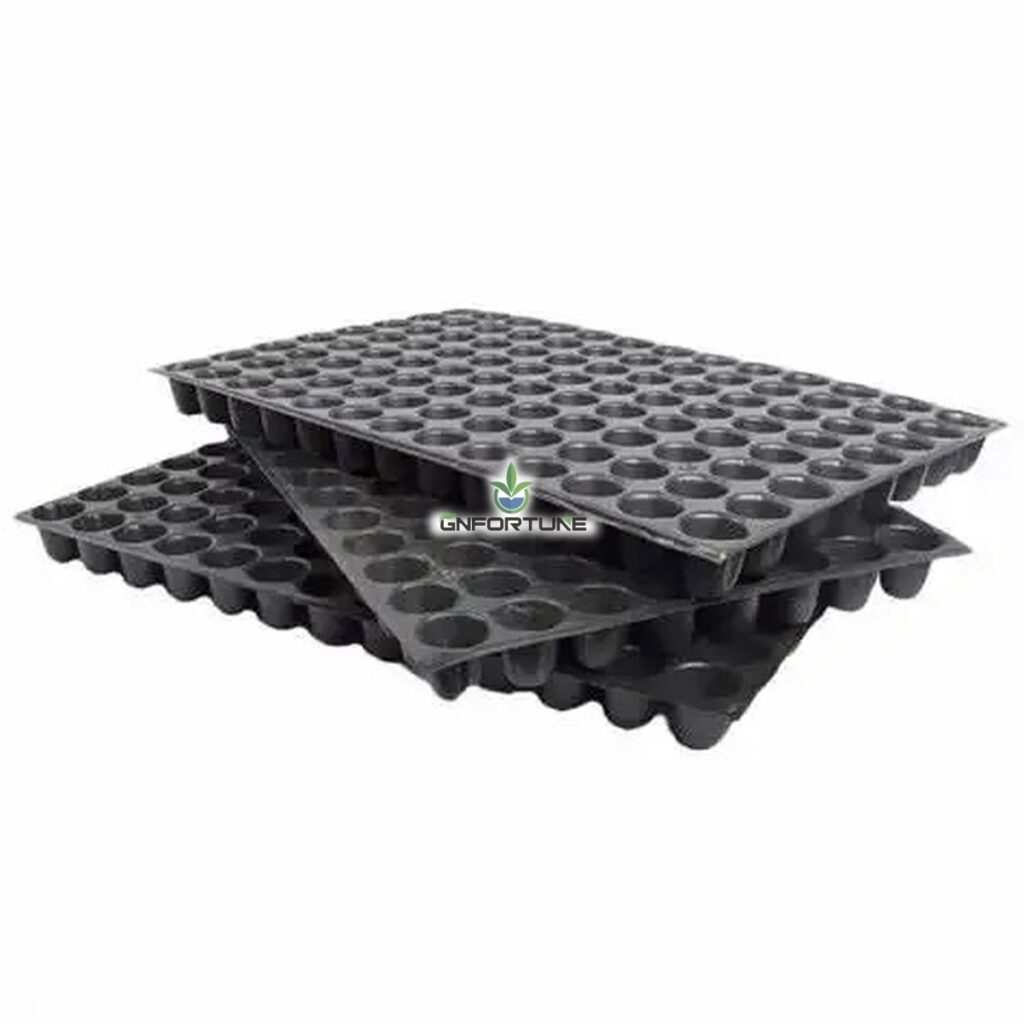
| Nursery corner | Parsley plugs, replacement blocks | Shared with propagation | Bench area held year round |
Parsley occupies bench area for months, so it behaves like a capital commitment: a bench given to parsley in March is not available for a fast crop in June. Plan parsley blocks on a rolling replacement calendar rather than a single planting, and use the crop scheduling method for continuous production to keep the cut volume steady across the year.
Propagation is the other allocation question. Parsley’s slow start means plugs must be sown weeks ahead of the block they fill, which is where the buy-plugs-versus-own-nursery comparison becomes a real decision rather than a costing exercise.
Washing, Bunching and Shelf Life
Herbs are sold as bunches or as packed leaf, and both routes need a defined wash step. Cut herbs carry soil-free but not debris-free leaf, and washing is where a good crop is either protected or lost.
- Wash water: keep it cold, 1 to 4 °C, and monitor sanitiser residual, since warm wash water drives bacterial load onto leaf that is already damaged by cutting.
- Drying: spin or forced-air dry before packing; free water in the bag shortens shelf life more than any other single factor.
- Bunching: bunch at a fixed weight and stem length, with the cut end aligned, so the pack line runs to a rate rather than a judgement.
- Cold chain: move to 0 to 4 °C within about 30 minutes of cutting.
Typical shelf life at 0 to 4 °C runs 7 to 10 days for cilantro, 14 to 21 days for parsley and 7 to 14 days for mint, and figures vary by region and season with cultivar and handling. Wash water control limits are set out in the wash water sanitation guide.
Frequently Asked Questions
Why does cilantro bolt in a hydroponic house?
A: Day temperatures above roughly 24 to 26 °C with lengthening days trigger seed running. Hold 18 to 22 °C day and 12 to 16 °C night.
How long does parsley take to first cut?
A: 60 to 80 days from sowing, including five to seven weeks of establishment. Germination alone takes 15 to 25 days.
Can mint share an NFT channel with basil or lettuce?
A: No. Rhizomes block the channel and crowd out neighbours. Grow mint in pots or buckets on a separate return.
How high should parsley be cut?
A: 25 to 40 mm above the crown. Cutting lower removes the growing point and the plant stalls for weeks.
What EC do culinary herbs run at?
A: Cilantro 1.2 to 1.8 mS/cm, parsley 1.4 to 2.0, mint 1.6 to 2.2, all above the lettuce range.
Request an Herb Bench Layout Quote
A hydroponic herbs commercial layout is decided by three things: the temperature ceiling your house can hold, which decides whether cilantro runs at all; the bench-months parsley consumes; and whether mint gets a contained zone with its own return. Basil equipment carries over to cilantro with a spacing and scheduling change, but the other two need bench area and tanks planned from the start.
Send the crop split, weekly bunch or weight target, house temperature range and available bench area, and the engineering team will return a bench allocation, tank count and propagation schedule. To request an herb bench layout quote, state which herbs you intend to run and whether mint is on the list, since that decision changes the pipework.