Germination Chambers and Propagation Room Setup
A germination chamber is a sealed, heated enclosure that carries sown trays from water uptake to radicle emergence, in the dark and at near-saturated humidity. The propagation room is where emerged seedlings grow to transplant size under light and moving air. Running both jobs in one room is the most common reason a propagation room setup produces uneven plugs: the chamber wants close to 100% relative humidity and no air movement, the bench wants 65% and a steady breeze. This guide covers the control targets for each stage, the bench options and how to size both against a transplant schedule.
Two Stages: Germination vs Propagation
Treat germination and propagation as two spaces with two control targets, because the settings that crack a seed are the settings that rot a seedling. Germination runs 2 to 7 days with near-saturated air and no light; propagation runs 14 to 28 days with light and moving air.
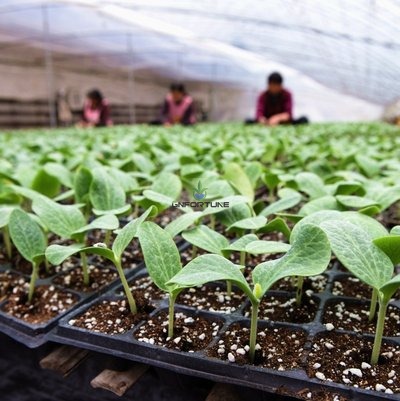
The handover point is radicle emergence, when roughly 60 to 80% of cells show a root tip. Move the whole batch then: trays held past that point give leggy plugs that transplant badly.
Germination Chamber Settings: Temperature, Humidity and Darkness
Three variables decide germination speed and uniformity: temperature, humidity and whether light reaches the tray. A chamber holds all three tighter than a room can.
| Parameter | Germination stage | Propagation stage | Why it matters |
|---|---|---|---|
| Air temperature | 20 to 26 °C leafy and herbs; 25 to 30 °C warm-season crops | 18 to 24 °C day, 15 to 18 °C night | Sets speed and stem extension |
| Relative humidity | 90 to 100% | 60 to 75% | Stops seed drying, then dries foliage |
| Light | Dark, or below 20 µmol per m² per s | DLI 8 to 14 mol per m² per day | Not needed to crack seed, vital after |
| Air movement | Near zero | 0.2 to 0.5 m per s across the canopy | Still air in the chamber, moving air on the bench |
| Duration | 2 to 7 days | 14 to 28 days | Sets how many trays the room holds |
Temperature drives speed, but uniformity across the chamber drives the sowing-to-transplant window. A chamber with a 1 °C spread germinates in a tighter band than one with a 4 °C spread running 2 °C hotter. Measure at shelf level at the tray edge, not at the controller probe.
Hold 90 to 100% RH with the medium moist and no free water on the surface; a sealed chamber keeps that without fogging if trays are watered at sowing. Add a humidifier only if the door opens several times a day. Darkness is the default, since most commercial lettuce, brassica and herb seed does not need light to germinate, and lights over a sealed tray bring surface drying and algae.
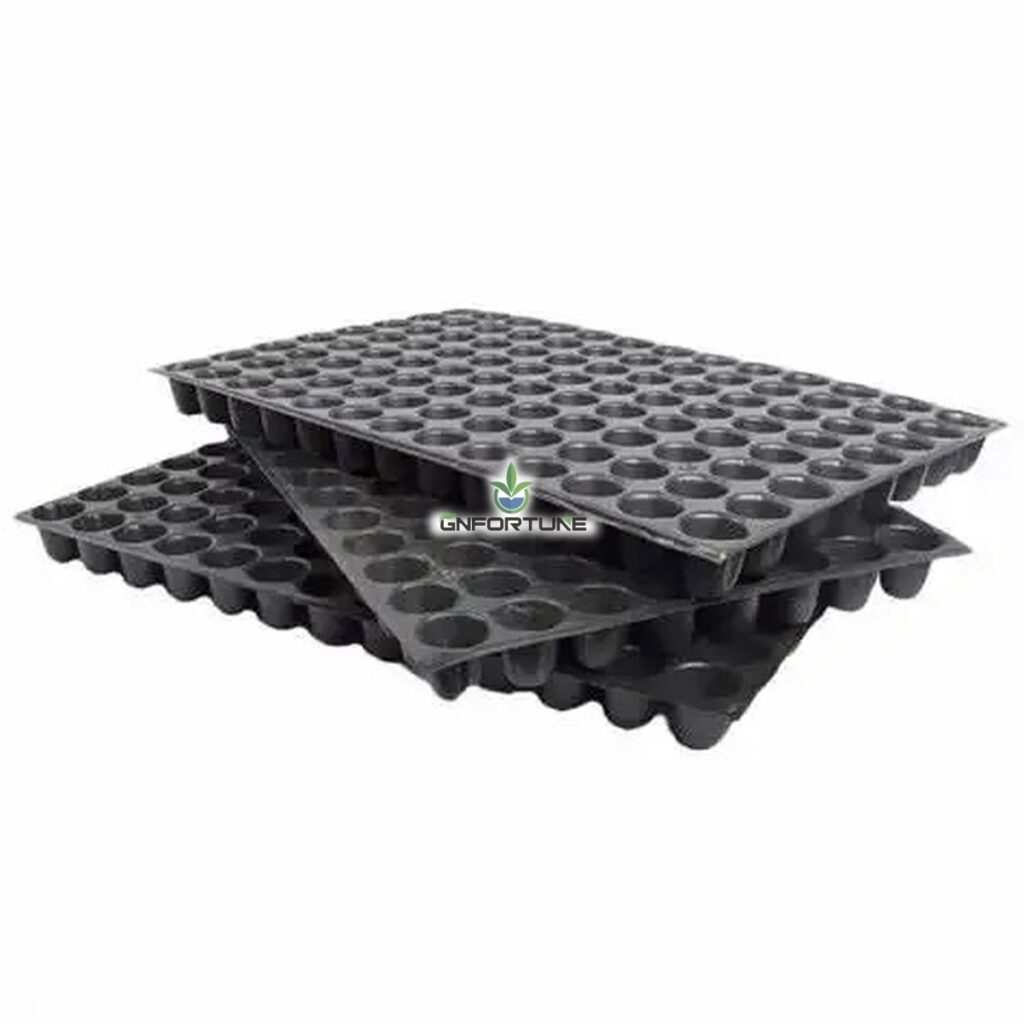
Media choice ties to this stage. The rockwool plug formats used for propagation set how much water a cell holds and how fast it dries; cell count and tray footprint sit in the plug tray buying guide.
Bench Options: Fixed, Flood and Rolling
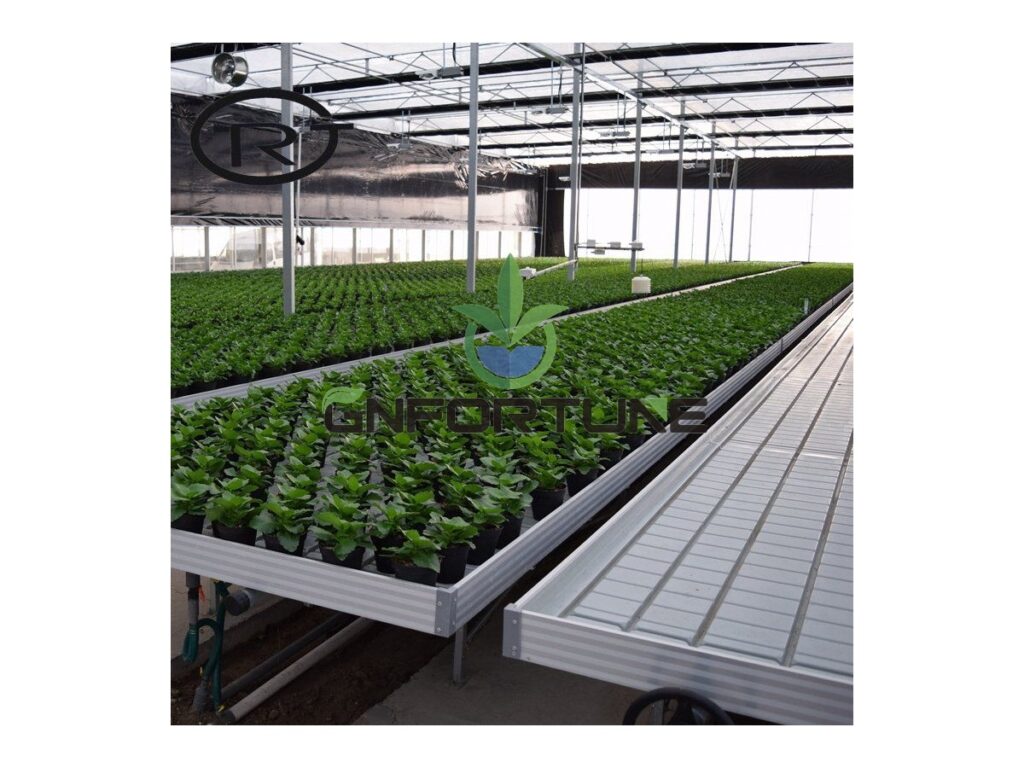
Choose the bench by what travels over it: trays, people, or water. Fixed is cheapest and wastes the most floor, rolling gives aisle area back, and flood puts irrigation underneath and removes the overhead watering step.
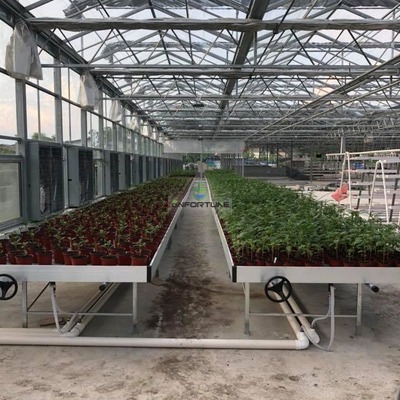
| Bench type | Typical width | Usable floor area | Requirements | Best fit |
|---|---|---|---|---|
| Fixed bench | 1.2 to 1.8 m | 60 to 65% | Frame, mesh or solid top, one aisle per bench | Small rooms, tight budgets |
| Flood / ebb-and-flow | 1.2 to 1.5 m | 60 to 70% | Level frame, tank, 15 to 25 mm flood depth | Uniform watering, labour saving |
| Rolling bench | 1.2 to 1.8 m | 80 to 85% | Level floor, rails rated for wet load, end turning space | High throughput, costly floor |
A flood bench needs a level frame, a tank sized to the flood volume and a drain-back short enough that roots are not left standing. Typical practice is 15 to 25 mm over the tray base held 5 to 15 minutes, once to four times a day. The frame has to be level within a few millimetres across its length, or one end floods while the other stays dry.
Rolling benches buy floor back by serving a bank with one aisle, and they need a level floor plus rails rated for the wet load. Construction and tank sizing sit in the flood tray and ebb-and-flow bench guide.
Light: When Seedlings Need It and DLI Targets
Seedlings need light from the day they emerge, and the number to design to is daily light integral, not lamp wattage. Target a DLI of 8 to 14 mol per m² per day for most transplant plugs, delivered as 150 to 250 µmol per m² per second over a 16 to 18 hour photoperiod.
Below roughly 6 mol per m² per day, plugs stretch and never catch up; above about 16, growth flattens while the power bill climbs. Measure the fixture layout at tray surface height and re-check it each season, since output falls with hours of use.
Fixture height and uniformity matter as much as the average: hang LEDs 30 to 60 cm above the canopy and aim for a uniformity ratio above about 0.7 across the bench. The greenhouse lighting guide on PPFD and DLI covers the units.
Airflow and Disease Pressure
A propagation room is the wettest, densest space on a farm. Damping-off needs no vector, only still air, a wet surface and a canopy that never dries. The control is continuous air movement, not a fan aimed at one bench.
- Air speed: 0.2 to 0.5 m per second across the canopy, enough to break the boundary layer without chilling plugs.
- Circulation: move air within the room rather than exchanging with the corridor, so what reaches the plugs is filtered.
- Water timing: irrigate early so foliage dries before dark; a wet canopy overnight is where losses begin.
- Spacing: thin trays as plugs grow, since a closed canopy holds humidity the ventilation cannot remove.
Size the chamber from the weekly transplant number, then check it against the floor plan — never the other way round. On site the failure mode we keep meeting is a germination chamber bought to fit the space left over, then run with the door propped open because it cannot hold one sowing batch. Buy against the plant number.
Moving Trays: Trolleys and Routes
Tray movement is a floor-area problem before it is a labour problem. A standard nursery trolley occupies roughly 1.3 by 0.7 m and carries a dozen to twenty trays, and its route sets aisle width everywhere.
Set routes one-way where volume justifies it: sowing, chamber, propagation bench, then out to the production house. Keep the chamber at the clean end and the loading door at the dirty end, since routes that cross at one door carry disease back into clean trays.
Turning space is the number that gets missed: a loaded trolley needs about 1.5 to 1.8 m to turn into an aisle at a right angle. Specify that at the end of every bench bank.
Sizing the Room to the Planting Schedule
Work backwards from transplants per week: divide by usable cells per tray, multiply by days in stage, then convert tray area to floor at your tier count.
Worked example: a farm transplanting 40,000 plants per week in 128-cell trays at 90% usable fill needs about 350 trays per week. Germination at 3 days means a chamber of 160 to 350 tray places, depending on whether sowing runs once or twice weekly. Propagation at 21 days holds about 1,050 trays at once; at 0.24 m² per tray that is 70 to 85 m² of floor on three to four tiers, or 100 to 110 m² with aisles.
Two checks before the drawing goes out: whether the chamber and bench share a wall and a door, saving every tray a corridor trip; and whether bought-in plugs are cheaper at this volume. The buy-plugs-versus-own-nursery comparison runs the same numbers from the cost side, and short-cycle crops such as direct-sown baby leaf may not need the room at all.
Frequently Asked Questions
What temperature should a germination chamber run at?
A: 20 to 26 °C for leafy crops and herbs, 25 to 30 °C for warm-season fruiting crops. Uniformity across shelves matters more than the setpoint.
How long do trays stay inside the chamber?
A: Two to seven days, until roughly 60 to 80% of cells show a radicle. Move the whole batch then, since holding trays past emergence produces stretched plugs.
Do seedlings need light during germination?
A: Most commercial lettuce, brassica and herb seed germinates in darkness. From emergence, target a DLI of 8 to 14 mol per m² per day.
How wide should propagation room aisles be?
A: About 0.9 to 1.2 m for hand work between benches, and 1.5 to 1.8 m where a loaded trolley must turn. Set that space at the end of every bench bank.
How do I size a propagation room?
A: Divide weekly transplants by usable cells per tray, multiply by propagation days, convert to floor at your tier count, then add about 30% for aisles.
Request a Propagation Room Layout Quote
A germination chamber and propagation room setup comes down to three numbers: weekly transplant count, days in each stage, and the tray format you run. Get those right and bench type, chamber volume and floor area follow. Send the transplant schedule, tray size, crop mix and available floor, and the engineering team will return a chamber volume, bench layout and tier count.
To request a propagation room layout quote, include the weekly plant number and whether sowing runs once or twice a week, since that choice sets the chamber tray capacity.