
An aeroponic growing system has almost no buffer. Roots hang in air and depend on a mist event arriving every few minutes, so the tolerance that a raft bed or a media slab provides simply is not there. That single fact sets the specification: nozzle droplet size, mist interval, pump duty rating, and filtration grade are not comfort features on this equipment, they are the difference between a crop and a loss. Buyers who evaluate a package on column count and price per port miss the four items that decide uptime, and they discover it during the first power event.
Nozzles Decide Everything in an Aeroponic Growing System
Droplet size is the specification to ask for first. Fine droplets stay suspended long enough to wet the whole root mass; coarse droplets fall out, wet the top of the root zone, and leave the lower roots dry even though the pump ran. Ask the supplier for droplet size at rated pressure, orifice diameter, and the filtration grade the nozzle requires, in writing.
| Misting class | Operating pressure | Droplet size | Filtration needed | Typical use |
|---|---|---|---|---|
| Low-pressure mist | 2 to 5 bar | 50 to 150 micron | 120 mesh plus 50 micron cartridge | Towers and columns, simpler pump set |
| High-pressure fog | 40 to 70 bar | 10 to 30 micron | 5 micron absolute,RO-treated feed | Root chambers needing saturation |
| Ultrasonic | Atmospheric | Under 10 micron | Clean feed, low solids | Small chambers, propagation |
Nozzle hardware details matter as much as the class. Orifice materials are usually stainless or ceramic in a brass or engineering-polymer body; the orifice is what erodes, so a spare set is a consumable, not an option. Anti-drip check valves stop a nozzle from weeping between cycles, and a weeping nozzle is the usual cause of a root zone that stays too wet at the base and too dry at the top.
Pump Head, Pressure and Duty Cycle
Aeroponic pumps run in short bursts, many times an hour, which is a harder duty pattern than continuous circulation. The pump has to reach working pressure within the first second or two of each burst, hold it for the cycle, and then stop cleanly. Ratings to confirm: pressure at the nozzle manifold rather than at the pump outlet, allowable duty cycle percentage, start-stops per hour, and thermal protection.
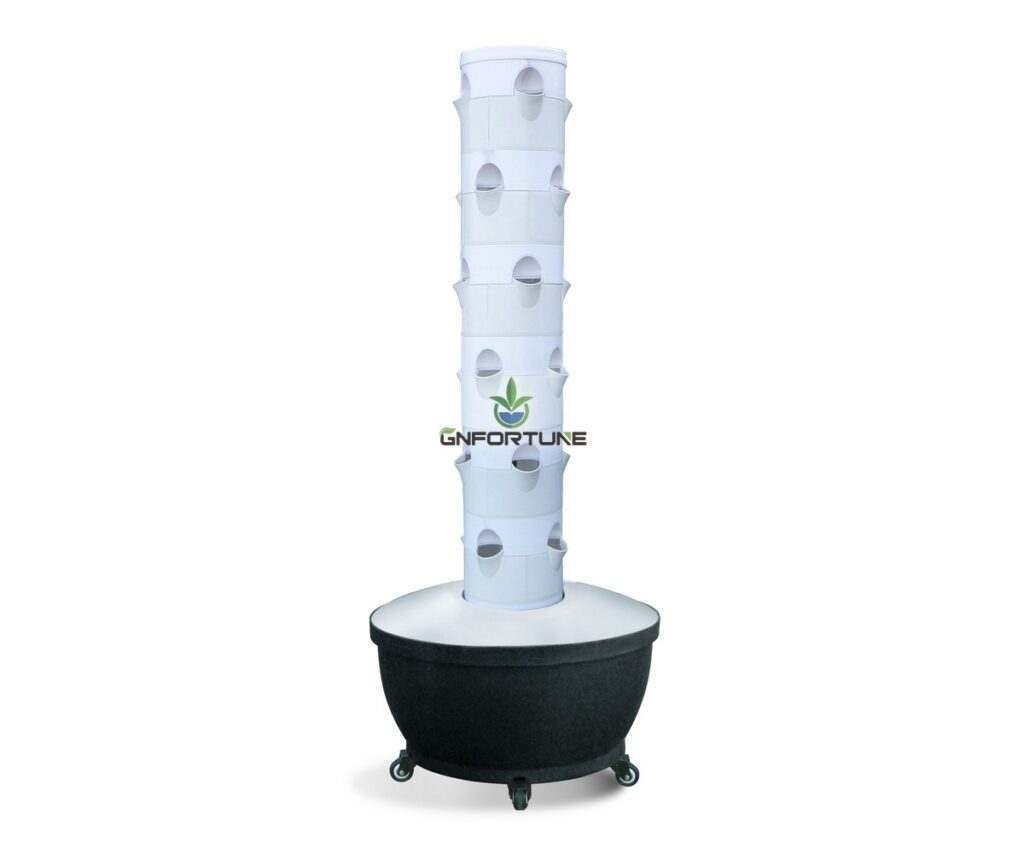
| Item | Spec to confirm | Typical range |
|---|---|---|
| Mist interval | On time and off time, adjustable | A few seconds on, every 2 to 10 minutes |
| Pump pressure at manifold | Measured, not nominal | 2 to 5 bar mist; 40 to 70 bar fog |
| Duty cycle rating | Start-stops per hour and run percentage | Sized to the interval programme with margin |
| Accumulator | Volume and pre-charge | Holds pressure between bursts |
| Redundancy | Second pump on auto changeover | Two pumps above roughly 50 columns |
| Filtration | Stage count and grade | Finer than one third of the orifice |
| Controller | Interval programme plus alarms | Low-pressure and no-flow alarm outputs |
Sizing the pump against column count and manifold length is the same exercise as any pressurised mainline, with the addition of the accumulator; the pump sizing and redundancy guide covers the head and flow calculation, and vertical system packages show how the manifold is usually arranged.
Mist Interval Controls and Backup
The interval controller is a process controller, not a wall timer. It should store a programme by crop stage, log missed cycles, and raise an alarm when pressure does not build. Battery-backed memory matters, because a controller that resets to default after a power cut can leave a tower standing dry until someone walks past. On site we often find intervals set once at commissioning and never revisited, so the programme that suited a young root mass is still running when canopy and transpiration demand have doubled.
Backup is where commercial sets separate from demonstration units:
- Second pump on automatic changeover, with a run-hour counter so duty is shared.
- Uninterruptible supply on the controller and solenoid valves, so a short outage does not stop misting.
- Accumulator sized for several mist cycles, giving a few minutes of cover after a pump trip.
- Low-pressure and no-flow alarms wired to a visible annunciator, rather than to a dashboard alone.
Root Chamber Geometry
Chamber geometry decides whether the mist reaches every root. Points to check: nozzle-to-root distance, which sets how much of the spray cone is useful; chamber volume relative to the root mass, which sets how fast the chamber saturates; and drainage, because any solution that pools at the base becomes a stagnant zone rather than a reservoir.
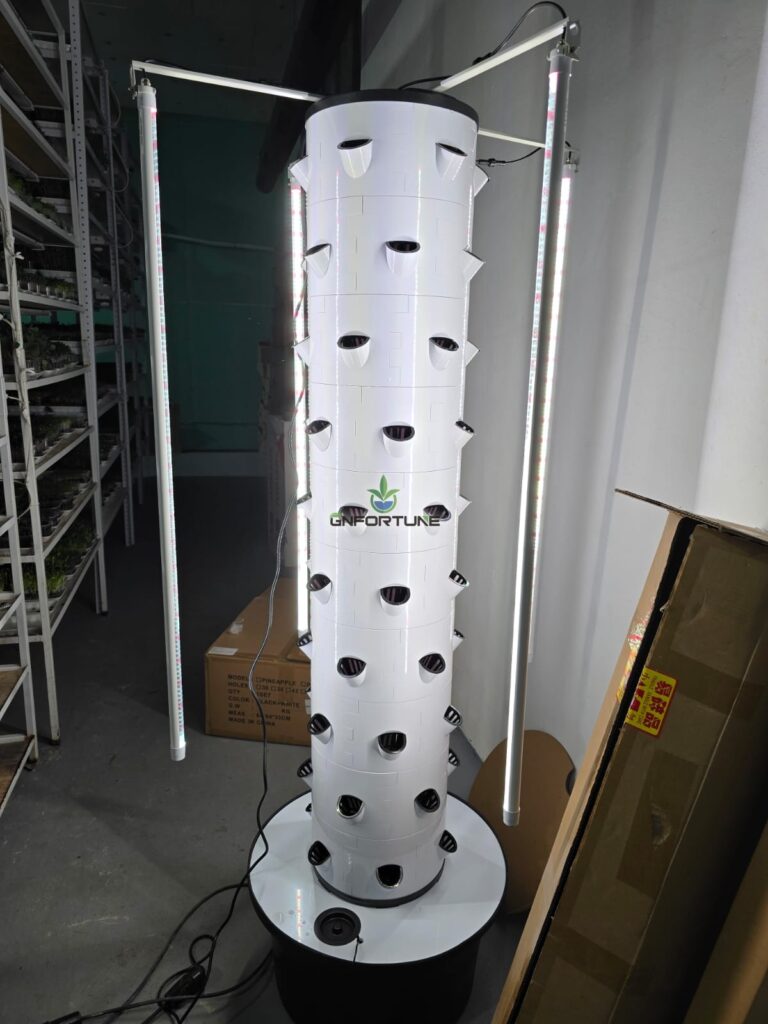
Light exclusion and access are the two geometry items that get missed. A chamber that cannot be opened for inspection hides a blocked nozzle until the crop shows stress, and a chamber that admits light grows algae on every wet surface inside it, which then feeds the nozzle blockage problem.
Filtration Before the Nozzle
Filtration must be finer than a third of the nozzle orifice, and that single rule rules out most single-stage designs on raw water. A practical train is a sediment stage for the heavy fraction, a cartridge stage at the grade the nozzle needs, and a strainer at the manifold. Where the feed carries high dissolved solids, treatment upstream is the cheaper answer than replacing nozzles; the water treatment guide sets out the options.
Monitor the differential rather than the calendar. Once pressure drop across the cartridge rises meaningfully above its clean value, flow at the far nozzles drops and those towers mist weakly while the gauge at the pump still looks normal.
Failure Points and Spares
Aeroponic equipment fails in a predictable order: nozzles partially clog, check valves stick, pressure switches drift, then pump seals wear. Stocking against that order is cheap insurance.
- Nozzles: hold 10 to 20 percent of installed count as spares, plus a full orifice set.
- Check valves and strainers: one spare per manifold.
- Filter cartridges: one complete spare set, changed on differential.
- Pump seal kits and a spare pressure switch: the two items that end a mist cycle.
- Spare controller: one per site on installations above a few dozen columns.
The failure that costs the most on aeroponic installations: a half-clogged nozzle does not stop misting, it changes the spray pattern. Droplets get coarser, the lower root mass dries, and the crop looks healthy for two or three days before it collapses. Weekly nozzle inspection with a spare at hand is cheaper than any monitoring system.
Uptime is the metric to buy against, and it is worth stating as a number in the purchase order: mist availability per month, with the alarm and changeover arrangements that deliver it. Packages that cannot quote that number are usually packages without redundancy, and the tower mist and uptime guide explains what the duty pattern looks like in service. For a comparison against other system types before committing, see the aeroponic, hydroponic and aquaponic comparison.
FAQ
What droplet size should commercial aeroponic equipment produce?
A: Low-pressure mist usually falls at 50 to 150 micron and high-pressure fog at 10 to 30 micron. Ask for the figure at rated pressure, since it changes with pressure and wear.
How often should towers mist?
A: Commonly a few seconds every 2 to 10 minutes, adjusted by crop stage and root mass. The programme should be revisitable on the controller, not fixed at commissioning.
What filtration grade is needed before the nozzles?
A: Finer than one third of the orifice, which for fine nozzles usually means a cartridge stage at a few micron preceded by a sediment stage.
Does a commercial set need a second pump?
A: Yes above roughly 50 columns, or wherever a pump trip would dry the root zone before staff respond. Automatic changeover with shared duty hours is the standard arrangement.
How long can roots survive without mist?
A: Minutes rather than hours in a warm house with a full canopy. That is why accumulator volume, controller backup power, and alarms are specified together rather than separately.
Request an Aeroponic Package Quote
Send column count, canopy plan, water analysis, and the uptime target, and the specification comes back as a nozzle class, pump duty, filtration train, and spares list rather than a column count alone. An aeroponic grow system should be quoted on mist availability, because that is what the crop is buying. Use the request an aeroponic package quote form with those four inputs.


