

Farms that manage one temperature usually manage neither. The air thermostat reads 21 °C, the control screen looks comfortable, and meanwhile the solution running through sun-warmed pipe sits eight degrees warmer than anyone intended — or a winter tank has pulled the root zone down to a level the crop never agreed to. Root zone and air temperature are genuinely separate targets: they respond to different inputs, move at different speeds, and need different instruments to measure honestly. Heating equipment selection is a separate subject; this article covers the two targets themselves, what each one does to the crop, and the measurement habits that stop the second temperature from being guessed.
Why Root Zone and Air Temperature Move Separately
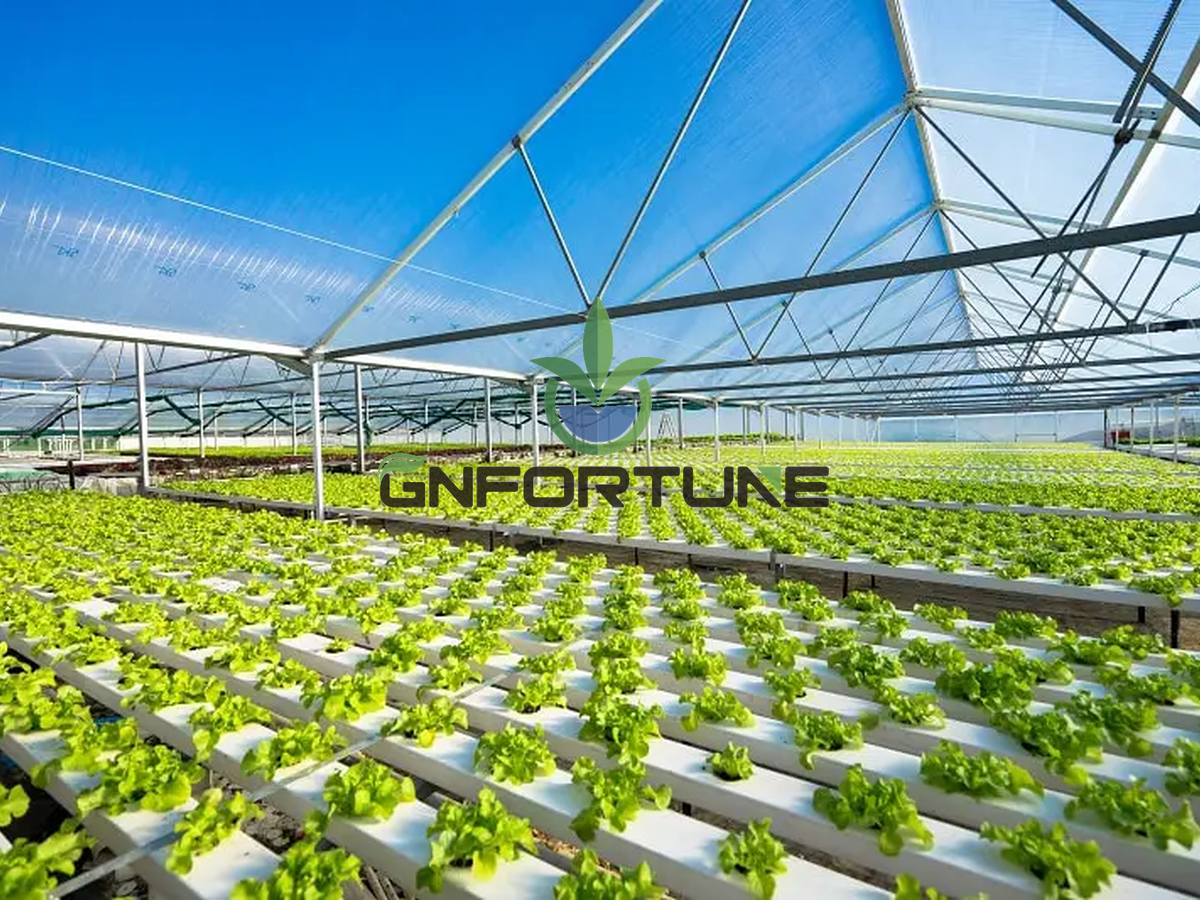
The air in a greenhouse is light, well-mixed and fast to change. It tracks vents, screens and radiation hour by hour, which is why a single screen-level sensor can follow it usefully. The root zone is the opposite: solution in tanks, channels and substrates carries far more thermal mass, and media in slabs or buckets warms and cools slowly. As a planning range, a low-volume NFT bay can see solution temperature rise 2–4 °C between morning and mid-afternoon under a warm cover, assuming 100×50 mm channels and no heating or chilling — while air at screen height swings 10 °C or more across the same day.
That asymmetry is the practical difference. Air can be corrected within an hour by opening a vent; a tank that has drifted warm takes many hours to pull back even with chilling, which is why the two targets are set and watched separately rather than lumped into one control loop.
What Root Zone Temperature Does to the Crop
Root zone temperature governs the chemistry and biology at the point of uptake. Three effects dominate:
- Oxygen holding: warmer solution carries less dissolved oxygen while root respiration demand rises — the classic root-rot combination when a warm film sits still.
- Uptake rates: roots take up water and nutrients fastest in a comfortable band. For leafy crops, a planning range of roughly 18–22 °C is a common starting point, assuming recirculating solution and normal EC; cold roots in a warm house show as slow growth and tipburn, because transpiration runs ahead of what the roots can supply.
- Pathogen pressure: several root-rot organisms accelerate in warm solution, so root zone temperature is a disease lever as much as a growth one.
The crop senses the root zone where its roots are — in the channel film, the slab or the bucket media — not in the tank. Tank temperature is a proxy that drifts from the real thing by several degrees on sunlit runs, which is the measurement problem taken up below.
What Air Temperature Does to the Crop
Air temperature drives the above-ground side: transpiration rate, development speed, and the shoot-root balance some growers steer deliberately. It is also the input behind VPD, since humidity targets only mean anything against a stated air temperature. Two distinct values matter:
- The 24-hour mean: set by heating and screening, it largely determines how fast the crop moves from transplant to harvest. Chasing a daily average beats chasing one afternoon reading.
- The day-night difference: a deliberate gap between day and night air temperature shapes stem elongation and head firmness, and growers who steer with it track it explicitly rather than leaving it to the weather.
Where the two temperatures disagree, symptoms appear quickly. Warm air over cold roots produces limp, calcium-starved growth on leafy crops; warm roots under cold air waste energy pushing solution the canopy cannot use. Reading the pair together is more diagnostic than reading either alone.
Measuring the Two Honestly
Each target needs its own instrument in its own place, and the placement errors are different:
- Air: an aspirated or shielded sensor at canopy height in a representative bay, away from vents, heaters and direct sun. A sensor bolted to a wall or left in a non-aspirated box reads the box, not the house — the guide to sensor placement catalogues the failures.
- Solution: measure in the supply line feeding the channels rather than only in the tank, because sun-exposed pipework shifts the temperature between the two points. A return-line probe adds the second half: how much heat the house put into the solution during its circuit.
- Substrate: on slabs or coir, a probe at mid-slab depth reads the actual root environment. Slab temperature lags both air and incoming drip solution, and on cold floors it can sit well below both.
Handheld meters close the loop: a weekly comparison against a calibrated handheld catches drift early, and the handheld-versus-fixed-sensors comparison covers the division of labour.
When the Two Targets Conflict
The two targets fight each other at the edges of the season, and the resolution differs by direction:
- Cold season: air may be held modest for energy reasons while the root zone is allowed to fall. A closed thermal screen overnight lifts canopy air and slows solution cooling; solution heating in the tank targets the root zone directly at lower cost than heating all the air. Hold the root zone in crop range before polishing the air number.
- Hot season: air is limited by what ventilation and shade can deliver, and the root zone risks running past the top of the band. Solution chilling sized for the tank and line load is the usual lever; the chiller sizing guide walks through the arithmetic.
- Transition seasons: clear spring days heat exposed supply runs faster than the tank control reacts. Insulation on sunlit pipe plus a return-line probe usually flattens the excursion more cheaply than adding capacity.
The sequence is the same in all three cases: decide the root zone band first, because uptake lives there, then spend the remaining energy budget on the air target.
Side-by-Side: Setting and Watching Each Target
The comparison below is the version worth pinning in the control room. It assumes a recirculating NFT or substrate system in a naturally ventilated house; DWC beds and sealed rooms shift the numbers and the levers.
| Aspect | Root zone temperature | Air temperature |
|---|---|---|
| Planning band, leafy crops | Roughly 18–22 °C, assuming recirculating solution and normal EC | Day 20–25 °C and night 16–19 °C as a common starting frame, adjusted by crop |
| What moves it | Tank temperature, sunlit pipework, chiller or heater, media depth | Vents, screens, heating, radiation, external weather |
| Speed of change | Slow — hours, thanks to water and media mass | Fast — minutes to an hour |
| Instrument | Supply and return line probes; mid-slab probe for substrate crops | Aspirated sensor at canopy height, one per representative zone |
| Failure symptom when ignored | Slow growth, tipburn, root disease in warm solution | Bolting, leggy growth, VPD and disease swings |
| First lever when off target | Solution heating or chilling; pipe insulation | Screen and vent sequence; heating setpoint |
Root zone and air temperature reward being written down as two separate setpoints with two separate probes, because the day one silently drifts is the day the crop explains the difference through symptoms nobody budgeted for.
FAQs About Root Zone and Air Temperature
Can one temperature sensor serve both targets?
No. An air sensor at screen height cannot read a channel film or a slab, and a line probe cannot read the canopy. Keep one aspirated air sensor per representative zone plus a supply-line solution probe, and add a substrate probe where crops run on media.
Is tank temperature a good enough proxy for root zone temperature?
On short, shaded runs, sometimes. On sunlit pipework the supply line can sit several degrees above the tank by mid-afternoon, so a return or supply probe is the honest measurement. Log the tank reading as context, not as the control input.
What root zone temperature should we hold for lettuce?
A planning range of roughly 18–22 °C is a common starting point for leafy crops in recirculating systems, assuming normal EC and adequate dissolved oxygen. Cold water holds more oxygen, so the lower edge is safer than the upper edge for disease, but uptake slows as it falls.
Why do we see tipburn when the air is warm and the roots are cold?
Warm air drives transpiration and calcium transport demand, while cold roots cannot supply water fast enough, so the fast-growing leaf tips starve. Lifting the root zone into range is usually the effective correction, rather than cooling the air further.
Which target do we fix first when both are off?
The root zone, because uptake biology and dissolved oxygen sit there and correction is slower, so it needs the head start. Then spend what remains of the energy budget on the air target through screens, vents and heating.
Related Reading
- Greenhouse Heating for Hydroponics: Root Zone Temperature and Winter Energy — The equipment side of holding the root zone band
- Hydroponic Water Chiller Sizing: Nutrient Temperature Control — Chilling capacity when the root zone runs hot
- Sensor Placement: Where Readings Go Wrong — The placement errors behind misleading air readings
- Thermal Screens for Hydroponic Greenhouses — The screen lever behind the night air target
- Handheld Meters vs Fixed Sensors in Hydroponics — How the two measurement layers check each other
Next Step: What to Send for a Quotation
Heating, chilling and sensing are quoted as separate packages by different suppliers, and the gap between them is exactly where the second temperature goes unmanaged. Specifying the pair together is what makes the setpoints real.
Specifying temperature control for a commercial house? For RFQ or project consultation, send: greenhouse dimensions and number of independent zones; system type and total solution volume per zone; pipe routing between tank and channels; target root zone and air bands for the crop; winter design temperature and summer peak at the site; whether solution heating, chilling or both are planned; sensor and automation level wanted; delivery schedule; and the budget band. G AND N FORTUNE LIMITED supplies channels, tanks, matched heating and chilling and sensor packages quoted to those parameters.


