

The Site Decides Things You Cannot Fix Later
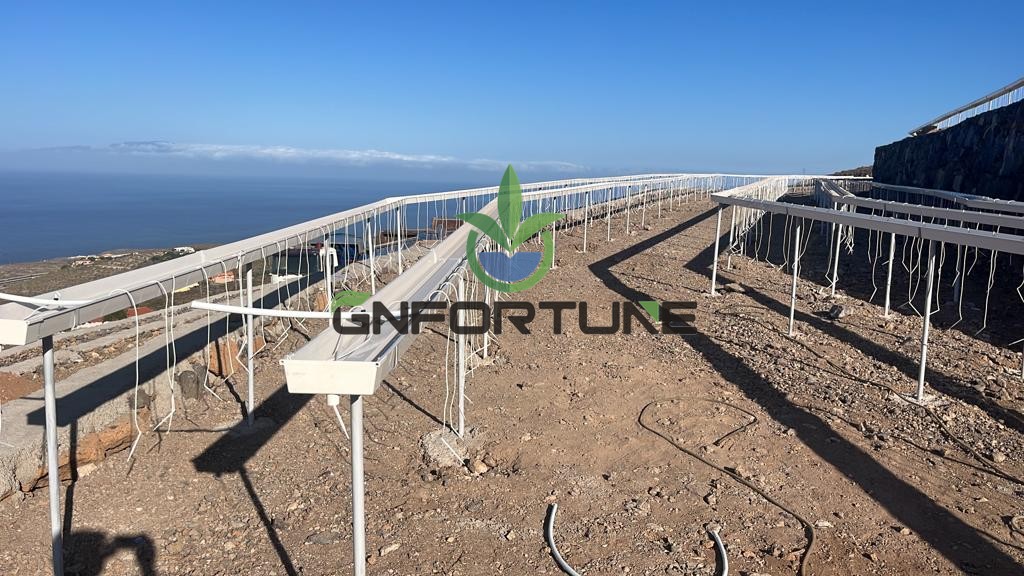
Equipment can be upgraded, layouts can be redesigned, and crop choices can change. The site is different: grid capacity, water rights, road access and the local labour pool are largely fixed the moment you sign. Several of the constraints that eventually cap a farm’s performance were set during site selection and only become visible years later.
This guide is a working checklist for hydroponic farm site selection — the eight factors that most often decide whether a project has room to grow, and how to score a specific site before committing.
1. Water: Rights, Volume and Quality
| Check | What to establish | Risk if ignored |
|---|---|---|
| Legal right to abstract | Permit status, allocation volume, transferability | Production capped or stopped entirely |
| Treated supply availability | Municipal connection, daily allowance, metering | Supply interruptions limit capacity |
| Seasonal variation | Dry-season reliability, historical drawdown | Summer failure at exactly peak demand |
| Quality analysis | Full report including sodium, chloride, hardness, alkalinity, iron | Recipe and crop choices silently constrained |
| Discharge position | Where spent solution goes, permitted limits | Compliance problem discovered after commissioning |
| Storage potential | Space and load capacity for buffer storage | No resilience against supply interruption |
Get a professional analysis of the actual source before you commit. Water quality is the most frequently assumed and least frequently verified input in project planning.
2. Power: Capacity Is the Expansion Ceiling
- Available capacity at the point of connection — not somewhere nearby, but at your boundary
- Cost and lead time of an upgrade, including utility approval timescales
- Three-phase availability for larger pumps and plant
- Reliability history — ask neighbours, not only the utility
- Voltage stability where sensitive equipment is planned
- Future capacity headroom for the second phase you will want in three years
Grid capacity is the single most common hard ceiling on expansion. Farms discover it at exactly the moment they want to grow.
3. Access and Logistics
- Road class and turning circle for the delivery vehicles you will actually receive
- Bridge heights, weight limits and narrow approaches along the route
- Distance to a port or major hub where equipment arrives by container
- Distance to your buyers and their distribution centres — delivery economics shape product options
- Site internal layout: enough room for deliveries to turn without crossing hygiene zones
- Seasonal access problems — roads that flood or freeze change your operating year
4. Labour Pool
- Population within realistic commuting distance and whether people have transport
- Competing employers in the area, particularly large facilities paying above average
- Availability of technical skills — maintenance, electrical, controls
- Seasonal labour availability if you plan peaks
- Training infrastructure locally — colleges, agricultural programmes
- Housing availability for key staff relocating
5. Climate and Microclimate
| Factor | Why it matters | What to check |
|---|---|---|
| Temperature range | Sets heating and cooling duty | Local records rather than national averages |
| Humidity range | Disease pressure and cooling performance | Seasonal extremes, particularly night humidity |
| Light availability | Winter production viability | Seasonal radiation data, shading from terrain |
| Wind exposure | Structural cost and heat loss | Site exposure, prevailing direction, shelter availability |
| Snow and rain loads | Structural specification | Local design values, not neighbouring regions’ |
| Frost and heat events | Design extremes | Historical return periods |
6. Soil, Drainage and Ground Conditions
- Bearing capacity of the ground — relevant even when very little load is placed on it
- Groundwater level and seasonal movement
- Existing drainage and where surface water naturally goes
- Contamination history for previous industrial or intensive agricultural use
- Flood risk, including surface-water flooding rather than only river flooding
- Any land designated for another legal purpose that constrains development
7. Permits, Planning and Neighbours
- Planning classification and whether your intended use is permitted
- Building permit process length — often longer than the construction itself
- Environmental permits covering abstraction and discharge
- Rights of way or easements crossing the site
- Neighbouring operations that could affect you — spraying, odour, dust, competing water users
- Future development plans nearby that change the picture over your payback period
8. Room to Expand
A site that fits phase one but not phase three is a common expensive outcome. Check:
- Additional land availability — ideally with an option rather than hope
- Services sized for later phases or space to run them
- Layout direction — can block two be added without crossing block one’s hygiene zones?
- Storage and parking for a larger operation
- Title restrictions limiting future development
Scoring Two Sites
| Factor | Suggested weight | Scoring note |
|---|---|---|
| Water security and quality | High | Scarcity plus poor quality can be unrecoverable |
| Power capacity and reliability | High | Hard ceiling on growth; expensive to change |
| Access to buyers | High | Freight cost per unit is a permanent margin factor |
| Labour availability | Medium–high | Becomes dominant as the operation scales |
| Climate suitability | Medium–high | Determines energy cost structure |
| Permitting certainty | Medium | Timeline risk rather than ongoing cost |
| Land cost | Medium | Often the least important of the set, despite being negotiated hardest |
Land cost tends to dominate discussions because it is the number people can negotiate. It is rarely the constraint that decides whether the farm succeeds.
FAQ
What is the most important single factor?
Depending on the region, water security or power capacity. Both are expensive or impossible to change later, and both cap everything else.
Is cheap land worth compromising on?
Rarely. Land cost usually sits well below energy, labour and logistics over the life of a project, so compromising on those to secure cheap land is typically a bad trade.
How much land do I need?
More than the structures occupy. Allow for plant room, storage, parking, deliveries turning, waste handling and at least one future phase.
Can poor soil be a problem for hydroponics?
Yes for drainage, bearing capacity and contamination. You are not growing in it, but you are building on it.
Should I buy or lease?
Leasing preserves capital and flexibility; buying secures the asset and future expansion. Where water rights attach to ownership, that changes the answer.
How long does permitting usually take?
Often longer than expected. Start the conversation with the authority before you finalise the site, and treat that timeline as project critical path.
Check the Site Before You Check the Catalogue
Give us your candidate site data — water analysis, power availability, dimensions and climate — and we will tell you realistically which systems fit and what it would cost to run them. Use the quote form.
Related reading: site decisions set up everything downstream — see the 12 engineering inputs, the 7-step project plan, runoff and discharge rules, structural design for local loads and scaling in phases.