

Greenhouse humidity control is the discipline that separates a climate which produces from a climate which spreads disease. Humidity sets how fast a crop transpires, how much calcium reaches the growing tip, and how long leaves stay wet after dark — and wet leaves are where grey mould and downy mildew begin. This guide covers the vapor pressure deficit (VPD) targets that matter by crop stage, the night-time trap behind most humidity losses, and the dehumidification options actually worth paying for. Figures vary by region and season.
Why Greenhouse Humidity Control Is Disease Control
Leaf wetness duration is the strongest single predictor of grey mould and downy mildew pressure. Every hour a leaf stays wet after the sun drops extends the window in which spores germinate and establish. Relative humidity says how close the air is to saturation; it does not say whether the crop surface will condense, because that depends on leaf temperature too. The disease side of that equation is covered in the fungal diseases in hydroponics guide.
Above roughly 85% RH, transpiration slows, calcium transport to the growing tip falls behind demand, and tipburn appears even when the nutrient recipe and the EC look correct.
What VPD Actually Measures
VPD is the difference between the water vapor the air could hold at a given temperature and the vapor it actually holds, expressed in kilopascals. It is evaluated at leaf temperature rather than air temperature, which is why a VPD number sits closer to what the plant experiences than a relative humidity number does.
At 0 kPa the air is saturated and transpiration stops. At 1.5 kPa and above, stomata close to protect water status, photosynthesis falls away, and growth stalls. The working band sits between those extremes and moves with crop stage and light level.
VPD Targets by Crop Stage
The bands below are canopy-level daytime targets for leafy greens and herbs, with night values typically 0.1–0.3 kPa lower. Treat them as operating ranges rather than setpoints to chase minute by minute.
| Crop stage | Target VPD (kPa) | Day temperature | Night temperature | RH band |
|---|---|---|---|---|
| Propagation and seedling | 0.4–0.8 | 22–25 °C | 18–20 °C | 75–85% |
| Vegetative growth | 0.8–1.2 | 20–24 °C | 16–19 °C | 65–75% |
| Flowering and fruit set | 1.0–1.5 | 22–26 °C | 17–19 °C | 60–70% |
| Head or fruit fill | 1.0–1.4 | 20–24 °C | 16–18 °C | 60–70% |
| Final week before harvest | 0.9–1.3 | 18–22 °C | 15–17 °C | 55–65% |
Above roughly 1.5 kPa, stomata close in most leafy crops, so pushing a hot afternoon harder buys nothing and costs water. Below roughly 0.4 kPa, transpiration effectively stops, calcium delivery falls behind, and the crop starts to look soft rather than fast.
Temperature and Humidity Combos That Hit Your Target
Because VPD depends on both numbers, many temperature and humidity pairs reach the same value — and those pairs are not equivalent for the crop. A 1.0 kPa target needs roughly 52% RH at 18 °C, 62% at 22 °C, 66% at 24 °C, and 70% at 26 °C. Raising temperature at constant absolute humidity raises VPD and the crop’s water demand with it; increasing air movement does the same at leaf level without moving the sensor reading, which is why airflow is the cheapest VPD tool in the house.
Night-Time Humidity: The 90% Trap
Air holds less moisture as it cools, so a house at 70% RH and 22 °C in the late afternoon reaches saturation by cooling to about 17 °C, with no water added. That is why night condensation is the norm rather than the exception, and why a wall-mounted sensor can read an acceptable number while the canopy drips.
Two levers exist. Heating raises the air’s water-holding capacity but leaves the absolute moisture untouched, so it lowers relative humidity without removing any water. Ventilation removes moisture, but only if the outside air is drier, and it takes warmth out with it. The combination works on nights when neither does alone, and the control logic has to decide between them hour by hour — see the greenhouse ventilation design guide for the vent-side sizing.
Dehumidification Options: Vent, Heat, HVAC, Desiccant
Four approaches cover almost every commercial case. The comparison below is about what each one actually removes, not about headline capacity.
| Method | Removes water? | Energy cost | Best for | Limits |
|---|---|---|---|---|
| Ventilation | Yes, if outside air is drier | Low | Daytime, temperate and arid sites | Useless when outside RH exceeds inside; cools the house |
| Heating (minimum pipe) | No — it lowers RH only | Medium | Cold nights, condensation control | Absolute humidity unchanged; fuel scales with the temperature lift |
| Heat plus vent | Yes | Medium-high | Most cold-climate nights | Needs vent capacity and staging logic |
| Refrigerant dehumidifier | Yes | High (electric) | Closed houses, high-value crops | Condensate must be drained; capacity falls as temperature drops |
| Desiccant dehumidifier | Yes, even when cold | Highest | Sealed rooms, low night temperature | Regeneration energy and capital cost |
Below roughly 12 °C, refrigerant coils lose capacity quickly and the desiccant option becomes the only mechanical one that still performs. In most commercial houses the cheapest first step is not a machine at all: a screen plus a minimum pipe lifts the crop surface temperature above the dew point.
The mistake we fix on site most often: a dehumidifier is bought before the sensor is fixed. The machine runs all night, the electricity bill climbs, and the canopy still condenses at dawn — because the probe was reading the aisle at 1.2 m, not the crop at 30 cm.
Sensor Placement and the Mistakes We Fix On Site
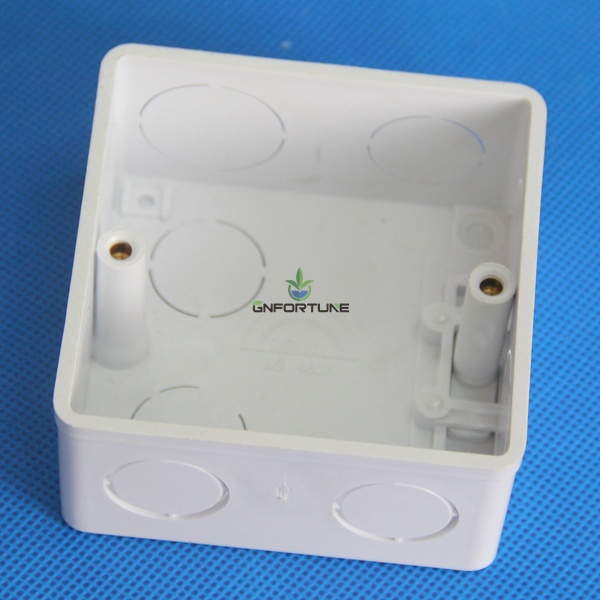
Sealed PVC electrical enclosure used to house temperature and humidity sensors inside a hydroponic greenhouseSensor placement produces more false humidity alarms than any other single factor. Three probes do the job: one inside the canopy at crop height, one at gutter or roof level, and one outside for the reference. Everything else is a compromise.
- Probes on walls or posts read the structure rather than the air, and lag the canopy by an hour or more.
- Probes within a meter of a heating pipe, fan, or vent report the machine’s effect, not the crop’s climate.
- Unshielded probes pick up direct sun and irrigation spray and show midday spikes that do not exist.
- Spot readings instead of a log hide the night profile entirely, which is the part of the day that usually matters.
Logging matters more than sensor precision. A 15–30 minute record across a full week shows the night curve and the hours the crop spends above the condensation threshold — the same hardware that makes a remote monitoring layer useful, as described in the hydroponics IoT monitoring guide.
How Greenhouse Humidity Control Is Designed Into a House
The design order is fixed: reduce the moisture load first, remove what remains second, and move air over the canopy throughout. Load reduction is operational — irrigate earlier so the substrate dries before the temperature falls, avoid late overhead water, and strip lower leaves.
The equipment stack then follows the climate. A temperate house typically gets a thermal screen for night insulation, circulation fans delivering 2–5 air changes per hour at canopy level, a minimum pipe, and a dehumidifier sized on the night load rather than the peak. A hot humid tropical house needs air exchange and airflow far more than insulation, so the cooling and airflow equipment does most of the humidity work. A Mediterranean house is usually night ventilation and a screen, with mechanical dehumidification reserved for the shoulder seasons.
Control logic ties it together: a humidity setpoint alone will fight itself, while a VPD setpoint with a temperature ceiling gives the controller something it can actually achieve. Where dosing and irrigation are already automated, the humidity strategy should live in the same controller rather than in a separate box — the greenhouse automation systems page shows how those loops are normally combined.
FAQ
Q: What VPD should hydroponic lettuce run at?
A: 0.8–1.2 kPa through vegetative growth and 1.0–1.4 kPa during head fill. Seedlings sit lower, around 0.4–0.8 kPa.
Q: Is 90% humidity at night always a problem?
A: Only if the crop surface reaches the dew point. High relative humidity with a warm canopy and good airflow is far less damaging than a cooler canopy in the same air.
Q: Do I need a dehumidifier in a ventilated greenhouse?
A: Usually not as a first purchase. Night ventilation plus a minimum pipe handles most temperate sites; mechanical dehumidification earns its place in closed houses and cold climates.
Q: How often should temperature and humidity be logged?
A: Every 15–30 minutes, continuously. Anything slower hides the night peak, which is where greenhouse humidity control problems actually show up.
Sources
- Published horticultural engineering literature on vapor pressure deficit, stomatal response, and canopy transpiration.
- Plant pathology references on leaf wetness duration and the infection windows for grey mould and downy mildew.
- Greenhouse humidity control references on screen systems, minimum pipe heating, and dehumidification staging.
Send Your Climate Record
Humidity problems are diagnosed from data, not from a single afternoon visit. Send a week of canopy temperature and humidity logged at 15–30 minute intervals, plus your crop list and climate zone, to /quote/, and we will model the VPD profile, flag the hours above the condensation threshold, and recommend the greenhouse humidity control package that fits the night load rather than the peak.
- Fungal diseases in hydroponics — the disease consequence of long leaf wetness.
- Greenhouse ventilation design — sizing the air exchange that removes moisture.
- Greenhouse cooling fans and pads — the airflow side of VPD control.
- Greenhouse automation systems — putting VPD and irrigation on one controller.