Every solvent-welded joint on a hydroponic manifold is a decision that the pipe will never be opened at that point. That is fine for most of a run and expensive at the places where something has to come out: a pump, a strainer housing, a flow meter, a dosing point, a section that needs flushing every month.
A pipe union hydroponic crews can actually use costs a fraction of a pump and turns a half-day cutting job into twenty minutes. This article covers which positions deserve a demountable joint, how the main types compare, how many a system can carry, and the details that decide whether the joint is usable once the plant room is finished.
Positions Where a Demountable Joint Is Not Optional
The rule is simple: anything removed more than once in the working life of the system needs a demountable joint on both sides. In practice that list is short and stable:
- Pump suction and discharge. Pumps come out for seals, impeller inspection and swap-over; without a union each side the pipe is cut every time.
- Filter and strainer housings. Opened on a maintenance trigger, so they need to come out without springing the pipe.
- Flow meters, gauges and sensor fittings. Calibrated, replaced and upgraded more often than the pipe around them.
- Dosing and injection points. Check valves and nozzles need attention without draining the line.
- Sections needing cleaning. Drain legs, low points and runs prone to biofilm or salt build-up.
- Zone and equipment boundaries. A demountable point at a zone isolation makes one zone serviceable alone.
Everything else can be welded. A union where nothing will ever be removed buys a leak path and a cost line, and nothing else.
Union, Camlock, Push-Fit or Flange
The four families differ on pressure capability, how fast they come apart and how they seal. Picking on price alone is how a coupling ends up on a suction line it was never rated for.
| Joint type | Pressure capability | Demount speed | Seal | Best location | Watch-outs |
|---|---|---|---|---|---|
| Threaded pipe union | Good; follows pipe and body rating | Seconds, two spanners | Flat face, cone seat or O-ring | Pump ports, filters, meters | Needs axial travel; do not clamp across it |
| True union solvent fitting | Good on uPVC pressure line | Seconds | O-ring or flat seat | Welded pipe meeting equipment | Union nut not over-tightened on plastic |
| Flanged joint | Highest of the four | Slow, multiple bolts | Full-face or ring gasket | Large headers, tank connections | Bolt torque sequence; gasket media |
| Camlock, cam and groove | Moderate; check the rating | Fastest, no tools | Gasket in the female coupler | Transfer hoses, fill lines | Not a permanent pressure-line union |
| Push-fit quick connector | Limited; size-dependent | Fastest | O-ring and collet | Small-bore dosing, air, sample lines | Vibration and thermal cycling loosen collets |
| Compression fitting | Moderate | Moderate | Ferrule or O-ring | Where welding is undesirable | Ferrule single-use on some designs |
The distinction buyers most often get wrong is between a union and a coupling. A plain coupling joins two fixed pipe ends permanently; a union is built so the ends separate without moving the pipe. Where the pipe cannot be sprung apart, the coupling is the wrong part even though it looks similar on a shelf.
Reading Pressure and Temperature Ratings
A rating on a coupling is only meaningful with its basis stated. Most plastic fitting ratings are quoted for water near 20°C, and allowable working pressure falls as temperature rises, so a union rated for the cold commissioning run may be marginal on a summer header.
Four things to confirm before a coupling goes on a specification:
- The rating basis — temperature, media, and whether it is a burst or a working figure.
- Surge allowance. Fast-closing solenoid valves produce spikes well above static pressure, and demountable joints are where those spikes show up, as covered in the farm’s zone valve specification.
- Suction duty. A joint on a pump inlet works under vacuum, so camlocks and push-fit connectors need suction capability checked rather than assumed from a pressure rating.
- Media compatibility. Nutrient solution is mild, but sanitisers and acid cleaning products are not; body and seal material both need checking.
Where a duty is already documented, joints should be specified to match the pump sizing duty point rather than the pipe size alone. A 63 mm line on a modest duty and a 63 mm line at high head do not deserve the same coupling.
How Many Demountable Points Is Too Many
There is a real trade-off. Every union is another seal, another thing to torque and another place for a slow weep to appear six months in. Too few costs labour and downtime; too many costs leak management.
A practical planning rule for a zone manifold:
- One demountable joint on each side of every serviceable item — pump, strainer, meter, injector.
- One at each zone isolation boundary, so a zone can be worked on alone.
- One at each tank or header take-off.
- Nothing demountable between those points.
On a six-zone block that typically lands between twelve and twenty demountable points, easy to inspect monthly and cheap to hold spares for. A quick coupling at every take-off instead roughly doubles the seal population for no maintenance benefit. Mobile and seasonal equipment is the exception: hoses that move and kit rotated between blocks justify quick couplings, because the labour saving is repeated.
Installation Detail: Access, Alignment and Support
A union that cannot be opened is worse than no union, because it looks like the job was done. Three details decide whether it works.
Axial travel. Separating a union needs the pipe ends to move apart by the length of the union body. Fitted tight between two elbows, or hard against a wall or tank, it cannot be separated without cutting, so leave a straight section on at least one side.
Alignment. Unions are not flexible joints and will not correct misaligned pipe. Forcing one together puts a bending load on the joint and the seal, and the result is a leak that returns after every re-make. Align the pipe first.
Support. Do not place a clip across a union, and do not let it carry the weight of a fitting or meter. Support the pipe either side, and give heavy items their own support rather than hanging them off the joint.
Seals, Spares and Stocking the Small Parts
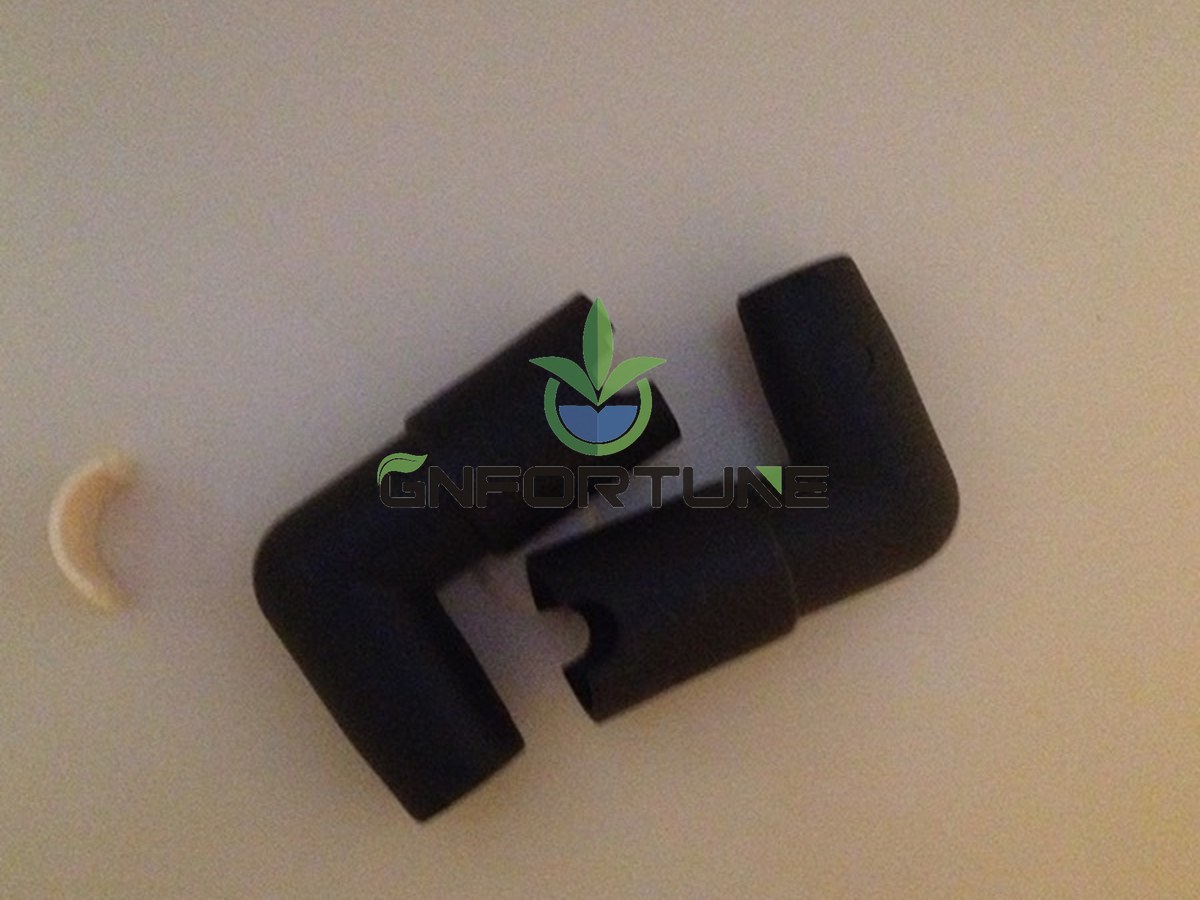
A union is a mechanical part with a consumable inside it, and the seal is what fails. Common forms are a flat gasket, an O-ring in a groove, a cone seat, or on some metal unions a tapered metal-to-metal seat needing no elastomer. Pipe union hydroponic seal stocking should follow the form, not the union size.
Two habits make this work: record which union types are installed and where, because “one inch” does not identify a seal; and hold a complete spare union of each type on critical positions, since a cracked union nut on a Sunday is a shutdown either way. The logic matches the site’s downtime-based spare parts list — stock by consequence, not by unit cost.
Seals should be on the cleaning rota too. A union opened during a sanitiser flush should have its seal inspected at the same time, and seals exposed to sanitiser checked for hardening and compression set rather than reused indefinitely.
Commissioning and Handover Checks
Demountable joints are the likeliest place for a slow leak in the first weeks, and cheap to verify early. Worth including in the commissioning walk: pressure test with every union installed, not with blanks in their place; open one joint of each type to confirm access; re-check union nuts after the first thermal cycle; and record joint count and seal types on the as-built list.
FAQs About Pipe Union Hydroponic Joints
Where should a pipe union be fitted?
On both sides of anything removed for service: pumps, strainer housings, flow meters, injection points and sections needing periodic flushing. Straight runs between those items are better welded, since every union adds a seal and a potential leak path.
Union or quick coupling on a pump connection?
A union on a permanent pump connection, because it holds pressure and vacuum reliably and does not work loose. Quick couplings suit hoses and mobile equipment, where disconnection speed is worth the extra joint and the rating has been checked for the duty.
How many demountable joints is too many?
Plan one on each side of each serviceable item, plus one per zone boundary and one per tank take-off, and nothing between. On a six-zone block that usually lands in the low twenties; beyond that, extra seals cost more in leak management than they save in labour.
Do quick couplings hold pressure as well as a union?
Generally no, and the gap widens with size and temperature. Camlocks and push-fit connectors are rated for specific duties, and choosing by pipe size rather than by pressure, temperature and suction duty is a common source of leaks.
What spares should we stock for unions and couplings?
One spare seal set per union type on site, plus a complete spare union of each type on critical positions such as pump and filter connections. Identify joints by type and seal form on the as-built list, because nominal size alone does not identify a seal.
Related Reading
- Agricultural Irrigation Pipe Fittings: Types and Sizing — The fitting families a union has to match before it is specified
- Irrigation Filtration: Screen vs Disc vs Sand Filter — The serviceable items that need a demountable joint either side
- Hydroponic Pump Sizing: Flow Rate, Head Pressure and Redundancy — The duty point joint ratings should be checked against
- Critical Spare Parts for Hydroponic Farms — How to decide which seals and unions are worth holding on site
- Hydroponic Equipment Lifespan: 10-Year vs 3-Year Parts — Which connection hardware to expect to replace inside three years
Next Step: What to Send for a Quotation
Unions, couplings and seal sets are quoted by type, size, body material and seal material, so the enquiry needs a schedule rather than a description. Pipe union hydroponic layouts are also far easier to get right on the drawing than to rework after installation.
For RFQ or project consultation, send: pipe sizes and materials by line; duty pressure and temperature range per section, including surge allowance; media and sanitisers used; thread standard for each port; body material preference; seal elastomer required; number and location of demountable points; spares ratio and whether complete spare unions are wanted; delivery schedule and budget band. G AND N FORTUNE LIMITED supplies unions, couplings, channels and pipework packages quoted to those parameters.