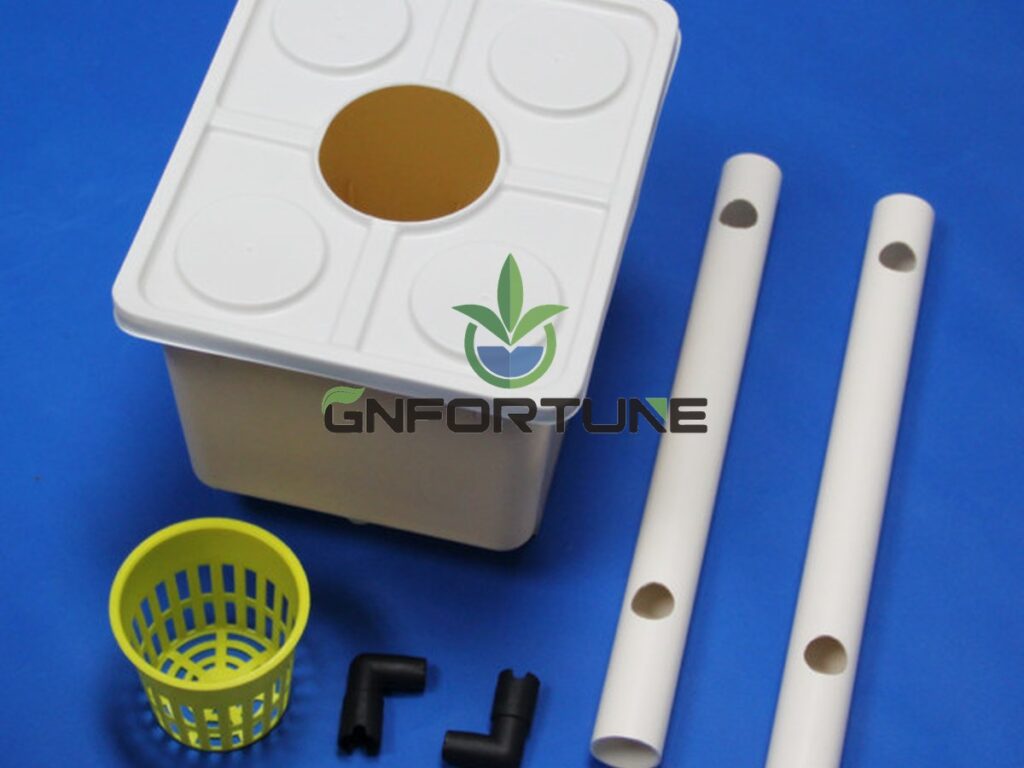
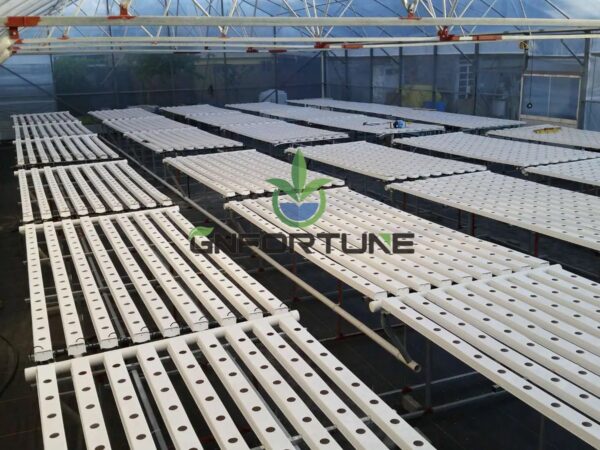
The second container is where a supplier relationship is genuinely tested. The first order gets the attention of the sales team, the production scheduler and the quality department; the repeat order is treated as routine, and routine is where equipment batch consistency quietly drifts — channels a fraction narrower, lids a shade looser, an end cap needing a push where it used to need a tap.
This is written for procurement teams and project engineers placing repeat orders across multiple containers, where a small dimensional shift stops being a nuisance and becomes an installation problem.
Why Equipment Batch Consistency Drifts Between Orders
Because the repeat order is produced under different conditions than the first: the tooling has worn, the resin lot is different, the line was set up by a different operator, and neither the production temperature nor the shipping route is the same.
Every process has a window, and parts produced inside it are conforming. The buyer’s problem is that two conforming parts can still fail to assemble, because their deviations sit on opposite sides of the nominal.
Across a project the effect is cumulative. A phase-two container delivered a year later produces a visible step in the run and a lid that behaves differently from one bay to the next. Buyers who specify nominal dimensions only leave that gap wide open.
The Dimensions Worth Locking With a Tolerance
Lock the dimensions that control assembly and function, and leave cosmetic ones to a workmanship clause. Specifying a tolerance on every dimension raises cost without improving fit.
| Dimension | Why it governs assembly | What to specify |
|---|---|---|
| External width and height of the channel | Hanger fit, lid fit, rack clearance | Nominal plus a symmetric tolerance, at stated points |
| Minimum wall thickness | Stiffness, service life, bracket contact | A minimum value rather than nominal |
| Lid retention geometry | Whether the lid seats and stays seated | Governing dimension plus the fit requirement |
| Length and cut squareness | End-to-end alignment along a run | Two tolerances, stated separately |
| Straightness over a gauge length | Visible bowing once the channel is hung | Maximum deviation over a stated length |
| Outlet and end-cap interface | Plumbing compatibility with stocked fittings | Interface dimension and mating part reference |
Two rules make that usable. State the measurement temperature, because uPVC dimensions move with temperature and a channel measured off the line in summer is not the one the installer handles in winter. State the gauge wherever the tolerance is tight, so both inspectors perform the same operation.
Where a dimension is critical to assembly, a go/no-go fixture is cheaper than a calliper argument. It answers the installer’s question and can be used on site.
Tooling Wear, Resin Lots and the Extrusion Window
Three sources account for most drift: tooling wear, raw material variation, and where in the process window the line was running. Knowing which one is responsible tells you whether a deviation is a one-off or the start of a trend.
- Tooling wear is directional. A die or mould wears gradually, so the dimension moves one way over successive runs — the drift a retained sample catches.
- Resin lots vary in melt behaviour and shrinkage. A new lot can move dimensions within the band without anyone changing a setting.
- The process window covers line speed, melt temperature, cooling rate and haul-off tension. Near the top of the speed range, parts land at one end of the band; run slower, at the other.
Seasonal effects belong in the same picture. Production in a hot month with slower cooling, followed by a container crossing an equatorial route, is a different thermal history from a winter shipment, and extruded uPVC keeps relaxing after it leaves the die.
The commercial implication is simple: ask what the supplier records per run and whether a part can be traced back to it. The checks a factory runs before release are described in the article on factory QC for hydroponic equipment.
Retained Samples and Batch Records: What to Keep
Keep a labelled reference part from the approved first production run, and require the supplier to keep one too. Two retained samples turn a disagreement into a comparison that takes minutes.
The buyer-side reference should be a full production part, not the pre-production approval sample, labelled with the order reference, the date and the supplier. Store it flat, out of sunlight and away from solvent vapours, and record its dimensions when it goes into store.
Ask the supplier to retain a sample from each run for a defined period and to record the run against the shipment. That is the discipline of first article approval and golden samples extended from one approval event to every batch.
The buyer’s own file should contain five things:
- The purchase order text carrying the agreed dimensions and tolerances.
- Measurement records from the approval sample and every inbound inspection since.
- The retained production part, labelled and stored under known conditions.
- The batch or run reference from the packing list, and the container it shipped in.
- Photographs of any deviation, with a scale and a dated reference part in frame.
Inbound Sampling: Plan and Decision Rules
Sample by production run rather than by shipment. A container stuffed from two runs needs two inspections, and the packing list is the document that tells you whether that happened.
Take samples from the first, middle and last bundles of each run, measure the locked dimensions, compare against the retained reference, and record results in the same format every time so a trend is visible across containers rather than buried in separate reports.
Decision rules belong in writing before the container lands:
- Accept if all locked dimensions fall inside the band and the assembly checks pass.
- Accept with a note if a dimension sits at the edge but assembly is unaffected — and tell the supplier, because edges are where the next batch goes out.
- Hold if a locked dimension is outside the band or an assembly check fails; keep the packaging and notify before unpacking further.
Photographs taken now are evidence rather than documentation. Include the packing list, the bundle label and a scale in the frame. The wider arrival procedure is covered under inbound QC on arrival.
What to Do When a Deviation Appears
Establish whether the deviation affects assembly, then agree a remedy before the container is unpacked further. Speed matters, but keeping the evidence intact matters more, because a partly installed container is very hard to assess.
- Confirm the measurement with a calibrated tool at the stated temperature, against the retained reference rather than the drawing alone.
- Test the assembly — lid fit, hanger engagement, end-cap termination. A dimension outside tolerance that still assembles is a different problem from one that does not.
- Notify the supplier with the batch reference, the measurements and the photographs, and ask for the run record.
- Agree the remedy — replacement parts, a credit, or an accepted deviation with a corrected specification — and put it in writing.
- Update the specification if the deviation exposed a dimension the order never mentioned.
That last step converts a problem into an improvement. Most repeat-order surprises come from a dimension nobody thought to lock, and each one is a chance to close the gap rather than negotiate a concession.
FAQs About Equipment Batch Consistency
Why does a repeat order differ from the first if the drawing has not changed?
Tooling wear, a different resin lot and a different point in the process window all move dimensions within the tolerance band. Two conforming parts can sit on opposite sides of nominal and still not assemble. A large rather than marginal difference points to a process control issue worth raising directly.
Which dimensions should carry a written tolerance?
The ones that govern assembly: external width and height, minimum wall thickness, lid retention geometry, length and cut squareness, and every plumbing interface. Cosmetic dimensions are better handled by a workmanship clause than by a tolerance nobody will measure.
How many samples should we inspect per container?
Enough to cover each production run on the packing list — commonly the first, middle and last bundles per run. A single sample drawn from a container stuffed from two runs misses half the shipment.
How long should retained samples be kept?
At least until the next order has been inspected and accepted, and ideally for the service life of the part so a warranty question can be answered by comparison. Keep the measurement record with it, and store it out of sunlight.
Can we require the supplier to keep batch records?
Yes, and it is a reasonable condition of repeat business. Ask for run identification on the packing list, a retained sample per run and a stated retention period. Small suppliers may resist, so keep the period realistic for the part.
Related Reading
- Factory QC for Hydroponic Equipment: What Gets Checked Before an Order Ships — The supplier-side checks to require at batch level, not just at approval
- Inbound QC: Checking Equipment on Arrival — The arrival procedure and what to record before signing for a shipment
- First Article Approval: Golden Sample and Checks — Turning a single approval event into a retained reference that later batches are measured against
- Technical Specification: Hydroponic Equipment Writing — How to write dimensions, tolerances and measurement conditions so both sides read them the same way
- How Hydroponic Equipment Ships: Container Loading and MOQ Math — Why one container can carry two production runs, and what that means for inspection
Next Step: What to Send for a Quotation
Equipment batch consistency is a purchasing condition rather than a quality-department afterthought, and the place it is secured is the purchase order.
Planning a repeat order? For RFQ or project consultation, send: greenhouse dimensions and available bay area; crop and target plant specification; channel profile and quantity in metres; the dimensions and tolerances to lock; retained-sample and batch-record requirements; target weekly or annual output; local climate range and raw water analysis; automation level requested; delivery schedule and phasing; and the budget band. G AND N FORTUNE LIMITED runs in-house extrusion and injection capacity in a 5,000㎡ factory.