Switching hydroponic equipment supplier is rarely a purchasing decision, even though it starts as one. Unit price is the visible number; the invisible ones are drawings, tooling, trial batches, spare-part compatibility and the weeks your team spends learning a new set of tolerances. Most farms that change do it after a failure — a missed delivery, drifting quality, a price rise — and the changeover then happens under pressure, which is exactly when the expensive mistakes are made.
This is written for buyers who want the second source before they need it: what a switch actually costs, how to qualify an alternative supplier on a small batch, and how to keep two sources producing the same part.
Why Carry a Second Source at All
Because single-source concentration is a supply risk rather than a judgement on the supplier. One factory, one die, one shipping route: any of them can fail without anyone doing anything wrong, and the buyer carries the consequence.
Qualifying a second source has a price — duplicate tooling where parts are bespoke, split volumes that raise unit cost, more inspection and more administration. Switching hydroponic equipment supplier later, under time pressure, is the expensive version of the same exercise.
- Worth it for: bespoke extrusions and moulded parts, long-lead items, anything with a single die, and sites where a late delivery stops planting.
- Usually not worth it for: catalogue items, standard pipe and fittings, and volumes too small to split.
- Worth qualifying but not running: a dormant second source, approved and sampled, held for the day the first one fails.
Dual sourcing greenhouse equipment is a portfolio decision. Buyers who qualify everything spend their budget on qualification and have none left for the parts that actually stop production.
Switching Hydroponic Equipment Supplier: What the Switch Costs
The unit price difference is usually the smallest line. The list below is what changes when a part moves to a new factory, and most of it is paid in time rather than money.
| Cost item | What it covers | Why it is often missed |
|---|---|---|
| Drawings and data | Re-drawing, revision control, tolerances | Old drawings are rarely current or complete |
| Tooling | New die or mould, or transfer of tooling | Ownership and release terms are not in the contract |
| Samples and trials | First articles, freight, scrap | Trial cost appears later as a surcharge |
| Validation | Dimensional checks, certificates, install trial | Nobody has written the acceptance criteria |
| Inventory overlap | Running down old stock, two part sets | Working capital is not in the business case |
| Spares and wear parts | Second set of consumables, labelled separately | Discovered at the first breakdown |
| Team learning | Installation, maintenance, fault diagnosis | Crew time never appears in the quote |
| Logistics | New packing, labelling, pallet patterns | Changes freight cost without changing the part |
Tooling deserves the closest reading. If the buyer paid for a die or mould, the contract should state who owns it, where it is held, and on what terms it can be released or moved. Without those clauses, a switch can mean buying the tooling twice.
Qualify an Alternative Supplier in Stages
Qualification is a sequence, and skipping a stage is how a cheap alternative becomes an expensive one. Each stage should have written acceptance criteria before it starts.
- Paper stage: drawings, specification, material data, certificates, capacity and realistic lead times.
- Sample stage: first articles measured against the drawing, with a signed golden sample retained by both sides.
- Trial order: a real quantity, installed in one bay or zone rather than inspected in a box.
- Repeatability check: a second batch measured against the first, because one good batch proves little.
- Limited release: a minority share of volume held steady for a defined period before any rebalancing.
As a planning assumption for commodity extrusions and moulded fittings, buyers often hold a new source at a minority share for one to two crop cycles before changing the allocation, assuming the part is not crop-critical. Treat that as a starting figure and set your own against the risk of the specific part.
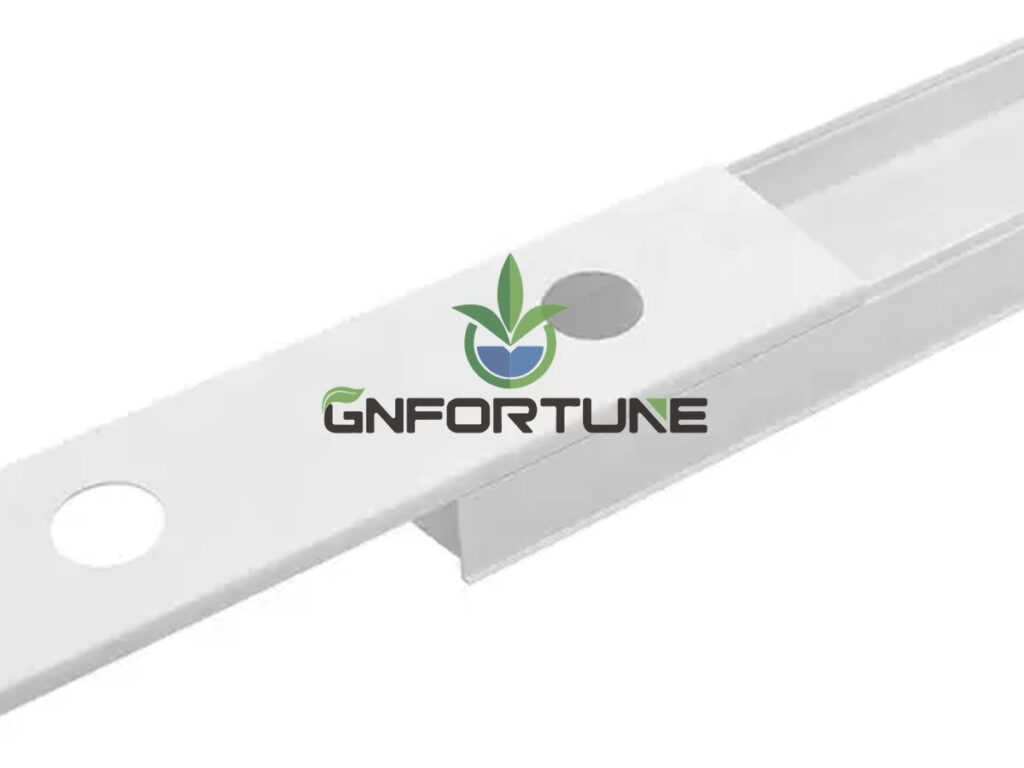
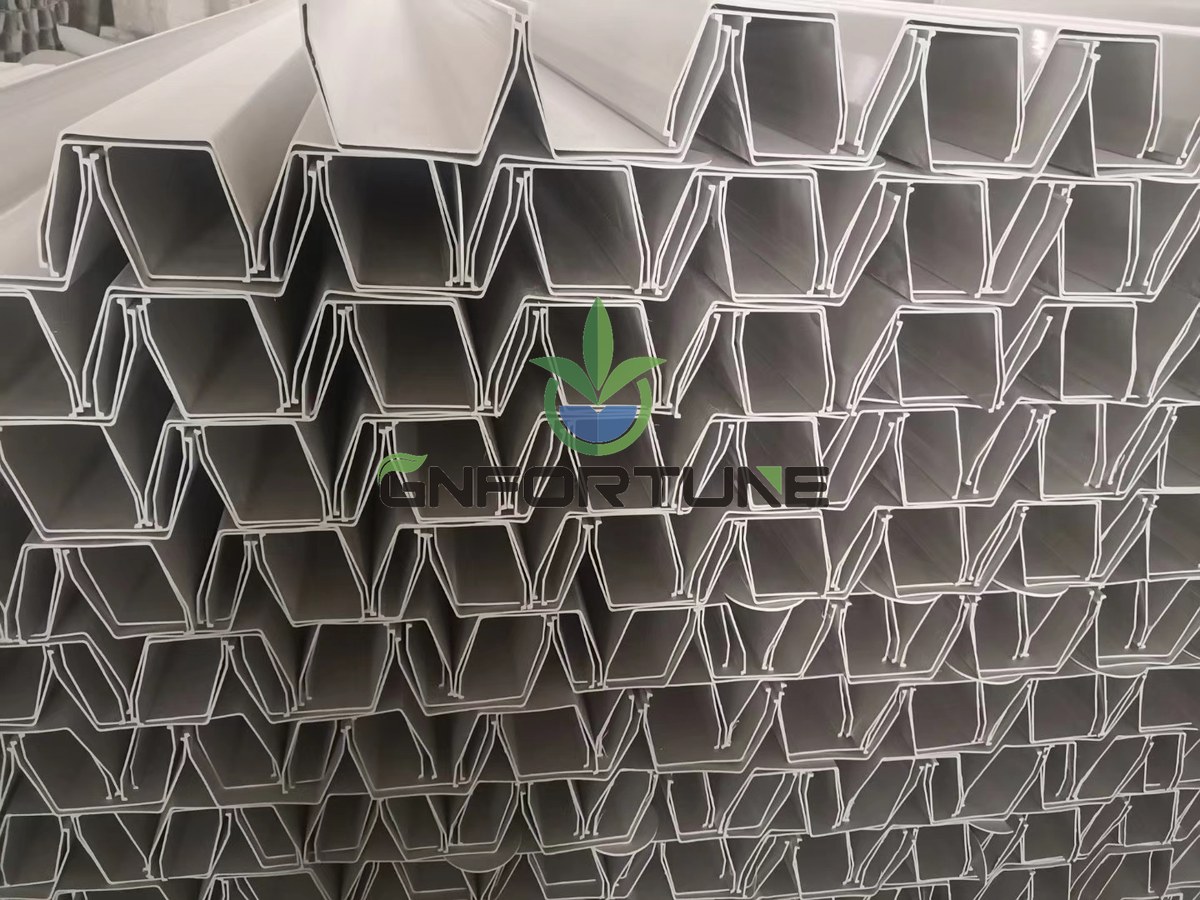
Two checks catch most problems early. Measure the interface parts — lid, end cap, bracket, hanger — rather than the main profile, since a small width difference shows up there first. Fit the trial batch with the crew who will install the rest.
Where Changeovers Go Wrong
The recurring failures are physical and procedural rather than commercial. Most of them are visible on the drawing if someone looks before the order.
- Interfaces: the channel matches, the lid does not. Tolerances stack, and a millimetre at the cap becomes a gap along the run.
- Material and stabilisation: the same polymer name does not mean the same UV package or service life.
- Colour and finish: replacements that do not match the standing house, where parts are visible or colour-coded.
- Documents: test reports in the wrong language, or missing material certificates.
- Packing and labelling: pallet heights and carton counts that change container utilisation.
- Spares mixing: two part sets in one store with no labelling rule.
- Lead-time optimism: a quoted lead time that assumes repeat orders and a free production slot.
Ask for a clause-by-clause response to the specification rather than a price list. The deviations are where the risk sits.
Running Two Sources Without Losing Consistency
Consistency comes from one specification and one reference sample, not from goodwill. Both suppliers should be measured against the same drawing revision and the same golden sample.
- One revision: any drawing change goes to both sources, with the old revision withdrawn in writing.
- Interchangeability as a requirement, written into the specification rather than assumed from a similar drawing.
- Allocation by part number or zone, so two variants do not end up mixed along one run.
- Deviation log per supplier, reviewed at the same interval as price.
- Shared acceptance test, so a batch is rejected on the same basis at both sources.
Keeping the Original Supplier
A supplier you may need again is worth keeping. Most buyers who switch discover that the old source was the only one holding a die, a colour match or a certification that turned out to matter.
Give notice, state the reason plainly, and avoid using a competitor’s quotation purely to press a price. That works once, and it removes the fallback the second source was meant to provide. Where volume allows, leaving the original a defined share keeps a working comparison on cost and quality.
Confirm early what you are entitled to take with you — drawings, tooling, test data — and get it in writing before the conversation turns difficult.
A Supplier Transition Plan
A transition plan is the difference between a controlled change and a scramble. The steps are ordinary; the discipline is doing them in order.
- Define the scope: which part numbers move and which stay.
- Freeze the drawing revision before anything is sent out.
- Confirm tooling ownership and release terms in writing.
- Place a qualification order with acceptance criteria attached.
- Run an install trial in one zone, documented with photographs and measurements.
- Set the allocation and a review date rather than an open-ended arrangement.
- Stock spares for both part sets during the overlap.
- Reduce the old volume only after the second batch has passed.
Change supplier risk is lowest when the switch is planned in a quiet month. Farms that change during a build programme or a crop failure pay for it twice: once in the qualification and once in the disruption.
FAQs About Switching Equipment Suppliers
How long does qualifying an alternative supplier take?
Longer than a purchasing cycle and shorter than a build programme, which is why it belongs in the plan rather than in a crisis. Tooling, samples, an install trial and a repeat batch have to happen in sequence, and each has its own lead time.
Should we tell the current supplier we are qualifying another?
Usually yes, and plainly. A supplier told honestly often improves on the points that prompted the search, and one that discovers it later will not be a fallback when you need one.
Is dual sourcing always worth the cost?
No. It pays on bespoke, long-lead or production-critical items. On catalogue parts with many alternative suppliers, the same money is better spent on a standard specification and a small buffer stock.
What share of volume should a new source get?
Start with a minority share and hold it through at least one repeat batch. A common planning assumption is a minority allocation for one to two crop cycles, adjusted for how critical the part is and whether spares exist for the original.
The parts match the drawing but still do not fit. Why?
Because fit is decided by tolerances and interface parts, not by the nominal dimension. Check the lid, end cap and bracket geometry first, and measure at a stated temperature, since extruded polymer dimensions move with it.
Related Reading
- How to Write an RFQ That Gets Comparable Quotes — the enquiry that makes two quotations comparable
- Comparing Hydroponic Equipment Quotations: How to Normalise Bids — the document a second source has to build to
- Hydroponic Supplier Factory Audit: The Checklist Buyers Use Before Placing an Order — what to check before qualifying an alternative source
- Critical Spare Parts for Hydroponic Farms: A Stock List Built on Downtime Risk — the stock that covers a supplier changeover
- Framework Agreement Equipment Supply: Hydroponic Call-Offs and Volume Bands — terms that survive volume changes and a second source
Internal links for the titles above are configured at publication.
Next Step: What to Send for a Quotation
Switching hydroponic equipment supplier is easier when the specification already exists in a form a new factory can build from. Send the drawing revision, the acceptance criteria and the duty conditions, and ask for a clause-by-clause response rather than a price alone.
Qualifying a second source or planning a changeover? For RFQ or project consultation, send: part numbers and quantities; current drawing or sample photographs with dimensions; material and tolerance requirements; greenhouse dimensions and usable growing area; system type (NFT, DWC, Dutch bucket or substrate gutter); crop plan and target weekly or annual output; local climate range and raw water analysis; delivery schedule and destination port; and the budget band. G AND N FORTUNE LIMITED supplies NFT channels, DWC systems and irrigation components, quoted from a drawing or a measured sample.