A greenhouse is financed on a yield model but repaid on invoices. A hydroponic offtake agreement — a buyer’s written commitment to take stated volumes at stated quality and price terms — converts a production plan into contracted revenue, and it is the document lenders look for before the equipment list. Securing it before construction fixes the crop mix, the packhouse layout and the cold store capacity; securing it afterwards means the buyer’s requirements arrive as a retrofit.
Why a Hydroponic Offtake Agreement Should Precede Construction
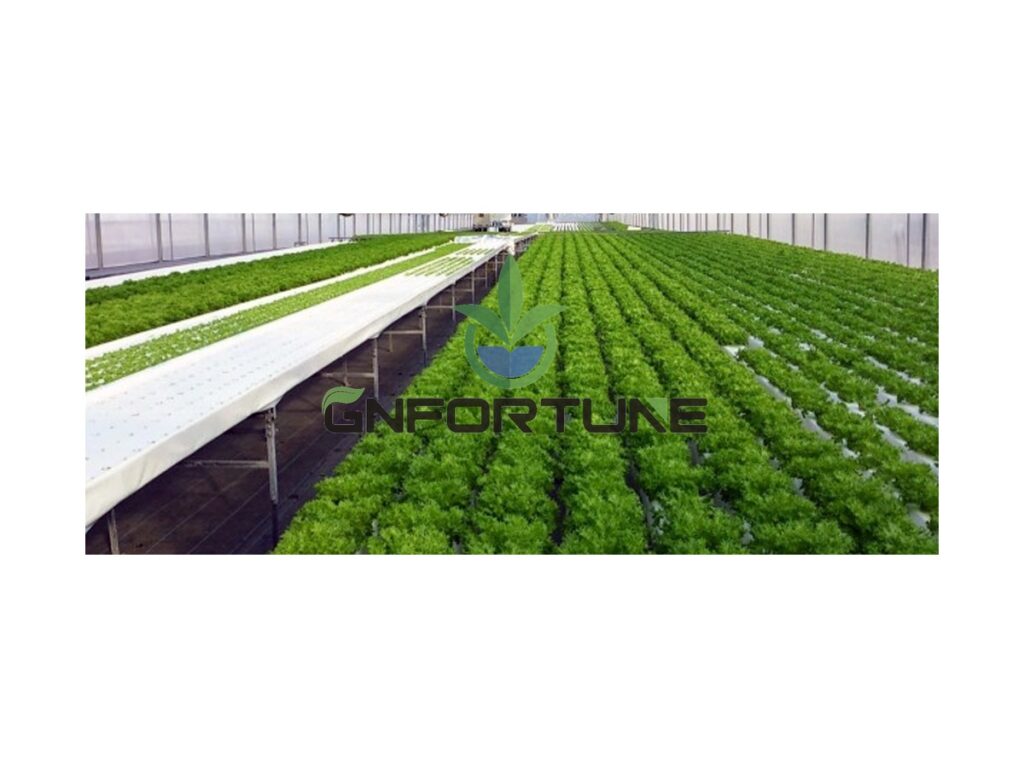
Because the buyer’s specification is a design input, not an afterthought. Weekly volume, pack format, shelf-life requirement and grading tolerance decide how much growing area, packing floor and cooling capacity the project needs, and all three are built into concrete before the first crop.
Building first and selling second produces a familiar set of problems. The crop mix is chosen on price per kilogram rather than contract fit. The packhouse is sized for a market the farm does not have. The cold store is too small for a buyer collecting twice a week instead of daily. And when a buyer appears, the audit list arrives with a deadline.
Earlier offtake also changes the financing conversation: contracted revenue supports a debt service calculation in a way that forecast spot sales do not, and a named buyer reduces the perceived risk of a first-of-its-kind site.
Contract Formats Buyers Actually Use
Most commercial produce moves under one of four structures, and the difference between them is where volume risk sits. Knowing which one is on the table tells the grower how much of the crop is genuinely committed.
| Format | What it commits | Volume risk on grower | Typical use |
|---|---|---|---|
| Fixed-volume supply contract | Stated weekly or seasonal volume at an agreed price or formula | Low on price, high on production shortfall | Retail and foodservice programmes with stable demand |
| Framework agreement with call-offs | Price and terms fixed; volumes confirmed per week or per month | Medium — terms are certain, volume is not | Supermarket supply agreements where forecasting is weekly |
| Contract growing hydroponics | Buyer specifies variety, programme and often supply of seed or transplants; grower produces to order | Low on market, high on agronomic performance | Processor and packer programmes, dedicated varieties |
| Preferred supplier or spot arrangement | No volume commitment; first refusal on available crop | High — usable as a starting relationship, not as bankable revenue | New market entry, surplus and seasonal peaks |
A produce supply contract for hydroponics is often a hybrid: a framework with an annual volume envelope and weekly call-offs inside it. What matters for a feasibility model is the enforceable minimum, not the headline annual figure.
Volume, Price and Adjustment Clauses
The volume commitment clause and the price clause decide whether the agreement supports a loan. Read them together, because a strong volume commitment at a weak price can be worse than no contract.
- Volume commitment clause. Look for the stated minimum per week or season, and the tolerance band around it. A commitment with a wide tolerance in the buyer’s favour is closer to a forecast than an order.
- Seasonal profile. Demand for leafy and vine crops is rarely flat, so the profile should be written month by month.
- Shortfall and excess. State what happens if the farm under-delivers through crop failure, and whether the buyer has any obligation on surplus. Force majeure wording should name crop loss events explicitly.
- Price mechanism. Fixed price, cost-index formula, or a band with floor and ceiling. Where input costs are volatile, a formula with a review period lasts longer than a fixed number the buyer will renegotiate.
- Review, notice, payment. How often price is reviewed, the notice period on either side, the payment period, and who carries currency movement on a foreign-currency contract.
Pricing discipline after signature is a separate operating task; the mechanics are set out in selling hydroponic produce: channels, contracts and pricing discipline.
Quality Specification, Grading and Rejection
A quality specification is only useful when it is measurable and the rejection process is written down. Vague specs are where disputes start, because both sides remember the best load they ever saw.
Per product, the spec should state size or weight range, count per pack, colour and defect tolerance, trim and presentation, packing format and label data, temperature at dispatch, and residue limits where the market requires them. Traceability — batch coding, harvest date, and the records a buyer can request at audit — belongs here too.
Then write the rejection mechanics:
- Who inspects, where, and within what time window.
- Whether rejection is whole-load or by proportion, and the tolerance that triggers it.
- Who carries the cost and freight of rejected product, and whether it can be reworked.
- Whether a rejection counts against the volume commitment.
A farm that meets the spec only on good weeks loses the contract on a bad one. The grading line, packhouse and cold chain have to be built to the spec — see grading standards and a line that ships to spec, packaging formats, shelf life and retail requirements and post-harvest cooling and cold chain.
Exclusivity, Term and Termination
Exclusivity is the clause most often accepted without pricing it. Giving one buyer exclusive rights to a crop, region or channel is a real concession and should be paid for with volume certainty, a longer term or a price floor.
- Scope. Name the crop, territory, channel and product form; exclusivity on “leafy” is not the same as on one pack size of one variety.
- Term length. Long enough to amortise the investment, with a review point. Retail supply agreements often run one to three years.
- Termination for cause versus convenience. Cause should include repeated rejection, payment default and audit failure; convenience termination on short notice makes the contract weak collateral.
- Transition. What happens to crop in the ground at termination, and how long the buyer keeps taking volume while a replacement outlet is found.
- Concentration risk. Where one contract covers most of the volume, a fallback channel should be identified before signing.
What a Grower Must Prove to Win an Offtake
Buyers are not buying a greenhouse; they are buying reliability. Hydroponic produce buyer requirements cluster around the same evidence set, and a project that can produce it during design is more credible than one that promises it after commissioning.
- Consistency. A credible weekly volume profile across the year, with seasonal dips stated.
- Food safety certification. The scheme the market requires, with the audit timeline understood before signing; the route is set out in GlobalG.A.P., HACCP and supermarket approval.
- Traceability. Batch coding from transplant to packed case, and records for one delivery.
- Cold chain. Cooling method, capacity and dispatch temperature — the answer decides whether the product reaches its shelf life.
- Continuity. Backup power, water storage and what happens to contracted volume after a crop loss.
- Financial standing. A buyer signing a multi-year agreement wants to know the farm will still be operating in year two.
Trial volumes are the usual bridge: most relationships start with a trial period at agreed volumes, and the specification tightens once both sides have data. A hydroponic offtake agreement signed at full volume on day one is rare.
FAQs About Hydroponic Offtake Agreements
Can a new farm get an offtake agreement before it has produced anything?
Yes, but usually as a framework with a trial period rather than a full volume commitment. Buyers commit to price, specification and a trial volume first, then extend once deliveries are consistent.
What volume commitment is worth having?
The enforceable minimum per week or month, not the headline annual figure. A commitment the buyer can reduce at will does not support a financing model.
Should the price be fixed or formula-based?
Fixed gives revenue certainty and leaves the grower carrying input cost movement; a formula with floor and ceiling shares that risk. Where energy and fertiliser costs are volatile, a banded formula with a review period lasts longer.
Is exclusivity worth giving?
Only if it is paid for — exchanged for volume certainty, a longer term or a price floor, with the scope naming the crop, territory and product form rather than a whole category.
What disqualifies a grower fastest in buyer assessments?
Missing food safety certification for the market, and no answer on continuity. A buyer planning a weekly shelf commitment will not carry a supplier without backup power or a crop-loss plan.
Related Reading
- Selling Hydroponic Produce: Channels, Contracts and Pricing Discipline — Channels, contracts and pricing discipline for selling hydroponic produce
- Grading Standards for Hydroponic Produce: How to Build a Line That Ships to Spec — Grading standards: the specification an offtake contract has to reference
- Packaging Hydroponic Produce: Formats, Shelf Life and Retail Requirements — Pack formats, shelf life and retail requirements buyers write into contracts
- GlobalGAP, HACCP and Supermarket Approval: Certification Path for Hydroponic Farms — Certification path to supermarket approval, which most buyers require
- Post-Harvest Cooling & Cold Chain for Hydroponic Produce: Vacuum, Forced-Air and Room Cooling — Post-harvest cooling and cold chain that keep graded produce on spec
Next Step: What to Send for a Quotation
Equipment sizing follows the offtake specification: weekly contracted volume, pack format and dispatch temperature decide growing area, cooling capacity and packhouse layout, and a supplier cannot price a system accurately from a tonnage figure alone.
For a project quotation, send: site or greenhouse dimensions and layout drawing, crop mix with contracted weekly and annual volume, pack format and grading specification required by the buyer, local climate data and energy cost, water source analysis, level of automation required, target commissioning date and budget range. G AND N FORTUNE LIMITED supplies NFT, DWC, Dutch bucket and substrate gutter systems and quotes against project parameters, with 30 years of manufacturing behind a 5,000 m² factory and a 2,400 m² trial greenhouse.