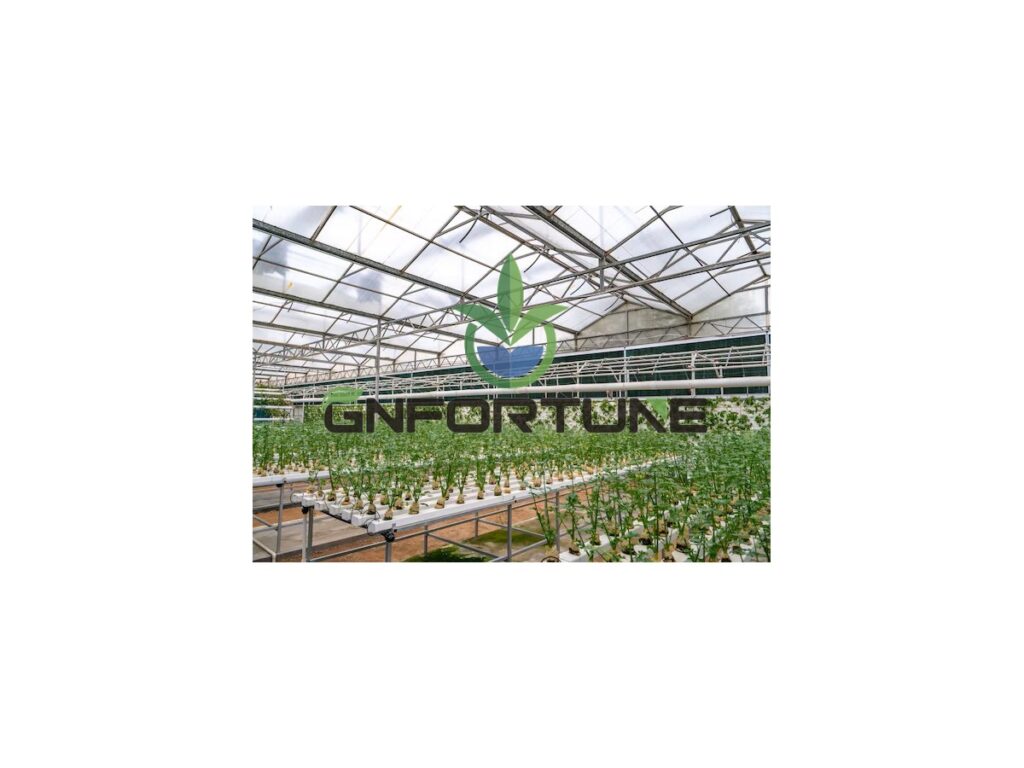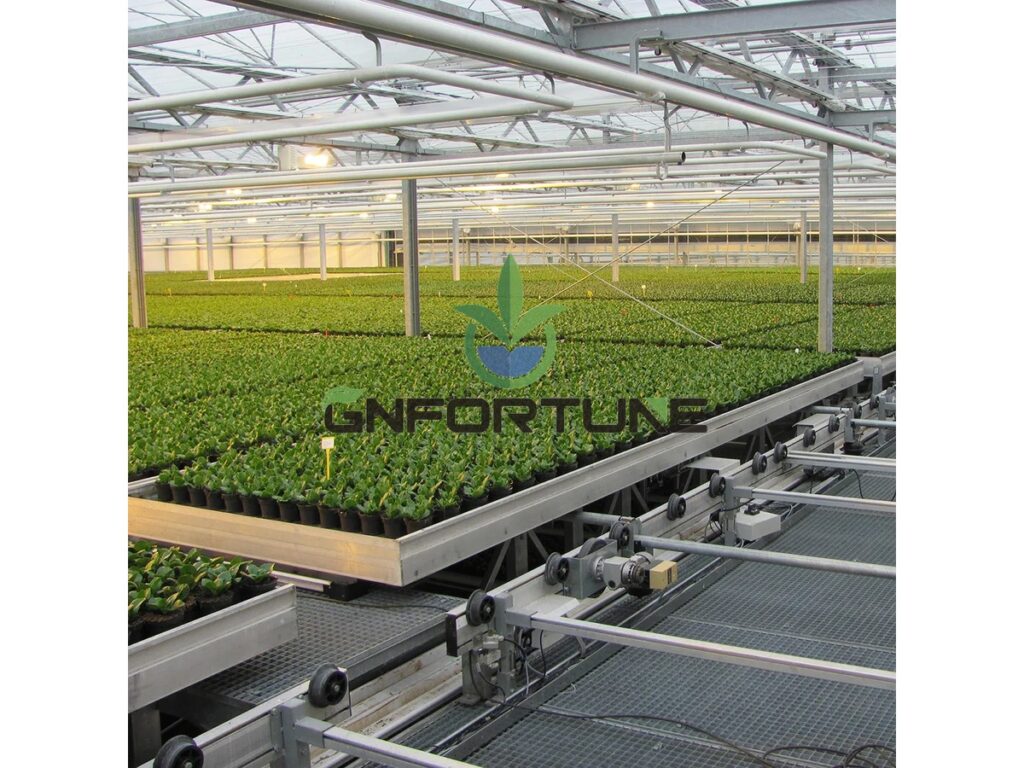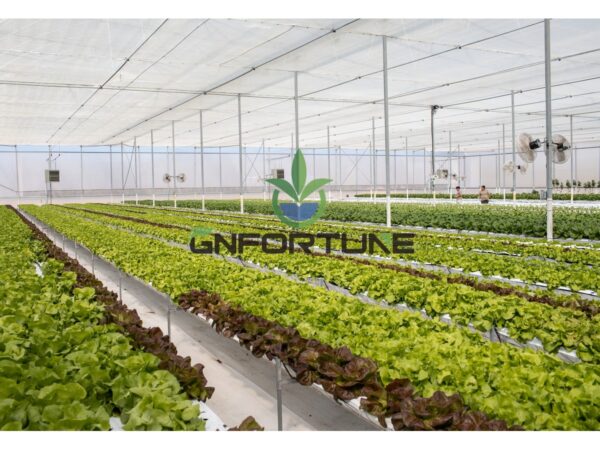
CO2 enrichment equipment greenhouse packages are usually priced per burner or per tank and sold without the distribution, control and safety items that make them work. Three things decide the outcome: whether the structure retains gas at all, whether the distribution network delivers it evenly across the span, and whether the controller coordinates with ventilation. Buy the burner first and quote last, and enrichment turns into an expensive way to vent gas out of the roof.
This is a selection guide written from a purchasing desk: what each hardware route delivers, what must be specified alongside it, and how to compare running cost per hectare honestly.
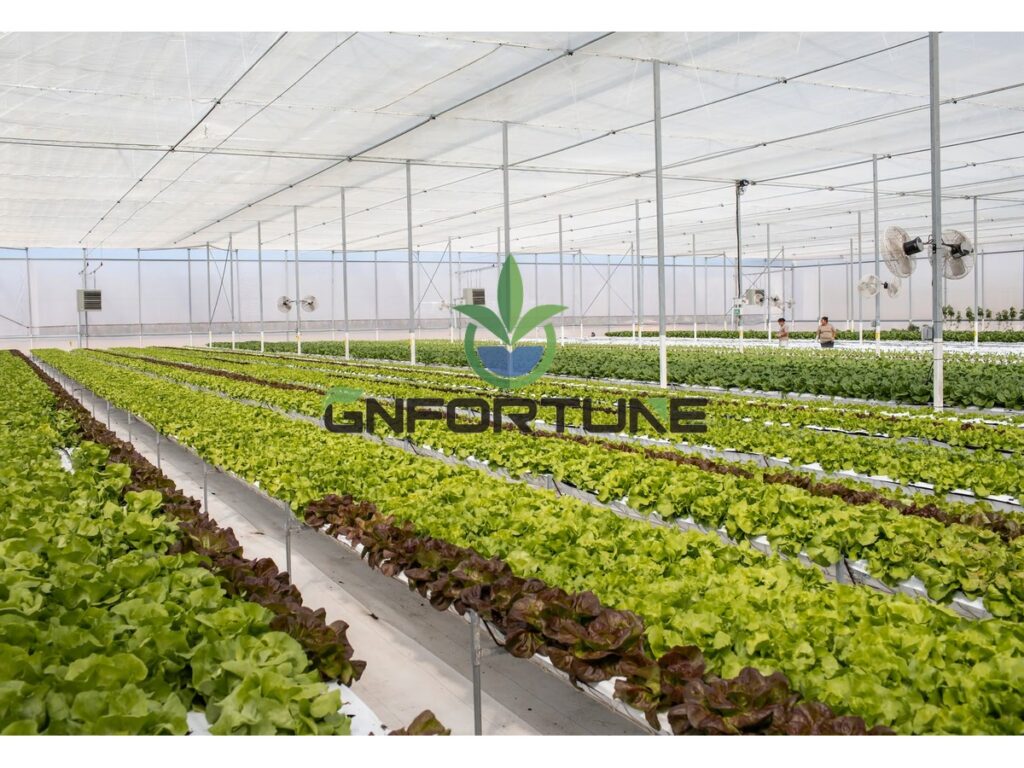
When CO2 enrichment pays and when it does not
Enrichment pays where there is high light, a tight envelope and a crop with a known response — tomato, cucumber and pepper under glass, or nursery stock where stem extension is controlled. CO2 is the raw material for photosynthesis, and raising concentration raises the rate at which the crop uses the available light. It does not pay when:
- The house leaks. Wide vents and frequent winter door movement mean the enrichment rate you pay for simply leaves.
- Light is the real limit. In a shaded house or a dark winter period extra CO2 buys little, so enriching in the darkest months is poor value.
- The crop is unresponsive. Many leafy crops gain little from enrichment in a channel system.
- Ventilation is uncoordinated. Enriching while roof vents stand open is a direct waste and the most common control fault in existing installations.
Background physics and target concentrations are covered in our article on how much CO2 plants need; the rest of this guide stays on hardware.
Source options: burner, liquid CO2, fermentation-grade gas
Three supply routes exist for CO2 enrichment equipment greenhouse projects, differing in fuel logistics, control precision and safety profile. Which fits depends on what is locally available.
| Route | Supply | Strength | Weakness |
|---|---|---|---|
| CO2 burner greenhouse | LPG or natural gas | Lowest consumable cost where gas is cheap | Adds heat and humidity; needs gas supply and flue |
| Liquid CO2 | Bulk tank and vaporiser | Clean, dry, precise, no added heat | Delivery contract, tank siting, market-linked price |
| Process-grade gas | Nearby brewery or food plant | Cheap where supply exists | Continuity outside your control; purity must be checked |
A burner is sized from greenhouse volume, not crop area: input rating follows the volume to be enriched and the leakage rate. Ask any supplier to state the input they propose and the enrichment rate behind it — a quote without those assumptions is a guess.
Liquid CO2 suits sites without gas, without a combustion permit, or where the crop zone must stay dry. Ask for vaporiser capacity against peak fill rate and tank size against your delivery interval.
Storage, vaporiser and safety requirements
A liquid CO2 storage tank is where compliance concentrates, so ask for documentation rather than promises.
- Tank siting. Separation distances, a bundled compound outside the greenhouse wall line, and a siting drawing rather than a bare footprint.
- Vaporiser sizing. Capacity for peak demand with the valve fully open, not average demand; undersized units fail in cold weather, when enrichment matters most.
- Pressure and relief. Stages, relief devices, and who carries annual inspection under local code.
- Detection and shutdown. A fixed CO2 detector with automatic shutoff for enclosed plant rooms where a leak could build up.
Burners carry a different safety scope: flame supervision, high and low gas pressure cut-outs and a pre-ignition purge. Check emission rules too, since combustion equipment near a protected structure is restricted in some regions. Greenhouse enrichment cost is heavily influenced by which compliance items the quotation includes.
Distribution tubing, injection points and mixing
Most failures are distribution failures. The gas reaches the manifold correctly, then reaches the crop unevenly, or leaks on the way.
- Perforated lateral tubing. Specify diameter against total delivery, perforation spacing against crop height, and outlet orientation.
- Inlet height. CO2 is heavier than air, so crop-level injection distributes far better than ridge injection — ask where inlets will run.
- Pressure regulation. Every zone needs a regulator and a flow verification point, or delivery shifts as zones open and close.
- Material and leak tightness. Pressure-test before commissioning, and confirm the tubing tolerates the working pressure and greenhouse atmosphere.
Air exchange matters more than buyers expect: how well CO2 mixes through the canopy before vents draw it out limits the achievable rate, so set injection points against the flow pattern from circulation fans. See our guides to ventilation design with vents and HAF fans and cooling options in hot climates, where pad-and-fan systems shorten the enrichment window.
Controllers, sensors and interaction with ventilation
A CO2 controller decides whether the hardware is worth buying: it modulates dosing against measured concentration and suppresses enrichment whenever the house cannot retain gas. Minimum control logic worth specifying in writing:
- Regulate dosing to a setpoint with a configurable dead band.
- Suppress dosing whenever roof or side vents open beyond a set position.
- Suppress dosing when heating runs, if the supply is burner-based.
- Hold a night setpoint at or below ambient, with a dawn ramp rather than a step.
- Log concentration, dosing output and vent position together for later diagnosis.
Sensor quality limits everything else. A drifting sensor makes the controller dose wrongly with total confidence, so specify sensor type, calibration interval and a calibration gas source; our article on sensor placement covers the errors behind inconsistent readings.
The platform usually also runs fertigation, so confirm CO2 logging exists on your existing controller and what the module costs — see our guide to nutrient controllers and automated dosing.
Running cost, maintenance and specification checklist
Greenhouse enrichment cost has three parts, and quotes showing only one are not comparable.
| Cost element | CO2 burner route | Liquid CO2 route |
|---|---|---|
| Consumable | LPG or gas at prevailing tariff | Bulk CO2 at market price, by tanker |
| Capital | Burner, ring main, pipework | Tank, vaporiser, regulators, pipework |
| Annual upkeep | Burner service, flue and gas checks | Tank and vaporiser inspection, relief certification |
To compare per hectare, take the annual consumption implied by the supplier’s enrichment rate and running hours, divide by hectares of cropped area, and insist on seeing the working — an unexplained cost per hectare is not signable. Ask each supplier to quote the following as separate, identified items:
- Source unit or tank, sized to stated volume and enrichment rate.
- Vaporiser or gas ring main, sized for peak demand.
- Regulators, manifold, valves and filters.
- Distribution tubing, supports, perforation and installation labour.
- Sensors, controller module and control integration.
- Detector, shutoff and compliance documentation.
- Commissioning, calibration and training.
- Spares list with lead times.
Also ask what happens when it fails and who services it locally. A burner on a remote site with no gas technician is a different investment from one near a service centre.
G AND N FORTUNE LIMITED supplies CO2 enrichment equipment greenhouse packages — source units, distribution tubing, control integration and commissioning — quoted against your structure and volume data rather than a catalogue rating, with layouts set out in our 2,400 m² test greenhouse before shipment.
FAQs About CO2 Enrichment Equipment
Is a CO2 burner cheaper than liquid CO2?
It depends on local gas prices and availability. Where LPG or natural gas is cheap and reliable, a burner usually has the lower consumable cost; where gas is restricted or expensive, liquid CO2 is more practical despite higher capital cost.
What size CO2 burner do I need for my greenhouse?
Size follows the volume to be enriched and the assumed leakage rate, not the growing area alone. Ask the supplier to state the input proposed and the volume and enrichment rate behind it.
Where should CO2 distribution tubing be installed?
At or just above crop level, following the house flow pattern. CO2 is heavier than air, so ridge-height injection distributes poorly compared with low-level injection.
Do I need a separate CO2 sensor and controller?
You need measured concentration and logic that suppresses dosing when vents are open. If your existing controller already runs that logic with a quality sensor and logs the data, a separate unit may be unnecessary.
How much does CO2 enrichment cost per hectare per year?
It combines consumable, capital and maintenance, and varies by crop, climate and target concentration. Ask each supplier to show the annual consumption working behind any per-hectare figure.
Related Reading
- CO2 for Hydroponics: How Much Do Plants Need? — How much CO2 plants actually need, and the enrichment ceiling by crop
- Greenhouse Ventilation Design: Vents and HAF Fans — Vent design and HAF fans, and why they fight enrichment
- Thermal Screens for Hydroponic Greenhouses: Night Heat Retention and Energy Saving — Night heat retention and how a screen keeps enriched air in the house
- Greenhouse Heating for Hydroponics: Sizing, Root-Zone Temperature & Winter Energy Cost — Heating sizing and root-zone temperature when the house is kept closed for CO2
- Hydroponic Farm Energy Cost: Loads and Solar Options — Farm energy loads and where enrichment sits in the bill
Next Step: What to Send for a Quotation
Enrichment quotations need structural and crop data before anything can be sized.
Send us: (1) greenhouse type, span, length and number of spans, plus total volume in m³; (2) cropped area in m² or hectares; (3) crop list and target yield; (4) winter design temperature and light availability; (5) gas availability — LPG, grid gas or bulk CO2 — with tariff if known; (6) vent and screen specification; (7) control platform and integration requirement; (8) delivery and commissioning dates; (9) budget range. Ask for a Project Consultation to review the layout and control logic first.