
Buy Plugs or Run Your Own Nursery: The Trade-off
Buying plugs or running an on-farm nursery is one of the few decisions that changes the shape of a whole business rather than one line of it. Bought-in plugs convert a fixed cost into a variable one and hand the germination risk to someone else, at a price per plant that includes their labour, their failures and their margin. An on-farm nursery removes that margin and takes the risk back, along with the space, the equipment and the daily attention a propagation room demands. Neither is obviously correct. The answer depends on annual plant count, on how reliable your planting calendar is, and on what a delayed delivery costs you in lost growing days.
What Each Option Really Costs Per Plant
Compare delivered cost per usable plant, not the headline price per plug.
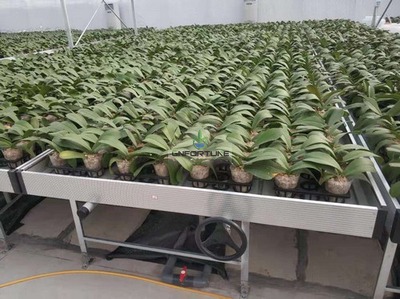
| Cost element | Bought-in plugs | Own nursery |
|---|---|---|
| Seed | Included in price | Direct cost |
| Media and trays | Included | Plugs, trays and replacements |
| Labour | Included | Sowing, checks, transplanting, grading |
| Energy and water | Included | Chamber, lighting, heating, irrigation |
| Failures and culls | Usually credited | Borne by the farm |
| Freight and cold chain | Charged to the farm | Not applicable |
| Capital | None | Chamber, benches, lighting |
| Late delivery risk | Shared, contractually | Internal scheduling risk instead |
Two adjustments make the comparison honest. First, divide the bought price by the stand count actually delivered, because a tray quoted at full count rarely arrives at full count after transit. Second, charge the nursery option a realistic germination rate: commercial seed commonly germinates at 85 to 98% depending on lot and species, and the culls below the target size are a real cost even when they are not a cash cost.
Space is the item most often omitted. Bench area used by a nursery is bench area not growing saleable crop, and it should be charged at whatever margin that space would otherwise earn. See the propagation room setup guide for what the space actually needs.
Biosecurity: What Arrives With Bought Plugs
A plug delivery brings the plant, the media it was grown in, and whatever travelled with both. That is the largest non-financial cost of buying in, and it is manageable rather than fatal if it is treated as an inbound control point.
- Pathogens: damping-off and root organisms arrive inside a healthy-looking plug. Quarantine arrivals rather than moving them into the crop.
- Insects: fungus gnats, aphids, thrips and whitefly travel on plants and trays. Inspect undersides and growing points, not just the tray surface.
- Viruses: symptomless carriers are how plant viruses move between farms. Buy from suppliers who test, and keep the records.
- Media variation: a different plug media changes watering in the first fortnight, when establishment is decided.
The control is a written inbound inspection: count, stand count, pest and symptom check, media and label check, then a quarantine period before the batch enters production. The incoming inspection procedure for seeds and media sets out how to run that at scale, and the propagation and transplanting guide covers the two weeks after arrival.
Labour Shape Across the Season
Buying plugs produces a spiky labour profile; growing them produces a flat one.

Bought-in plugs concentrate work into receiving, inspection and transplant, which suits a crew sized to the main crop with temporary labour added for planting days. An own nursery adds a small, continuous and skilled workload: sowing on schedule, checking germination daily, moving trays between chamber, bench and dispatch, grading before transplant. It needs someone present every day, because a germination chamber left unattended over a warm weekend loses trays.
The failure mode differs too. A late delivery costs growing days. A failed germination costs the same days but is visible a week earlier.
Scale: Where an Own Nursery Pays Back
The break-even is an annual fixed cost divided by a saving per plant.
| Input | How to estimate it | Why it moves the answer |
|---|---|---|
| Annual plant count | Plants per cycle multiplied by cycles per year | The denominator of every per-plant cost |
| Annual fixed nursery cost | Capital depreciation plus energy plus allocated space | Must be carried regardless of how many plugs are grown |
| Saving per plant | Delivered plug price minus own growing cost | Small changes here move break-even sharply |
| Utilisation | Weeks the nursery is actually full | A nursery used four months a year carries the same annual capital |
| Break-even count | Fixed cost divided by saving per plant | Below it, buying is cheaper; above it, growing is |
Worked logic: if the annual fixed cost of a nursery corner is F and the saving per plant against bought plugs is S, break-even sits at F divided by S plants per year. On many leafy operations that lands in the hundreds of thousands of plants per year; on vine crops, where each plant is worth far more, the count is lower and the nursery pays back sooner.
Utilisation is the trap. A nursery sized for the peak week and idle the rest of the year carries twelve months of capital for perhaps four months of output, and that is the situation where buying stays cheaper well past the theoretical break-even.
Hybrid Model: Chamber In, Plugs Out
The most common commercial answer is neither pure option. Grow the predictable base load, buy the peaks and the awkward varieties.
- Own germination, bought finishing: run the chamber on farm, then move trays on to bought plug stock when demand spikes.
- Own nursery for standard lines: the varieties you plant every week, where scheduling risk is low.
- Buy for difficult species: slow, uneven or expensive seed is often better bought as plugs from a specialist.
- Buy for contingency: a standing arrangement with a plug supplier is cheap insurance against a chamber failure.
Variety choice interacts with all of this, and the variety selection and seed sourcing guide is worth reading before committing to a seed-only model, because some genetics are simply easier to buy as plants.
Questions to Ask a Plug Supplier
A plug quotation is easy to compare on price and hard to compare on everything that matters.
- Grown to order or from speculative stock? To-order plugs give you the sowing date.
- Sowing date and plant age at dispatch? Older, held plugs transplant differently.
- Which media, plug size and cell count per tray? This sets watering behaviour and stand count.
- Guaranteed stand count, and what happens to short trays? Get the credit policy in writing.
- What pest and disease testing is done, and can you see the records? A supplier who tests produces documentation quickly.
- Delivery window and cold chain? Transit time and temperature decide how plugs look on arrival.
- Minimum order and lead time? This is what actually constrains your planting calendar.
Buy the risk you cannot manage, and grow the volume you can schedule. A nursery is not a cost-saving project; it is a commitment to being right every week for the whole season. If your planting calendar slips, if nobody owns germination on Sundays, or if the annual count is well below break-even, bought plugs are the professional choice, not the lazy one.
Frequently Asked Questions
At what scale does an on-farm nursery pay back?
A: Divide the annual fixed cost of the nursery by your saving per plant against bought plugs. For leafy crops the answer usually sits in the hundreds of thousands of plants per year.
Is buying plugs a biosecurity risk?
A: Yes, but a manageable one. Quarantine arrivals, inspect for pests and symptoms, and buy from suppliers who test and show records.
How much space does a nursery corner need?
A: Enough bench area for one sowing cycle at your peak weekly plant count, plus germination space and a route for moving trays.
Can a farm do both at once?
A: Yes, and most do. Grow the base load and buy peaks, difficult varieties and contingency cover.
What is the biggest hidden cost of an own nursery?
A: Idle capacity. A nursery sized for the peak week carries its capital all year, which pushes break-even higher than the arithmetic suggests.
Request a Nursery Corner Quote
The buy-plugs-or-build decision is a break-even calculation dressed up as an equipment decision. Work out annual plant count, the saving per plant against your current plug price, and how many weeks a year the nursery would be full. If the count clears break-even with margin, build; if not, negotiate the plug contract and spend the capital on growing space.
Send crop, weekly plant count, plug size and media preference, and whether a chamber already exists, and the team will return a nursery layout with bench area, chamber size and tray counts. To request a nursery corner quote for your farm, include your current delivered plug price if you have one.


