Growing Media Wholesale: Pallets, MOQ, Freight and the Questions to Ask First
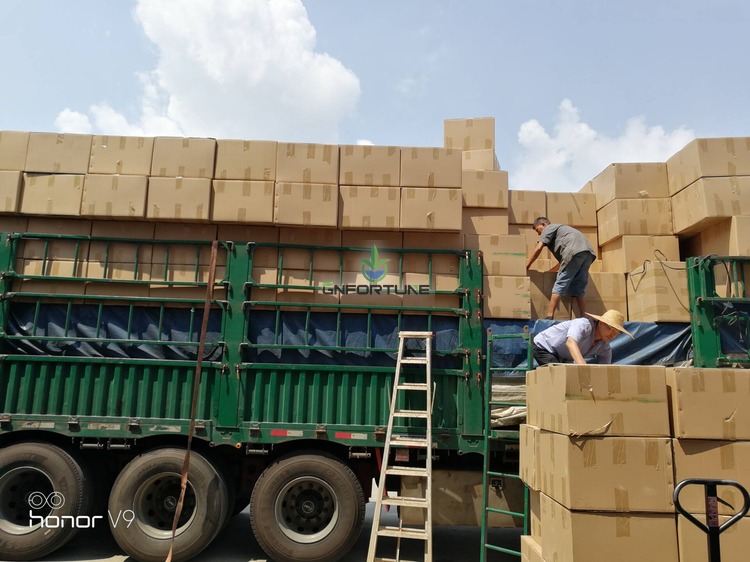
Growing media wholesale is a freight problem before it is an agronomy problem. Coir, perlite, rockwool, and mineral blends are bulky, low-value per cubic metre, and expensive to move, so the unit that matters is the pallet or the container rather than the bag. Buyers who order grow media by the bag pay retail handling costs on commercial volumes and pay again for the freight inefficiency. This guide sets out the pack formats, the freight economics behind minimum order quantities, the specifications to require on a quotation, and the documentation that decides whether a shipment clears customs.
Bag vs Bale vs Pallet vs Container
Five pack formats cover the market, and the right one depends on annual volume and on how much covered storage the farm has. Compressed formats save freight because the media is shipped at a fraction of its expanded volume, but they need water and time to expand on site before use.
| Format | Typical volume | Freight efficiency | Best for |
|---|---|---|---|
| Consumer bag | 5 to 50 L | Poor, high handling cost | Trials and emergency top-up only |
| Compressed bale or brick | Expands to 40 to 80 L | Good for coir and peat blends | Sites with expansion tanks and labour |
| Bulk bag (FIBC) | 0.5 to 2 m³ | Good for perlite and mineral media | Medium volumes, forklift handling |
| Palletised slabs or cubes | 1.0 to 2.0 m stack height | Good, protected and countable | Rockwool, slab and cube programmes |
| Full container load | 20 or 40 ft | Best cost per litre | Annual contracts and farm groups |
Ask the supplier to quote cost per litre of expanded media landed at the farm, not cost per bag. That single conversion makes coir against perlite against rockwool comparable, and it exposes freight as the dominant cost line it usually is.
MOQ and Freight Economics
Minimum order quantities on media exist because of freight, not because of production. A part-container shipment of low-density material pays full container handling for a fraction of the space, which is why suppliers quote a threshold rather than a unit price at low volume.
- Container weight versus volume. Light media fills a 40 ft container by volume before it reaches the weight limit. Heavier mineral media can hit the payload limit first, so check which constraint binds.
- Pallet dimensions. Standard pallets stack to roughly 1.5 to 2.0 m. Confirm pallet footprint and height, because they decide how many fit per container and whether the load needs a high-cube box.
- Compressed versus expanded. Shipping compressed and expanding on site can cut freight volume substantially, at the cost of water, labour, and tank capacity.
- Consolidation. Combining a media order with equipment in the same container often costs less than shipping media alone. Worth asking whenever a hardware order is already planned.
Declared Specs: Particle Size, pH, EC, Dust
A media quotation without declared specifications is not a quotation, it is a description. Require a specification sheet with test values for the batch, and require that the purchase order references it. The parameters below are the ones that change crop performance and the ones most often missing.

| Parameter | What to require | Why it matters |
|---|---|---|
| Particle size distribution | Stated grade range and screening method | Sets air-to-water ratio at container capacity |
| Bulk density | kg/m³ dry, plus packed or loose basis | Decides freight weight and bag count |
| pH | Test value with the method stated | Drives the acid or buffer adjustment at mixing |
| EC | Test value, ideally 1:1.5 or saturated paste method stated | High EC means a leaching step before planting |
| Dust and fines | Percentage below a stated sieve size | Fines clog emitters and add handling labour |
| Moisture content at dispatch | Percentage by weight | Determines freight weight and mould risk in transit |
| Washing and buffering | Declared for coir, with sodium and potassium levels | Unbuffered coir competes with the feed programme |
The guide to washed and buffered coir at commercial scale explains why batch variation in EC and buffering costs more than the price difference between two suppliers. The soilless substrate guide covers how each material behaves once it is in the system.
Import Documents and Phytosanitary Rules
Organic media crosses borders under plant-health rules, and mineral media does not always escape them either. A shipment held at port for a missing certificate costs more than the margin on the order, so confirm the document set before the container sails.
- Phytosanitary certificate. Required for most organic media. Confirm the issuing authority and that the description matches the commercial invoice.
- Certificate of origin. Needed for preferential duty in many markets, and worth requesting even where duty is zero.
- Fumigation or heat treatment declaration. Wooden pallets usually need ISPM 15 marking. Unmarked pallets are a common cause of port delays.
- Material safety and composition data. Increasingly requested by retail customers and auditors, particularly for mineral wool and expanded clay.
- Country-specific registration. Some markets require the importer to be registered before organic material can be cleared. Check before ordering, not after.
Storage on Site: Moisture and Contamination
Media storage is a hygiene question. Opened bags of organic media pick up weed seed, dust, and splash contamination, and wet pallets grow mould long before planting. Covered, drained, and segregated storage costs little and prevents most of the problems.
- Keep it dry and off the floor. Pallets on a drained hard standing, under cover, with the wrap intact until use.
- Rotate stock. First in, first out. Organic media in particular has a practical shelf life, and moisture shortens it.
- Segregate opened from sealed. Once a bag is open, treat it as a short-life item and use it within the current crop cycle.
- Keep expansion water clean. Expanding coir with untreated surface water reintroduces whatever that water carries.
- Plan the quarantine step. If incoming inspection rejects a batch, it needs somewhere to sit that is not next to accepted stock.
The batch acceptance and incoming inspection guide sets out sampling rates and acceptance criteria, and the rockwool plugs, cubes and slabs guide covers pack formats and storage for slab programmes.
Supplier Red Flags on Media
Media is one of the easiest product categories to substitute, because a buyer cannot tell a slightly different grade apart by eye. The signals below are the ones that reliably precede a problem.
The question that separates a real supplier from a broker: ask for the test certificate for the specific batch being quoted, not a generic product datasheet. A manufacturer or a contracted packer can produce a batch record within a day. A broker offers a marketing sheet, then a delay, then a substitute grade. If the batch number cannot be traced to a production date, the declared EC and pH are decoration rather than data.
- No batch number on the bag or pallet label. Without it, there is no traceability if the crop fails.
- Specification given as “typical”. Typical values are not commitments. Require a stated range and a test method.
- Price quoted per bag only. It hides freight and makes comparison impossible.
- Substitution offered after order confirmation. “Equivalent grade” usually means a wider particle distribution and more fines.
- No phytosanitary documentation offered. For organic media this is a hard stop in most import markets.
- Moisture not declared at dispatch. The buyer pays freight on water and receives mould.
FAQ
What is the minimum order for wholesale growing media?
A: It is set by freight rather than production. Suppliers usually quote a pallet or part-container threshold; a full container gives the best cost per litre.
Should media be bought compressed or expanded?
A: Compressed saves freight where the site has expansion capacity and labour. Expanded or slab formats cost more to ship and need less handling.
What EC should growing media arrive at?
A: Low enough to plant without prolonged leaching. Require the declared test value and the extraction method on the specification sheet.
Does imported media need a phytosanitary certificate?
A: Organic media generally does, and mineral media may depending on the destination. Confirm the document set with a local broker before shipping.
How long can growing media be stored?
A: Mineral media is stable indefinitely if kept dry and sealed. Organic media has a shorter practical shelf life, and moisture in transit shortens it further.
Get a Media Pallet Quote
Wholesale growing media orders should be compared on cost per litre landed, with declared particle size, pH, EC, dust, and moisture attached to a named batch. Send annual volume, crop, and destination port through the request a media pallet quote form and the team will return pallet quantities, container loading, and the specification sheet that ships with the order.