

“Turnkey” Means Whatever the Contract Says
Two parties can sign for a turnkey hydroponic facility and mean entirely different things. One assumes everything is handled down to the first harvest; the other assumes delivery of equipment and drawings. The gap between those positions is where projects lose time, money and relationships.
A turnkey hydroponic project works well when the scope split is written down in enough detail that nobody has to interpret it on site. This guide sets out the usual division of responsibility, the sequence it should follow, and the items most often missing from the first draft.
Typical Scope Split
| Item | Usually buyer | Usually supplier | Often disputed |
|---|---|---|---|
| Land and site permits | Yes | Input drawings for permit packs | Structural calculations stamped for local code |
| Groundworks, slab and drainage | Yes | Layout requirements and point loads | Where falls and gullies were specified by whom |
| Building / greenhouse shell | Sometimes (separate contractor) | Sometimes included | Interface tolerance between shell and internal structures |
| Growing system hardware | No | Yes | Spare parts and commissioning consumables |
| Pumps, filtration, dosing | No | Yes, with commissioning | Power supply characteristics supplied in time |
| Electrical supply and distribution beyond equipment | Yes | Load schedule and connection specification | Who sizes and installs the incomer and protection |
| Water supply up to the plant room | Yes | Connection specification and quality requirement | Pre-treatment responsibility where water is poor |
| Freight, insurance and import clearance | Depends on Incoterm | Depends on Incoterm | Port charges, demurrage, local taxes |
| Installation labour and site supervision | Varies | Varies — often supervisor plus buyer’s crew | Overtime, delays caused by site not being ready |
| Commissioning and acceptance testing | Joint | Joint, with supplier procedures | Who supplies water, power and plants during testing |
| Training | Crew availability | Delivery of training | Language, duration, documentation |
| Agronomy and crop plan | Sometimes | Sometimes offered | Whether yield figures are advisory or guaranteed |
Delivery Sequence That Works
- Inputs agreed: climate data, water analysis, crop list, target output, power availability — differences here invalidate later stages
- Concept layout and budget: get area, row count and rough figures before detail starts costing money
- Approved drawings: general arrangement, sections, fixing details, plant room schematic, electrical single-line
- Signed specification: materials, brands or equivalents, quantities, spare parts list
- Manufacturing and inspection: with hold points if the buyer wants to witness them
- Packing and shipment: against a named Incoterm, with documents that match what the destination actually requires
- Site readiness verified: power, water, access, dry storage, drainage — before the container arrives
- Installation: to the approved drawings, with any deviation recorded before it is covered up
- Commissioning: pressure testing, flow verification, sensor calibration, alarm testing, then wet run without plants
- Training: hands-on with the actual equipment plus documentation in the working language
- Acceptance: against a written checklist agreed at contract stage
Site Readiness: The Usual Cause of Delay
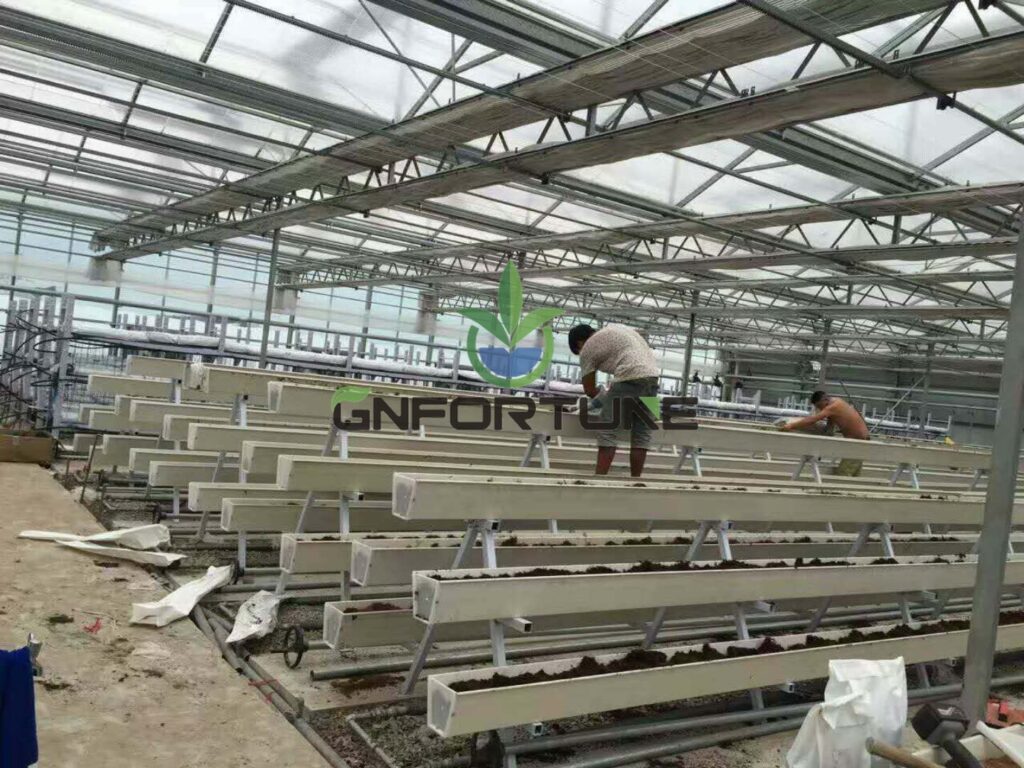
- Floor not complete, not flat, or not cured when installation is scheduled — the single most frequent delay we see
- No power on site or insufficient temporary supply for tools and testing
- No dry, secure storage for equipment awaiting installation, which leads to damaged components and disputes about who caused it
- Access too narrow for the longest items — measure the longest piece against every door and turn
- Crew not assembled to work alongside an overseas supervisor whose days are being paid for
- Drainage not connected, making a wet commissioning test impossible
Gaps That Turn Into Claims
- Spares not specified — nobody ordered seals, clips or emitters, so the first failure is a downtime event
- Commissioning consumables such as dosing chemicals, calibration solutions and test media excluded from supply
- Language of documentation not agreed, leaving operators with manuals they cannot read
- Acceptance criteria undefined, so “pass” becomes a negotiation after installation
- Delay responsibility unclear when the site is not ready for a booked supervisor
- Tax and duty allocation left implicit in a quotation
- Warranty start date undefined — does it begin at shipment, installation or acceptance?
Commissioning: Do Not Skip the Wet Test
Filling the system with water before plants go in is the cheapest insurance in the whole project. It finds leaks, wrongly assembled fittings, control logic errors and sensor drift while they are still cheap to fix. Plants turn every one of those into a crop problem.
- Pressure test pipework to an agreed figure and hold it
- Verify flows at every zone against design values
- Calibrate EC, pH and any other probes with fresh solutions
- Trigger every alarm and confirm both the alert and the escalation path
- Run pumps through their full duty cycle, including changeover if redundant units are installed
- Record results against the acceptance checklist in writing
What To Ask Before Signing
- Exactly which items are excluded from scope, in writing
- Which party supplies each listed utility, and to what specification, before installation starts
- How many installation days are included, and what happens if the site is not ready
- Whether a supervisor is included, and for how long
- What training is delivered, in which language, with what documentation
- What triggers warranty start and what is covered in the first year
- Who holds spares, and what response time is committed
FAQ
Is turnkey cheaper than buying equipment only?
Not necessarily cheaper, but it reduces interface risk and internal coordination load. It suits buyers without in-house project capability. Buyers with strong teams often save money by taking shell and services themselves.
What is usually excluded from turnkey scope?
Commonly land, permits, groundworks, the building shell, main electrical infrastructure, water supply to the plant room, import duties and taxes, and long-term agronomy. Confirm each explicitly rather than assuming.
Who is responsible if the site is not ready on time?
Whoever the contract says. Define it, along with standby and re-mobilisation costs, before scheduling a supervisor.
Do I still need my own project manager?
Yes, even for a full turnkey contract. Someone has to own permits, readiness, payments, access and decisions on site — and accept the works at the end.
Can turnkey include a yield guarantee?
Rarely, because it depends on variables outside the supplier’s control. Expect performance specifications for equipment and environment, with agronomy offered as support rather than a guaranteed outcome.
Should I use one contractor for shell and system?
One interface is simpler, but check that whoever takes the whole package is genuinely competent in the growing side. Many disputes come from packages subcontracted down to whoever was cheapest.
Write the Boundaries Down
The best turnkey contracts we work on start with a written scope matrix that both sides sign before detailed drawings begin. Send us your site data and crop plan and we will return a draft scope split you can take to your other contractors. Start with the quote form.
Related reading: this complements several existing guides — commissioning and site acceptance, the 7-step project plan, warranty and spares clauses to negotiate, shipping, container loading and MOQ and the importing checklist.