

A quotation that looks 15% cheaper can cost more on the water, and the difference is usually the freight mode buried in the small print. Choosing between the modes — the real question in lcl vs fcl equipment shipping — is decided by four numbers: total cubic volume, part weight and value, the length of the longest item, and how much delay the project schedule can absorb. Get those four onto the table before comparing prices, and most mode decisions make themselves. This article walks through where each mode fits, what LCL actually costs once fixed fees are counted, and how to make freight a comparable line across competing quotes.
The Four Modes and Where Each One Fits
Equipment for a hydroponic project travels by one of four routes, and each has a boundary where it stops making sense:
- FCL (full container load): the whole container is yours. Fastest handling, fewest touchpoints, and the only mode where loading quality is fully under the shipper’s control.
- LCL (less than container load): your cargo shares a container with other shippers’ goods through a consolidator. Suited to small lots that cannot fill even a quarter of a box.
- Breakbulk or flat rack: for items that physically exceed container dimensions — long bundles, wide tanks, gantry frames. Priced per measurement, booked well ahead.
- Air freight: for high-value, low-weight urgency — controllers, dosing pumps, a seal kit that is holding up commissioning. Almost never right for channels, gutters or structure.
| Mode | Typical fit | Cost basis | Transit profile | Main risk |
|---|---|---|---|---|
| FCL 20ft / 40ft | Roughly 15 m³ up to a full system order | Per container, per lane | Direct service, one loading, one devanning | Vessel schedule and port congestion |
| LCL consolidation | Under roughly 15 m³, small spares and sample kits | Per m³ or per tonne, whichever bills higher, plus fixed fees | Extra days at origin and destination CFS | Co-load damage, devanning delays, fixed-fee share |
| Breakbulk / flat rack | Oversize tanks, long profile bundles, frames | Per measurement (W/M), lashing and port charges | Slower; crane handling at both ends | Weather exposure and lashing quality |
| Air freight | Urgent, high value-density parts | Per kg, fuel and security surcharges | Days, not weeks | Cost per kilo dwarfs part value on dense goods |
The boundaries shift with lanes and seasons, so treat the figures below as planning ranges with stated assumptions rather than market quotes.
What LCL Actually Costs: The Fixed Fees Behind the Rate
LCL is quoted per cubic metre or per tonne — whichever produces the higher charge — but the rate is rarely the expensive part. Each shipment also carries fixed charges at both ends: origin CFS and documentation, destination devanning, do fees and a minimum-charge clause that bills perhaps 1–2 m³ even if the cargo is smaller. As a planning range on a typical lane, those origin and destination fixed items often add 200–400 per shipment in local equivalents, which is why a two-crate sample order can ship for less by courier than by LCL.
The arithmetic that decides the mode, with illustrative numbers: assume a 40ft container on a regional lane costs 2,500–4,000 and carries 55–60 usable cubic metres of stacked cargo — roughly 50–70 per m³ at a full load. LCL on the same lane quotes 60–90 per m³ plus the fixed fees above. Under about 15–20 m³, LCL usually wins despite the fees; above that, the cubic rate plus fees approaches or exceeds the whole-container cost while delivering less protection. Confirm against live quotes — lanes swing widely with season and fuel.
Time and Damage Risk: Why Handling Count Matters
An FCL shipment is loaded once at the factory, sealed, and opened at destination. An LCL shipment is received at the origin CFS, devanned, re-sorted, stuffed into the consolidation box, devanned again at destination, re-sorted and released — six or more extra touchpoints, each one a handling event. Two consequences follow:
- Transit: LCL typically adds several days at origin while the consolidator fills the box, and again at destination while it is devanned and released. Where the delivery window is contractual, those days belong in the schedule from the start.
- Damage exposure: co-loaded cargo can be stacked against or on top of yours, and crush damage on cartoned fittings is the classic LCL loss. Crating and palletising raise the bill but lower the risk, and the insurance position is documented in the guide to freight insurance and damage claims on equipment orders.
For fragile or mixed-cargo consignments, FCL with a part-filled container is often the cheaper answer once one damage claim is priced in — a claim settles at cost plus delay, and delay is what the project cannot buy back.
When Consolidation Is More Expensive Than a Full Container
Three situations flip the usual LCL-is-cheaper assumption:
- Cubic threshold: near 15–20 m³ on a mid-range lane, the LCL total converges on the FCL total. Above the threshold you are paying near-full-container money for shared-container service.
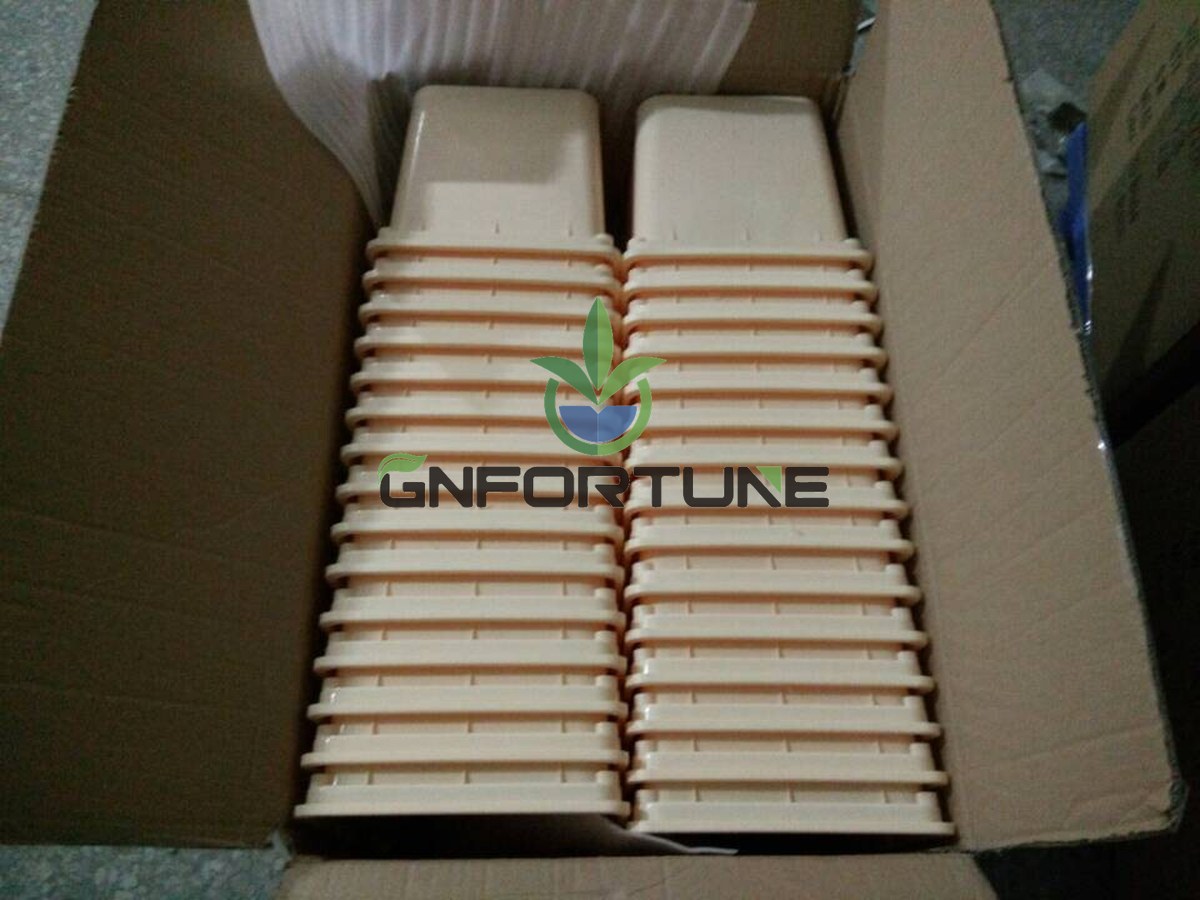
- Palletisation demand: consolidators often require palletised or crated cargo, and a palletised load wastes 15–25% of container volume compared with tight floor-loading — which pushes an order that would fit a 20ft into a 40ft.
- Expensive destination legs: at some ports the destination CFS and do charges per shipment are high enough that a consolidator’s fixed fees dominate the comparison, especially on small lots.
The counter-example matters too: a 6 m³ spares pack riding as LCL while the main order ships FCL separately is usually cheaper than holding the main order to consolidate — provided the schedule allows the two arrivals.
Long Channels and Profiles: The Loading Limits That Decide the Mode
NFT channels, substrate gutters and structural profiles come off the extrusion line in lengths that may not fit the box. A 20-foot container offers about 5.9 m of internal length, so 6 m channel bundles must be cut to roughly 5.8 m, loaded at an angle if the bundle allows, or shipped on a 40-foot unit with about 12 m of internal length. A 40ft high-cube carries the same length with more cubic volume, which is why long-profile orders default to it.
Bundles that exceed even that — or wide tanks and trusses — move on flat racks or breakbulk, where lashing certificates and port lifting charges enter the price. This is also where the packing plan meets the commercial one: the order-by-order loading arithmetic behind container choice is worked through in the article on how hydroponic equipment ships and container loading maths. Confirm channel cut lengths before the drawing is approved, not after the booking is made.

Writing the Freight Mode Into the Quotation Basis
Comparing bids is impossible when one supplier quoted FOB with FCL, another CIF with LCL and a third DDP with delivery to store. Require every quotation to state: the Incoterm (the three common ones are compared in the guide to Incoterms for equipment orders), the assumed freight mode, the number and type of containers, the assumed chargeable cubic and weight, and whether destination charges are included. With those five lines normalised, the landed-cost comparison becomes arithmetic rather than argument — the full cost build-up is covered in the article on hydroponic equipment landed cost listed below.
Freight mode is not a logistics afterthought in lcl vs fcl equipment shipping; it is a specification, decided by cubic volume, part length, cargo value and schedule, and written into the quotation so every bid can be compared like for like.
FAQs About LCL vs FCL Equipment Shipping
At what volume does FCL become cheaper than LCL?
As a planning range, somewhere between 15 and 20 m³ on a mid-range lane, assuming standard cartoned cargo and a destination port with normal CFS fees. Run both calculations with live quotes at the actual chargeable volume — the fixed destination fees are what move the crossover point.
Is LCL safe for fragile equipment?
It carries more handling than FCL by design, so risk rises with the number of touchpoints. Crating, palletising and inner packaging reduce exposure; for control cabinets, dosing skids and anything with glass or calibrated parts, FCL or air freight is usually the defensible choice.
Can 6-metre NFT channels ship in a 20-foot container?
Not straight — a 20ft offers about 5.9 m of internal length. Options are cutting channels to roughly 5.8 m, angle-loading if the bundle allows, or moving to a 40ft unit. Decide cut lengths at drawing approval, because they affect both freight mode and on-site jointing.
Why did my small LCL shipment cost more than the freight rate?
Because minimum-charge clauses and fixed origin/destination fees bill regardless of cargo size, and on small lots they dominate. For consignments under a few cubic metres of light parts, compare courier pricing before booking LCL.
Should the buyer or the supplier choose the freight mode?
Whoever carries the risk and the destination charges should decide the mode. Under FOB the buyer books and can consolidate; under CIF the supplier chooses and the buyer should audit the mode and route written into the offer before accepting the price.
Related Reading
- How Hydroponic Equipment Ships: Container Loading and MOQ Math — The loading arithmetic behind the mode choice
- Hydroponic Equipment Landed Cost — Where freight sits in the full cost build-up
- Incoterms for Equipment Orders: FOB, CIF and DDP Compared — Who books, who pays, who carries the risk
- Hydroponic Equipment Lead Times: The Full Path — Where freight days sit in the delivery schedule
- Checking Shipping Documents: Packing List, Invoice and B/L — The papers that must match the booked mode
Next Step: What to Send for a Quotation
Freight is quotable in days when the cargo is described properly. Suppliers can price the right mode first time instead of defaulting to the cheapest-sounding one.
Requesting an RFQ or project consultation? Send: the equipment list with quantities and package dimensions if known; channel cut lengths or profile lengths; destination port or city and country; required delivery window; preferred Incoterm or ask us to quote two; any site access limits for trucks or containers; and the budget band. G AND N FORTUNE LIMITED supplies NFT channels, substrate gutters, DWC and Dutch bucket systems and greenhouse structures, and quotes FOB, CIF and DDP with the freight mode, container count and chargeable volume stated on the face of the offer.


