

The multi-tier “I” type is the most photogenic NFT layout — towers of lettuce under light, floor area working several times over. This 2,000 m² installation in Shenzhen is a working example of where that geometry makes sense, and equally of where it does not. If you are weighing an I type NFT system against horizontal layouts, this project shows both sides.
What Was Installed at the Shenzhen Site?
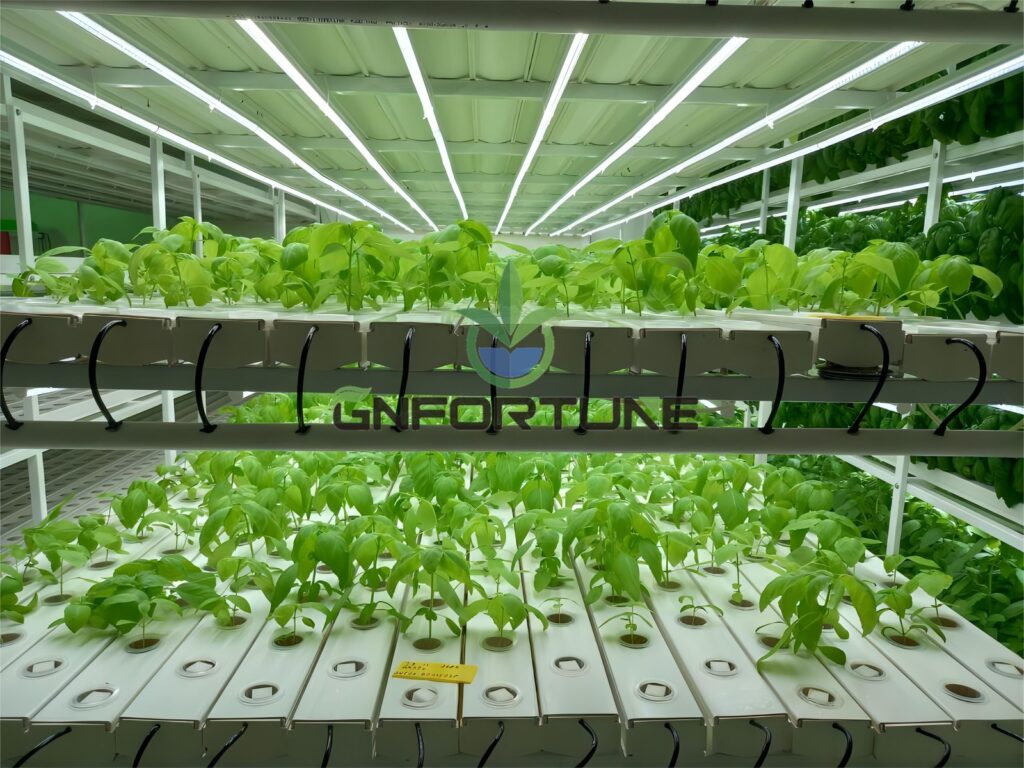
The project is a 2,000 m² base running our multi-layer “I” type system: vertical racks carrying stacked NFT channels, with nutrient supply and return plumbed per tier, installed indoors. The design brief was maximum production from limited, already-covered floor area — the situation where vertical layering earns its cost.
Because the site is indoors, sunlight was never part of the plan. Each tier is lit artificially, and the lighting provision was designed around the crop’s daily light integral rather than as a generic “grow light” allowance. That decision, made early, shapes everything else: rack spacing, tier height, and the electrical infrastructure behind the walls.
Where Does an “I” Type System Actually Fit?
The “I” type is the common NFT design for multi-layer use, and it is mainly chosen for three situations: indoor plant factories, container-based growing, and sightseeing or display agriculture where the vertical green wall is part of the attraction. In all three, land or floor area is the scarce resource, and stacking layers is the only way to raise output per square metre.
What it is not is a default upgrade. The cost per cultivated area runs notably higher than a single-layer horizontal layout — more structure, more channels, more lighting, more climate control per kilogram. For a large farm with affordable land, we say so plainly: the horizontal system wins on cost, and multi-tier geometry does not pay for itself.
| Layout | Best fit | Watch out for |
|---|---|---|
| “I” type multi-tier | Indoor factories, containers, display agriculture | Highest cost per m²; lighting becomes the main running cost |
| Horizontal NFT | Large farms with land available | Needs the most floor area; simplest and cheapest per m² |
| “A” type | Small and medium greenhouses wanting more yield per m² | Rack orientation must follow the sun |
What Did the Lighting Design Involve?
Indoor multi-tier growing lives or dies on the lighting budget. Three decisions carried the design: tier heights set so lamps sit close enough to be efficient without scorching the canopy; LED fixtures specified for the leafy-vegetable spectrum rather than generic full-cycle; and controls that schedule photoperiods per tier, since lower tiers see different microclimates than upper ones.
The running lesson from this site, and from every indoor project since: the lighting line item, not the channels, decides whether the project’s electricity cost per kilogram works. Buyers comparing “I” type quotations should compare the lighting design first.
What Did Installation and Commissioning Involve?
- Racks leveled and anchored; layer alignment checked before any channel went up, because a 2mm error repeats across every tier.
- Channels seated, then flow balanced per tier — top tiers and bottom tiers behave differently at the same pump setting.
- Lighting commissioned with a meter at canopy height, tier by tier, not by fixture count.
- A short validation crop run before full planting, confirming flow, drainage and thermal behaviour across all levels.
The site has since operated as a reference for indoor multi-tier growing in the region, and it is one of the installations buyers visit when they are weighing an indoor project of their own.
FAQs About I Type NFT Systems
What is an “I” type NFT system?
It is a multi-layer vertical NFT layout: racks carrying channels in stacked tiers, with nutrient distribution and return serving each level. It is the common design for indoor plant factories, container growing and sightseeing agriculture, where vertical stacking is used to raise output from expensive or limited floor area.
Is multi-tier NFT profitable for a large farm?
Usually not. The cost per cultivated area is significantly higher than horizontal layouts, and large farms typically have land available at a lower cost than the extra structure and lighting. We advise large-farm buyers toward horizontal NFT and reserve “I” type for sites where floor area is genuinely the constraint.
Do indoor “I” type systems need grow lights?
Yes — indoors there is no sunlight to rely on, and each tier must be lit to the crop’s needs. The lighting system is designed around daily light integral for leafy vegetables, and its running cost is the main factor in the project’s economics. Generic “grow light” allowances without a proper design are the most common budgeting error.
How many layers can an “I” type rack carry?
Layer count is set by crop height, lamp-to-canopy distance and working access rather than by the rack itself. Leafy greens typically run several layers per rack. More layers mean more structure and more lighting per square metre of floor, so the optimum balances yield per area against the cost of reaching it.
Can an “I” type system be seen working before I order?
Yes. The Shenzhen installation operates as a working reference, and our own trial greenhouse on the factory site runs the same system types. Seeing channels flowing and cropped across tiers — and talking to the people who run them — is the practical way to judge whether the geometry suits your project.
What to Send When You Request a Quotation
For an indoor or multi-tier project, send: floor dimensions and height, target crop, whether sunlight is available, and your location. We will propose a layout — and tell you honestly if multi-tier is the wrong answer for your site: contact our team.
Related reading: compare layouts in multi-layer rack systems and commercial vertical growing systems, see the opposite strategy in the 2-hectare lettuce farm case study, and check system fit in NFT vs DWC.