A hydroponic joint venture is a different instrument from a sales contract, and confusing the two is where most partnership disputes start. An offtake agreement fixes price, volume and grade; ownership, decision-making and risk stay where they were. A joint venture, a contract farming arrangement or a shared-risk model changes who owns the asset, who decides the crop plan, and who absorbs a loss when yield or price moves. This article covers the structures: what each party contributes, how decisions and distributions are controlled, how exits are priced, and where these deals fail.
It is written for growers, investors and buyers considering an equity route rather than a straightforward purchase agreement.
Three Structures, and What Each One Is

A joint venture creates a jointly owned company; contract farming leaves the farm independent but ties production to a buyer’s specification and price; a shared-risk model adds a volume or price guarantee to either, usually in exchange for decision rights or equity.
- Joint venture (equity). Both parties hold shares in a company owning or leasing the asset. Profit, loss and control follow the shareholders’ agreement rather than a supply contract.
- Contract farming. The grower remains owner and principal; the buyer supplies specification and often inputs or genetics, and commits to buy at a stated price or formula.
- Shared risk. The buyer takes part of the production or price risk — floor price, input cost-sharing, working capital support — in exchange for supply security or an equity stake.
The boundary that matters: if the buyer’s only right is to receive produce and pay for it, the deal is an offtake. Anything giving the buyer a say in how the farm is run, or a claim on its equity, makes it a partnership.
Who Brings What
Four contributions recur — capital, land, market access and operations — and each has to be valued rather than assumed.
- Capital partner: construction and working capital, bringing covenants and reporting with it.
- Land or site partner: tenure, utilities and permits, which decide whether the asset is financeable at all.
- Market partner: buyer relationships, volume commitment, brand, and the price risk reduction that comes with them.
- Operating partner: agronomy, crew and systems, carrying execution risk.
Value each contribution before agreeing a split. Negotiations often open at an even split and then move once contributions are costed; anchoring on 50/50 before the land lease and working capital requirement are quantified is the usual mistake.
Watch related-party supply: where a partner also sells inputs or equipment into the venture, pricing is a distribution decision disguised as a purchase order.
Decision Rights and Deadlock
Control should follow the risk each party carries, and the reserved matters list is where control actually lives — not the equity percentage.
- Reserved matters: capital spend above a threshold, crop plan changes, new debt, the general manager appointment, related-party contracts, distribution policy.
- Day-to-day: who instructs the crew, and who signs off the nutrient programme and harvest schedule.
- Deadlock: an even board needs a route — escalation to named individuals, a cooling-off period, then a defined mechanism.
The common error is an even board without a deadlock clause: every disagreement becomes a negotiation about the whole business.
Money Out: Distribution, Fees and Reinvestment
Agree the order of payments before the amounts: debt service, reserves, fees, then distributions. Arguments about profit are usually arguments about what counted as a cost.
- Reserves for replanting, maintenance and working capital come out before profit is declared, or the venture needs a cash call whenever a cycle runs late.
- Fees are compensation for work, distinct from return on equity; paying both without separating them double-counts.
- Reinvestment — whether profit is distributed or retained for expansion, and who decides.
Where an operating partner is paid a fee, a planning band of 2–6% of revenue plus a performance element is a common starting point, depending on who funds working capital. State the accounting period: seasonal distributions are easier to misread than annual ones.
Which Risks Each Model Actually Shares
Price risk, yield risk and cost risk can be allocated independently, and a deal that shares one is often described as though it shares all three.
| Risk | Sits with the grower when | Shared or transferred when |
|---|---|---|
| Price | Selling at spot or on a floating formula | Fixed price, floor price, or a collared formula |
| Yield | Grower controls agronomy and inputs | Buyer supplies genetics or inputs and accepts grade responsibility |
| Cost | No escalation clause on inputs or energy | Cost-sharing or a price formula indexed to inputs |
| Counterparty | Contract silent on default | Stated remedies for a partly grown crop |
Force majeure and crop failure need separate treatment: a crop lost to disease, power failure or weather is not the same event as a buyer unable to take volume.
Exit, Buy-Sell and Valuation
Write the exit before the first planting. A venture with crop in the ground always has something to argue about, and the argument is easier under a clause agreed in calm conditions.
- Transfer restrictions and rights of first refusal, including sale to a competitor.
- Tag-along and drag-along, so minority holders are neither stranded nor able to block a sale.
- Put and call options with a valuation formula rather than a fair-value phrase.
- Deadlock remedies — a shot-gun buy-out, a mediated sale, or a wind-down with an agreed asset split.
- Separation on exit: who keeps the customer list, the standing crop, the equipment and any licensed technology.
Valuation is the clause most often deferred and the one that decides everything later. A formula tied to a multiple of average earnings, adjusted for standing crop and outstanding capital commitments, is easier to apply than an opinion.
Where These Deals Characteristically Break
On attribution rather than on the shortfall itself: who caused it, not how large it was. Six failure points recur.
- Yield below plan. Agronomy, inputs, seed or specification — the answer decides who pays, so responsibilities belong in writing.
- Grade disputes. Rejection criteria, and who bears the cost of rejected volume.
- Cost overruns. In a venture vehicle these are a capital call, not a shared surprise.
- Price movement. A fixed price turns unattractive for whichever side is out of the money, with no remedy absent a review clause.
- Land tenure. A partner leasing the site to the venture creates a conflict at renewal.
- Technology and data. Who owns the design, the recipes and the production record at the end.
What the Term Sheet Has to Cover
Each item has a counterpart in the shareholders’ agreement or the farming agreement; the term sheet only has to show whether the two documents will line up.
- Structure and equity split, with contributions valued.
- Reserved matters and the deadlock route.
- Distribution order and fee terms.
- Risk allocation: price, yield, cost, force majeure.
- Supply terms: specification, rejection, volume commitment.
- Related-party contracts, exit formula and asset split.
How Equipment Supply Fits a Hydroponic Joint Venture
Keep the supply contract separate from the equity agreement, with the venture as buyer and the specification attached, so equipment terms survive a change in partners. Where a partner is also a supplier, price at arm’s length and document it: that is the item auditors and minority shareholders examine first.
Phasing matters too. A venture planning a second phase needs equipment pricing that holds for the repeat order, or the economics of the first phase do not survive the expansion.
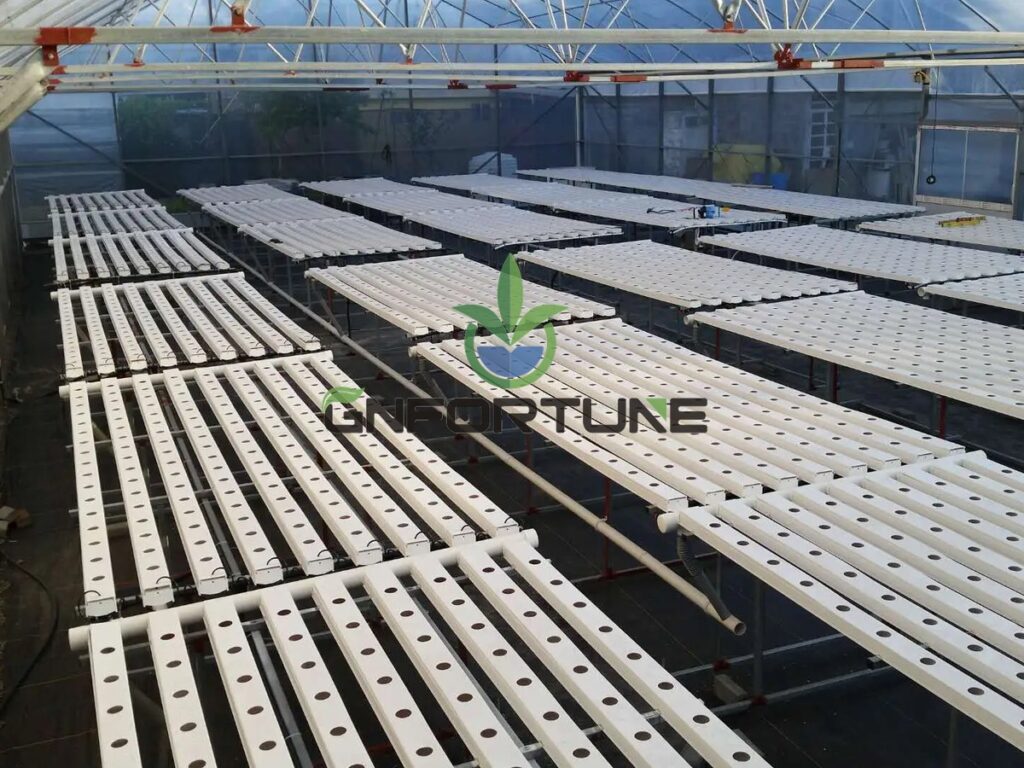
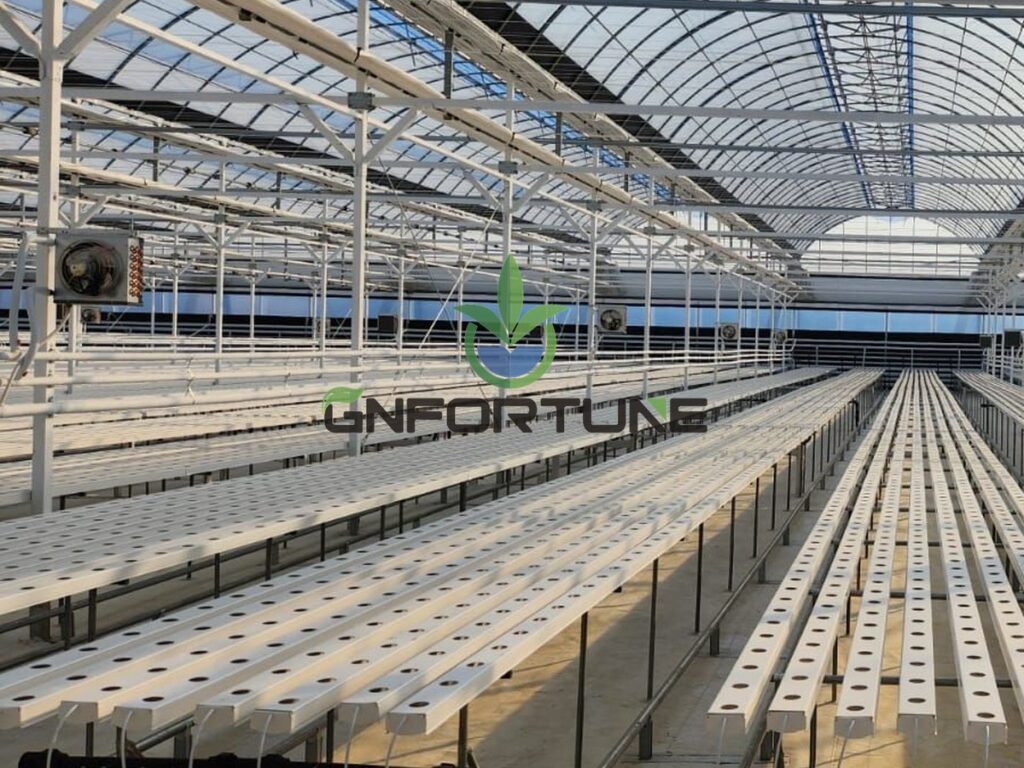
G AND N FORTUNE LIMITED supplies NFT channels, DWC and substrate systems and matched greenhouse packages quoted to project parameters, and can quote to a venture vehicle with specification, delivery schedule and spares set out separately from any equity arrangement.
FAQs About Hydroponic Joint Venture and Contract Farming
What is the difference between a hydroponic joint venture and an offtake agreement?
An offtake is a purchase contract: price, volume, grade, delivery. A joint venture creates shared ownership, so control, losses and residual value are shared too. The limitation is that hybrids exist, where a buyer takes equity alongside purchase rights.
Who should own the greenhouse in a contract farming arrangement?
Usually the grower, since contract farming leaves ownership and principal risk with the farm. Where the buyer funds the equipment, secure title or a registered interest, because funded equipment in another party’s name is disputed first on exit.
How is profit split between partners?
It should follow contribution and risk rather than a convention, with capital, land, market access and operations each valued. The limitation is that fees and related-party pricing change the effective split, so read them together.
What happens if the crop fails?
Whatever the risk clauses say, which is why crop failure and force majeure need separate treatment. Disease, power failure and weather differ from a buyer unable to take volume, and each should carry its own consequence.
Can a partner exit while a crop is standing?
Yes if the buy-sell clause allows it, though timing is complicated by standing crop valuation and forward commitments. Most agreements restrict transfers to cycle boundaries or specify how a mid-cycle crop is valued.
Related Reading
- Offtake Agreements Before You Build: Securing Buyers for Hydroponic Produce — The offtake contract that usually sits beside an equity deal
- Selling Hydroponic Produce: Channels, Contracts and Pricing Discipline — Channels, contracts and pricing discipline
- Turnkey Hydroponic Projects: Scope Split Between Buyer, Supplier and Installer — Who owns what between buyer, supplier and installer in a project
- Hydroponic Farm Risk Management: Power Failure, Crop Loss and Business Continuity — Power failure, crop loss and business continuity in a shared venture
- Grants and Subsidies for Hydroponic Farms: What Funders Look For — What funders look for in a project structure
Next Step: What to Send for a Quotation
In a venture, the equipment scope is what the shareholders’ agreement will be measured against; a quote without an agreed specification becomes a capital call dispute later.
Structuring a partnership? For RFQ or project consultation, send: greenhouse dimensions and usable area; the entity that will be buyer of record; crop plan and target grade; target weekly or annual output; local climate range and raw water analysis; preferred system (NFT, DWC, substrate gutter or undecided); whether a second phase is planned; automation level; delivery schedule; and the budget band. G AND N FORTUNE LIMITED supplies NFT channels, DWC and substrate systems and matched greenhouse packages quoted to those parameters.