Most commercial sites are built in stages, and most of those stages are designed backwards. A phased hydroponic project is usually drawn as a finished masterplan with lines marked where the build will stop, which leaves phase one carrying the cost of the whole site and the revenue of part of it.
The discipline that makes phasing work is different: build shared infrastructure at final capacity, keep growing area repeatable at phase size, and let cash flow release the next stage.
Why a Phased Hydroponic Project Goes Wrong
Phasing goes wrong when the cut is made in the growing area but not in the shared infrastructure. The result is a farm that pays for final-scale water treatment, electrical capacity and drainage while only half the rows are planted, then pays again to revisit those systems in stage two.
Three patterns account for most of the damage:
- Value engineering removes the wrong items. Tank volume, filtration capacity, packing floor and cold store get trimmed because they do not look like production, then constrain every later stage.
- Utilities are phased with the structure. Electrical and water treatment have their own permit and utility lead times; sizing them twice means applying twice.
- Stages have no gate. “Phase two next year” with no evidence condition is a calendar habit, not a test.
Staged greenhouse construction also costs more per unit of growing area than a single build, because mobilisation and redesign are paid twice. The premium is worth paying when it protects liquidity, and wasted when it only delays the spend.
Build Order: Infrastructure Before Growing Area
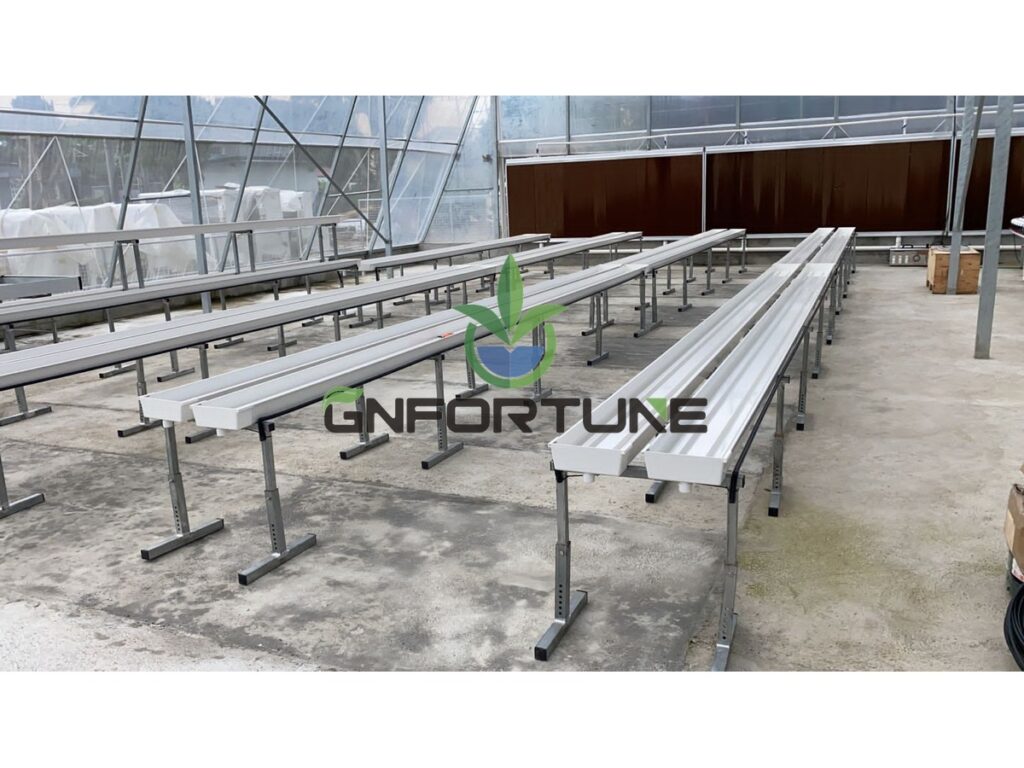
Build the site, utilities and shared systems to final capacity first, then add growing area in repeated modules. Growing area is the cheap, repeatable part of a hydroponic farm expansion; everything that serves it is expensive to revisit once crop is in the house.
- Site works. Drainage, access and levels for the final footprint.
- Water. Source, raw storage, treatment and mixing capacity for the full site.
- Electrical. Incoming service, transformer capacity and generator connection for final load, with spare panel ways left.
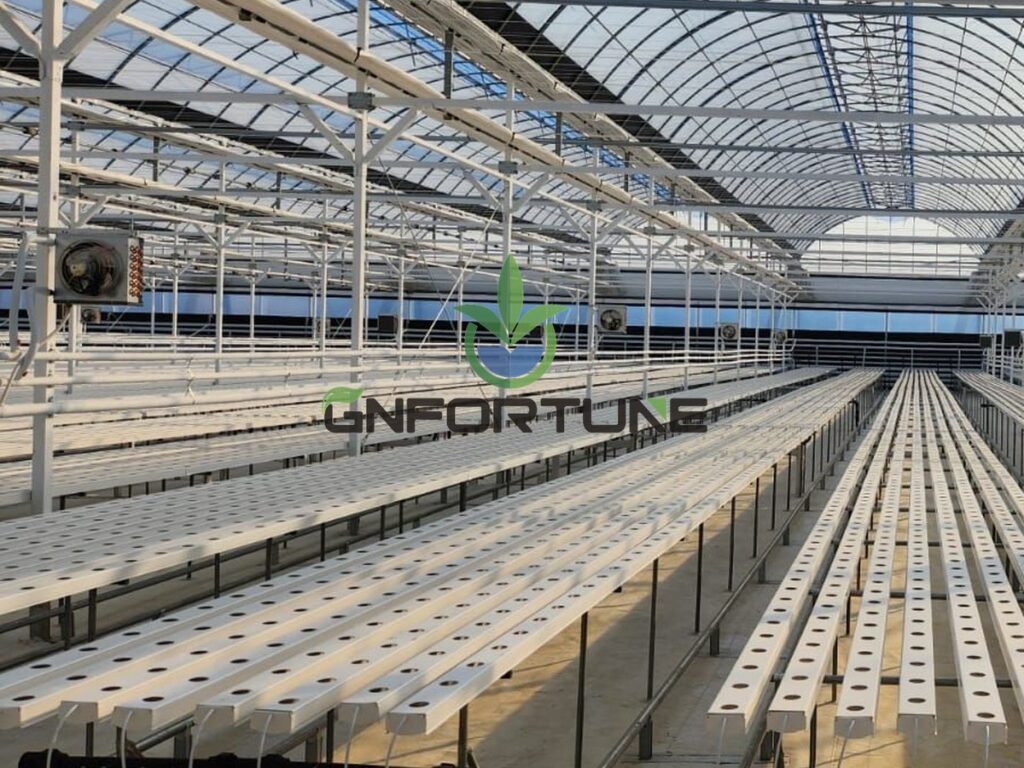
- Structure. Bays in multiples of a repeating module, with the service bay completed first.
- Shared recirculation. Return main, filtration, disinfection and dosing room sized for final flow.
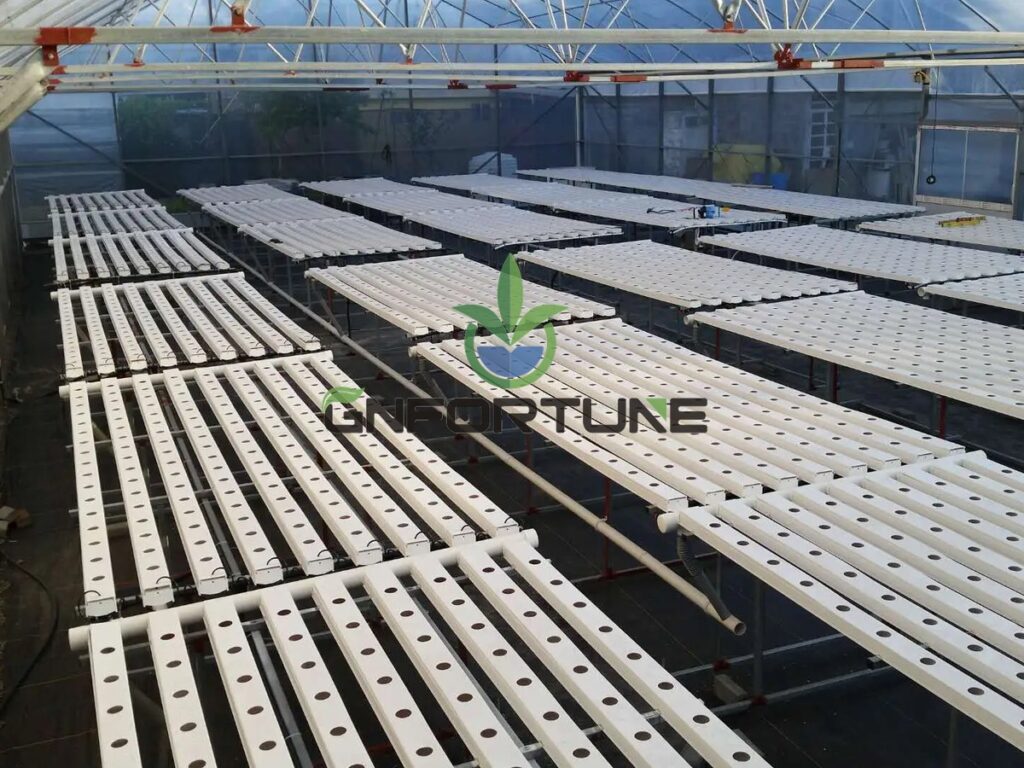
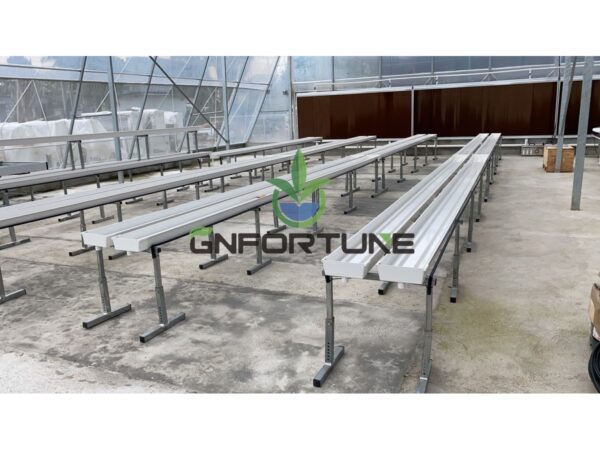
- Growing modules. Channels, gutters or benches — only for the area going into production.
- Post-harvest. Cooling, packing floor and cold store: the item most often deferred, and the one that decides whether phase-one crop can be sold.
That is also the order in which correction gets expensive: moving a drainage main after commissioning means draining a live system, while adding a row of channels means unrolling more of the same profile.
What to Oversize in Phase One
Oversize anything buried, structural, or changeable only during a shutdown; keep growing modules and lighting at phase-one size. The test: if enlarging it later means breaking concrete or draining the system, size it for the final farm now.
| Component | Size for | Reason |
|---|---|---|
| Raw water storage and treatment | Final site | Tanks and skids are cheap at order stage, disruptive to add beside a running system |
| Incoming electrical service and main distribution | Final site | Utility upgrade is on the utility’s timeline, not the project’s |
| Return main, filtration and disinfection | Final site | Enlarging means draining and cutting into a live recirculation loop |
| Dosing room and fertigation head unit | Final site plus margin | Headroom costs little; a second room rarely fits the layout later |
| Cold store and packing floor | Phase one plus one module | Harvested crop with nowhere to go is written off the same week |
| Pumps and dosing injectors | Modular, in parallel | Add a second unit per phase rather than oversizing one and running it off curve |
| Channels, gutters, slabs, benches, lighting | Phase one only | Repeatable per module, no rework cost, and the specification may improve between phases |
Oversize by capacity, not by duplication. A larger return main and spare panel ways are cheap; a second treatment skid installed later is not. Modular hydroponic installation works precisely because the growing hardware is the part that repeats cleanly.
Phase Gates: The Evidence Before Releasing the Next Budget
In a phased hydroponic project, a gate is a written condition — with a named owner and a document that proves it — which must be satisfied before the next stage’s money is released. Without gates, phasing is just a slower way to build everything at once.
Phase gate criteria worth writing into the project approval, whatever the crop:
- Operational. Output at or above plan for a stated number of consecutive cycles, with packout meeting the market specification.
- Commercial. Contracted volume for the additional output, not a forecast.
- Financial. Phase-one capex variance inside tolerance and cost per kilogram tracking the model.
- Technical. Commissioning and site acceptance signed off for the installed stage with punch list items closed — the sequence behind that sign-off is covered in hydroponic system commissioning and site acceptance.
- Team. Staff in place and trained for the larger operation; the second stage usually fails on labour before it fails on equipment.
Write the default outcome in as well: if the evidence is not produced, the default is delay rather than proceed, and the decision sits with whoever carries the cash risk.
Cash Flow Timing Against Crop Revenue
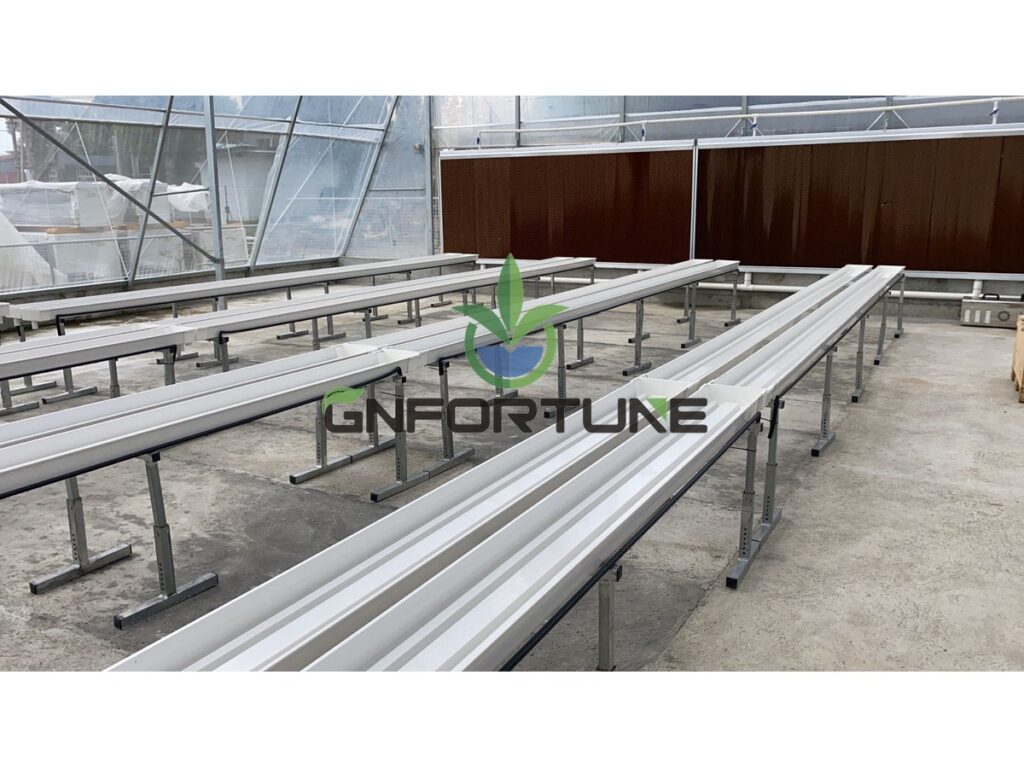
Phase two should be funded when phase-one revenue has become predictable, not when phase one is full. Construction spend and crop revenue peak months apart, and that gap is where project cash flow hydroponics becomes a problem rather than a spreadsheet.
| Project moment | Cash position | What to plan for |
|---|---|---|
| Design, permits, utility applications | Out, no revenue | Longest calendar item; utility lead times can run past the build programme |
| Site works and shared infrastructure | Heaviest outflow | Deposits on long-lead equipment often fall here as well |
| Phase-one fit-out and commissioning | Outflow continues | Balance payment before shipment typically lands before any crop is saleable |
| First crop in the ground | Trough | Fertiliser, energy, packaging and payroll with no harvest revenue yet |
| First harvests and ramp-up | Revenue starts, below steady state | Yield and packout usually build over several cycles |
| Steady state | Revenue covers operating cost | The point at which a gate can honestly be tested |
The mistake is committing phase-two deposits during the trough: equipment payment terms usually front-load a deposit and a pre-shipment balance, so cash for stage two leaves months before stage two produces anything. Model the plan monthly and test the buffer against downside scenarios — the discipline set out in hydroponic farm risk management and business continuity.
Contract and Procurement Consequences of Phasing
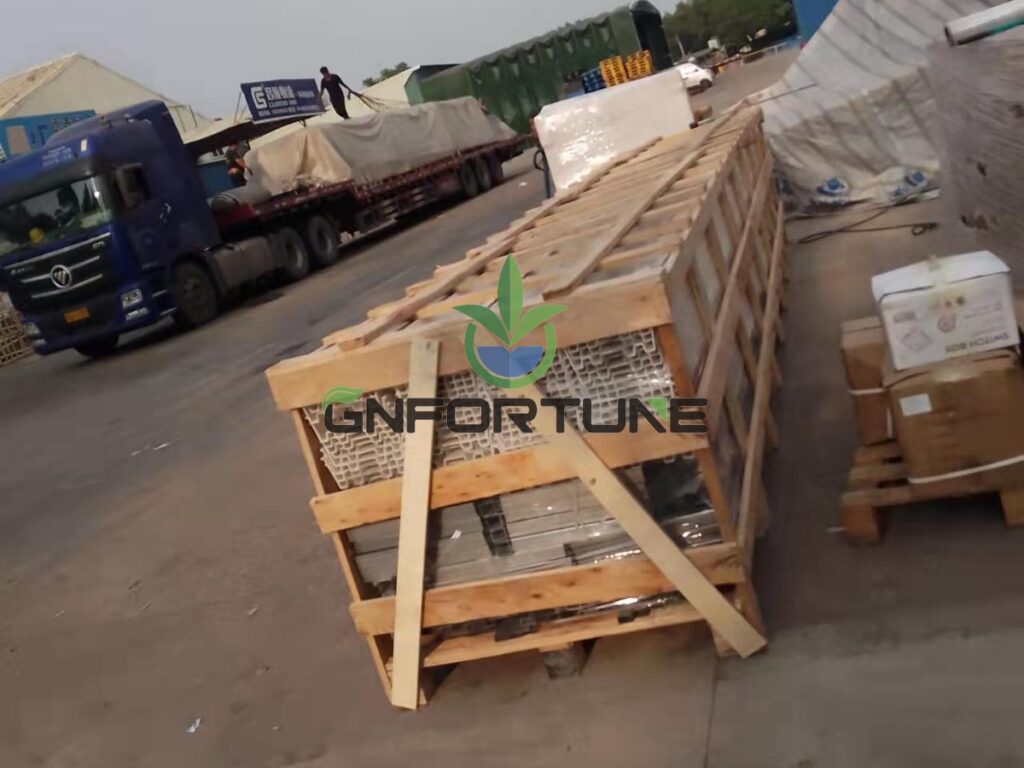
Phasing changes what needs to be in the supply contract: price validity across stages, repeat-order pricing, tooling retention, lead times triggered at a gate, and acceptance written per stage rather than per project. A contract drafted for a single delivery leaves all of those open.
- Price validity. Hold unit prices for later stages inside a stated window, with an agreed re-quote mechanism after it expires.
- Tooling and repeatability. Confirm the die or mould stays available and the profile and material standard are unchanged, so phase two matches phase one.
- Lead time at the gate. Agree that equipment lead times for stage two start on written gate release, not on a programme date.
- Warranty per shipment. Warranty should start on arrival of each stage, not on the first order date.
- Spare allowance. Carry a damage and rework allowance inside the phase-one order; a single profile ordered later as a top-up often misses the MOQ.
- Scope boundaries. Splitting a build multiplies the seams between buyer, supplier and installer, so the responsibility matrix has to be written per stage — see turnkey project scope split.
- Comparable quotes. When stage two is re-tendered, normalise bids the same way as stage one; see comparing hydroponic equipment quotations.
FAQs About Phasing a Hydroponic Project
Should phase one be the full structure with only part of the growing area?
Usually yes for structure, utilities and shared systems, and no for crop equipment: channels, gutters and lighting install cleanly per bay, the structure and services do not. The exception is where a smaller house is materially cheaper to run.
How much more does building in stages cost?
More per unit of growing area, because mobilisation, temporary works and redesign are paid twice. Get both options priced by the same contractor rather than applying a percentage.
When should the next phase start?
When the gate evidence exists, not when the calendar says so — sustained output against plan, contracted volume for the extra crop and a commissioning sign-off.
Can phase two use a different system or supplier?
It can, and sometimes should if stage one revealed a better fit, but mixing channel profiles or bucket designs complicates spares, training and irrigation uniformity.
What should be protected in the phase-one order?
A price validity window for stage two, confirmation that tooling is retained, a spare allowance for damage and rework, and a warranty starting per shipment. All four cost nothing at order stage.
Related Reading
- How to Build a Commercial Hydroponic Setup: 7-Step Project Plan — The seven-step project plan a phased build still has to satisfy
- Turnkey Hydroponic Projects: Scope Split Between Buyer, Supplier and Installer — Who owns what between buyer, supplier and installer in a turnkey job
- Hydroponic System Commissioning: Installation Sequence, Testing and Site Acceptance — Installation sequence, testing and site acceptance at each phase gate
- Scaling a Hydroponic Farm: From Pilot Row to Commercial Production Without Losing the Plot — From pilot row to commercial production without losing the plot
- Hydroponic Equipment Financing: Leasing, Bank Loans and Vendor Payment Terms Compared — Leasing, bank loans and vendor terms when budget is released in stages
Next Step: What to Send for a Quotation
A phased hydroponic project needs two numbers from a supplier, not one: the shared infrastructure sized for the final farm, and the growing hardware priced per module with a repeat-order price held for the later stage. Quoting stage one alone produces equipment that cannot be extended without rework.
For a project quotation, send: site dimensions or layout drawing with the final footprint marked, the intended stage split, crop mix with target annual tonnage at full build, local climate data and energy cost, water source analysis, level of automation required, target commissioning date for stage one and the budget range for both stages. G AND N FORTUNE LIMITED manufactures NFT, DWC, Dutch bucket and substrate gutter systems and quotes against project parameters rather than from a fixed price list, holding repeat-order pricing for later phases.