Greenhouse heating equipment is usually compared by catalogue rating, but the number that decides the outcome is how much heat the structure loses on the coldest night it is designed for, and what temperature the root zone has to hold. Buyers typically open with “boiler or heat pump?”. Get the load wrong first and everything downstream is either oversized or short, and the mistake is paid twice — once in capex, once every month in fuel.
This article compares the three mainstream routes from a procurement view: where each wins, what installers leave out of a quotation, and which numbers a supplier needs before pricing realistically.
Start from the heat load, not the heater
Calculate the loss first, select the plant second. A capacity quoted before a heat-loss calculation is a guess dressed up as a specification. Houses lose heat through three paths, and only the first appears in every brochure:
- Transmission through the covering — area × U-value × design temperature difference, where single film, double inflated film, polycarbonate and glass are not close to each other.
- Infiltration — leaky seams, tired door seals and wind-driven gaps add a large share of the load, and it is the item most often missing from a first quotation.
- Latent load from the crop — evaporating water removes energy, so long lighting hours and high-transpiration crops push the total up.
Record these before sending an RFQ: covering material and layer count, structure dimensions and surface area, outside design temperature, target night temperature by crop stage, whether an energy screen is fitted and operated, wind exposure, and the harvest calendar. Copying a kilowatts-per-hectare figure from another climate is the most common reason an ordered boiler turns out larger than the job needs.
Hot water boiler systems: fuel, distribution, buffer
A hot water boiler greenhouse system remains the default where dependable local fuel exists and heat must travel across long pipe runs. It handles the low supply temperatures a floor or root-zone loop wants, and it copes with high-temperature demand without losing output.
| Route | Where it fits | Strength | Main procurement risk |
|---|---|---|---|
| Hot water boiler | Cheap local fuel, long runs, large house | Fuel-flexible, steady output, well understood | Fuel price volatility, flue provisions, distribution balance |
| Heat pump | Reliable power, moderate winters, low-temperature emitters | Low running energy per unit of heat, can also cool | Site electrical capacity, output falls as it gets colder |
| Unit heater | Small houses, tunnels, frost protection, peak top-up | Low installed cost, fast response | Stratification, uneven temperature, dry canopy |
Three components decide performance, and none is the burner: a buffer tank, so the burner runs at steady load instead of short-cycling; balanced distribution, since loop layout and balancing valves determine row-to-row uniformity more than size does; and cool return water, which lets a condensing boiler recover more heat. Choose fuel on delivered price and local availability rather than preference — biomass looks very different in a district with a dry chip supply than one without.
Heat pumps: capacity, climate limits, electricity
Heat pump greenhouse heating suits sites with reliable power, a moderate winter and emitters designed for low supply water temperature. Output moves with the gap between source and supply temperature: colder night, hotter water, less capacity. Settle four points before signing:
- Design-condition capacity, not nominal — ask for output at your coldest expected outdoor temperature plus defrost allowance.
- Electrical service — many existing sites have no spare transformer capacity, and the upgrade belongs in day-one budgeting.
- Low-temperature emitters — pairing a pump with high-temperature emitters throws away the efficiency advantage.
- Source option — ground or water loops hold steadier capacity than air source, at higher installed cost.
Reversible units add a second use worth planning where summer heat is the harder problem; compare the options in our guide to greenhouse cooling in hot climates.
Unit heaters and forced air: where they fit
Unit heater hydroponics layouts win on installed cost and response speed, and lose on uniformity. They suit smaller structures, seasonal polytunnels, overnight frost protection, and peak top-up on a house already carrying hot water.
The weakness is physical. Warm air rises, so heat collects at the ridge while the crop sits in the coldest layer, and long houses show the largest difference between the door end and the fan end. Moving air can also dry a young canopy faster than the irrigation plan expects.
Two measures limit that penalty: multiple small units rather than two large ones, so staging is available at part load, and horizontal airflow mixing rather than natural convection. Fan interaction is covered in our guide to greenhouse ventilation design with vents and HAF fans.
Root-zone versus air heating
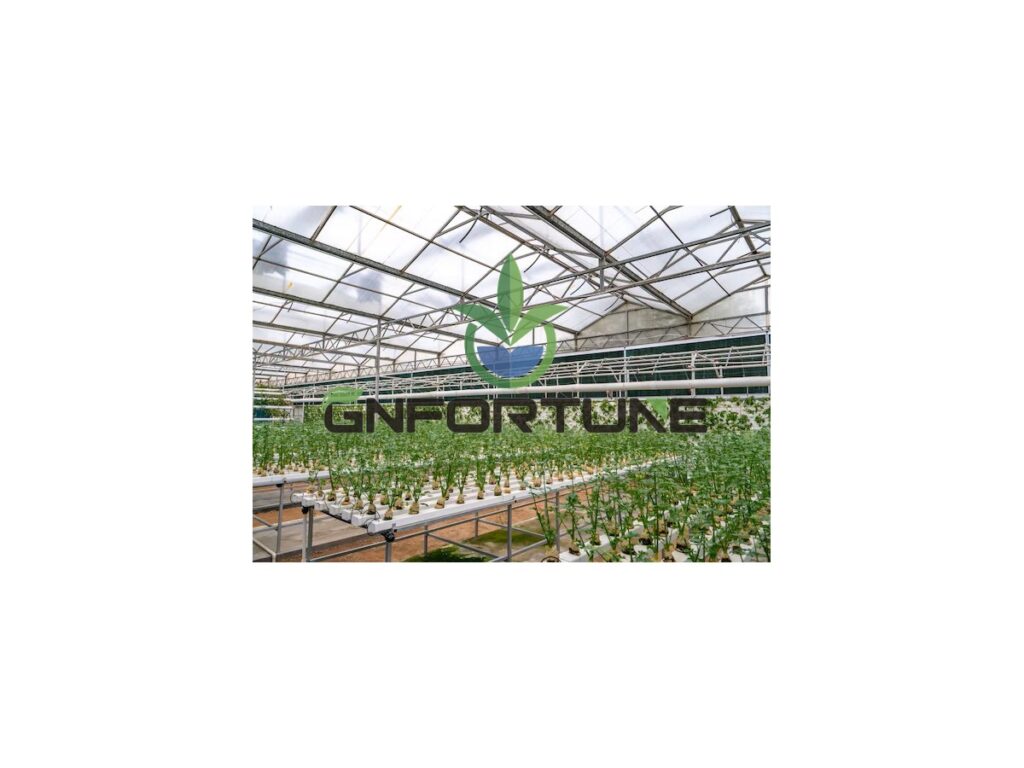
Root zone heating keeps the plant working at a lower air temperature, and that difference is usually the cheapest heat you can buy: leaf expansion and nutrient uptake slow when the solution runs cold, even under comfortable air.
It also changes what “target temperature” means. Instead of holding the whole air volume, you hold bench, slab or solution, which lowers total load and cuts the hours the air-side system runs.
Two cautions. Warm solution holds less dissolved oxygen, so heating a reservoir without reviewing aeration trades a temperature problem for a root health one. A warm root mat under a cool, humid canopy also favours root disease, so humidity control and air movement have to move with it.
Control, zoning and running cost
Control accuracy is worth more than a marginal burner efficiency difference, because most heating hours occur at part load rather than at design load. Midnight setpoint strategies, night temperature integration and screen interaction all act directly on those long part-load hours. Build the heating running cost greenhouse model from your own inputs:
- Seasonal heat demand in kWh from the load calculation and days per outdoor temperature band.
- Delivered energy required, using seasonal boiler efficiency or seasonal COP rather than a peak figure.
- Multiply by your tariff, including demand charges and any night-rate structure.
- Add maintenance, flue inspection, water treatment and expected component replacement.
- Convert to cost per square metre per season, then link it to output — see our walkthrough of cost-per-kilo accounting for lettuce farms.
Climate and grid conditions move the answer a long way: cheap power and a short mild winter justify heat pump plant that would not pay back where gas is subsidised and the heating season is long. Our overview of commercial hydroponics in India walks through those regional inputs.
At G AND N FORTUNE LIMITED, greenhouse heating equipment is quoted as part of the greenhouse package, because distribution layout follows the row spacing and crop height decisions taken elsewhere in the project. Covered example rows and layouts run in our 2,400 m² test greenhouse, and every enquiry is quoted to your climate data and fuel situation rather than a catalogue figure.
FAQs About Greenhouse Heating Equipment
Which heating route has the lowest running cost?
There is no single winner. Compare delivered energy per unit of heat at your local tariffs, using seasonal efficiency for boilers and a seasonal COP for heat pumps. Where electricity is expensive or unstable, a boiler on a locally cheap fuel usually wins even though it loses on efficiency.
Do heat pumps work in cold-winter climates?
They can, but output falls as outdoor temperature drops and defrost cycles take energy. Specify capacity at your design outdoor temperature rather than nominal conditions, and expect either a larger plant or a hybrid where a boiler covers the coldest hours.
Is root zone heating worth the extra installation?
Usually yes for NFT and substrate-row crops, because it holds plant performance at a lower air temperature and lowers total load. Match it with solution aeration and humidity control, or the warm root zone shifts the risk instead of removing it.
Why do two houses with the same boiler show different temperatures?
Distribution, not capacity, is the usual explanation: unbalanced loops, undersized pipe runs, missing balancing valves and poor sensor placement all produce row-to-row variation that extra burner output will not correct.
What information belongs in a heating quotation request?
Climate data with design outdoor temperature, structure dimensions, covering type and layer count, screen presence, crop list with target air and root-zone temperatures, fuels with delivered prices, electrical service capacity, required delivery date and budget range. Without those, any figure returned is an estimate rather than a quotation.
Related Reading
- Greenhouse Heating for Hydroponics: Sizing, Root-Zone Temperature & Winter Energy Cost — Heating sizing, root-zone temperature and winter energy cost
- Thermal Screens for Hydroponic Greenhouses: Night Heat Retention and Energy Saving — Night heat retention: the cheapest heating upgrade on most farms
- Hydroponic Farm Energy Cost: Loads and Solar Options — Farm energy loads, solar options and what heating really costs
- Greenhouse Covering Materials: Glass vs Polycarbonate vs Film — Covering materials compared on heat loss and light transmission
- Hydroponic Water Chiller Sizing: Nutrient Temperature Control for Commercial Farms — Water chiller sizing when the same plant room also has to cool
Next Step: What to Send for a Quotation
Heating quotations are only as good as the load inputs behind them. Send the items below and we can return a heat-load estimate, equipment options by fuel availability in your market, and a distribution layout sized to your row spacing.
Send us: (1) location with design temperature and heating days; (2) dimensions, covering, layer count and screen presence; (3) crop list with target air and root-zone temperatures; (4) fuels on site with delivered unit prices; (5) electrical service capacity; (6) automation level — manual valves, zoning or full climate integration; (7) delivery date; (8) budget range. Request a Project Consultation to review the load calculation against your drawings first.