

A Pilot Is for Killing Bad Assumptions Cheaply
The purpose of a pilot is not to prove the crop can grow. That is already known. The purpose is to find out what your specific combination of water, climate, labour and market does to the numbers — at a scale where being wrong is affordable.
Scaling a hydroponic farm goes wrong when the pilot is treated as a small version of the finished business rather than as a test rig. A pilot that only measures yield has wasted its budget; a pilot that measures yield, labour, failure modes and realised price has earned the next phase.
What the Pilot Must Produce
| Output | What to measure | Why the full-scale plan depends on it |
|---|---|---|
| Marketable yield per m² per year | Harvested, graded, saleable weight over at least four seasons | Drives the whole revenue model; one season is not a year |
| Labour hours per unit | Sowing, transplanting, crop work, harvest, packing — by task | The number most often underestimated in business plans |
| Cycle reliability | Actual vs planned days to maturity, by season | Determines whether the planting calendar holds |
| Energy and water per unit | Metered, not estimated | Feeds the operating cost and the backup sizing |
| Failure and loss rate | Disease, tipburn, bolting, mechanical, grading rejects | Sets realistic pack-out, not catalogue pack-out |
| Realised price | What the buyer actually paid, including rejects and freight | List price and realised price are rarely the same figure |
| Equipment reliability | Every unplanned stop, with cause and downtime | Decides what the spare parts inventory must hold |
| Consumables cost per unit | Seed, media, packaging, sanitiser, acid | Compounds with volume and is often ignored |
Two seasons is the practical minimum; four gives you the seasonal spread that exposes heating and cooling costs. Expanding after one good spring is the most common expensive mistake in this industry.
Gates: Deciding When to Expand
- Market gate: a buyer has committed to volume in writing, at a price and a specification. Expansion without this is speculation
- Production gate: yield, cycle time and pack-out have held at target across more than one season
- Cost gate: unit cost has been measured and is below the realised price with margin intact
- Operational gate: the team can run the current area without the founder personally solving problems daily
- Capital gate: funding is secured for the expansion and for the working capital gap it creates
Any gate failing is a reason to fix that thing, not to expand around it. Scaling multiplies whatever currently exists — including the defects.
Standardise Before You Replicate
- One system type per crop. Running three system types triples your spares, your training burden and your troubleshooting surface
- Fix the specification in writing: channel profile, tank size, pump duty, emitter type, sensor model. Replication is only cheap if it is identical
- Freeze the design for a defined period. Continuous improvement during expansion is the enemy of repeatability
- Write the SOP while the pilot is running, not afterwards — the person who knows why it works will not be there forever
- Document the settings, not just the hardware: setpoints, alarm limits, dosing curves, crop recipe by growth stage
Phasing: How Big Should Each Step Be
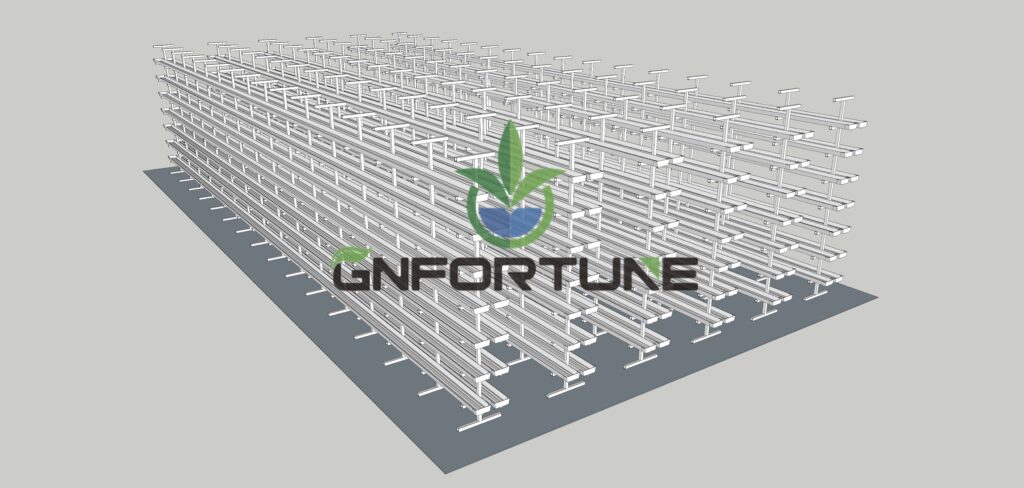
| Approach | Description | Advantages | Risks |
|---|---|---|---|
| Incremental (one zone at a time) | Add a zone or a house at a time as demand grows | Lowest risk; lessons carry forward; cash flow funded | Higher unit cost; repeated mobilisation |
| Modular block (repeatable units) | Design a standard block and repeat it | Best balance of cost and learning | Requires design discipline early |
| Step change (full build) | Build the full commercial area in one go | Lowest unit capital cost; fastest market capture | Highest risk; no room to correct the design |
Where the design is genuinely new to your team, one full replication of the pilot block — same specification, larger area — is usually the lowest-risk large step. It tests your supply chain and installation process at scale without introducing new engineering.
The Procurement Leverage Point
Expansion is where equipment purchasing changes character. Volume moves you from catalogue pricing to project pricing: better unit rates, custom profiles, consolidated shipping and — more valuable than any of those — a supplier who will hold stock for your spares and commit to a delivery schedule. Ask for:
- Tiered pricing tied to the phased plan, not just to the first order
- Consolidated container loading across phases to reduce freight per unit
- A spares package priced with the main order rather than bought later at emergency rates
- Documented lead times for repeat orders, so the expansion schedule is real
- Installation support terms that scale — the second house should be easier to commission than the first
Common Scaling Mistakes
- Expanding on a good season rather than on a good year
- Underfunding working capital. A larger area means more crop in the ground and a longer cash cycle before the first revenue lands
- Assuming labour scales linearly. It often improves with scale, but only after a step change in training and supervision
- Changing several variables at once in the new build — new system, new variety, new market — so nothing can be attributed
- Neglecting the packing and cold chain. Production can double overnight; the pack house and cold store usually cannot
- Ignoring the utility constraints until the expansion is designed and the incomer turns out to be too small
Expansion Readiness Checklist
- The buyer is named and committed, with volume, specification and price in writing
- Four seasons of production data exist, including the worst season, not just the best
- Labour hours per unit have been measured for each task, and the pack house keeps up with peak harvest
- Unit cost is below realised price after all inputs, including packaging and freight
- The equipment failure log shows a stable pattern, and the spares inventory covers the top items
- Utilities have confirmed capacity for the expanded load — power, water and discharge
- The design is frozen and documented with drawings, datasheets and settings
- Working capital for the expanded cycle is funded separately from construction
- The team can run the current area without the founder on site every day
- A supplier has quoted the repeat order with confirmed lead times and tiered pricing
Two supporting reads for this stage: how to read a supplier’s CAD drawings and datasheets before you freeze the design, and regional market notes for Europe if your expansion targets a new territory.
FAQ
How long should a pilot run before expanding?
Long enough to see at least one full seasonal cycle, and ideally four seasons. Expansion decisions taken on a single favourable season are the most common cause of disappointing year-two results.
How big should a pilot be?
Big enough to be statistically meaningful and to use the same equipment as the full build — typically a single complete zone with its own pump, tank and controls. Too small and you learn nothing about circulation or labour.
Should I build the full farm in one phase to save money?
Only if the design is already proven in your conditions or by comparable operations. The capital saving is real, but it buys no option to correct a design error.
What breaks first when farms scale up?
Usually the pack house and the cold chain, followed by labour supervision. Production area is the easiest thing to add; post-harvest capacity is the easiest thing to forget.
Do unit costs fall with scale?
Capital cost per square metre generally falls; operating cost per unit falls more slowly and can rise if supervision and logistics do not keep pace. Model both separately rather than assuming a single learning curve.
When should I involve my equipment supplier in the expansion?
At the design stage, before the layout is frozen. Repeat orders are where lead times, custom profiles and consolidated shipping deliver most of the saving, and all three need advance notice.
Plan the Next Phase With Real Numbers
Send your current layout, pilot results and target area through the quote form. We will return a phased expansion plan with equipment pricing by phase, lead times and the spares package to hold on site.
Related reading: expansion sits inside the wider project sequence in the 7-step project plan, and the financial side in ROI, cost per acre and payback.