

“Turnkey” is the most loosely used word in hydroponic procurement. In one contract it means design plus equipment plus installation plus training. In another it means equipment delivered on a pallet, and the buyer discovers on site that wiring, water supply and foundations were never included. When we help project owners and general contractors review turnkey hydroponic greenhouse bids, the first thing we do is draw the contract boundary.
This page is a buyer’s map of a turnkey project: what a complete scope looks like, where the scope gaps hide, and how to structure payment and acceptance so you are not paying for promises.
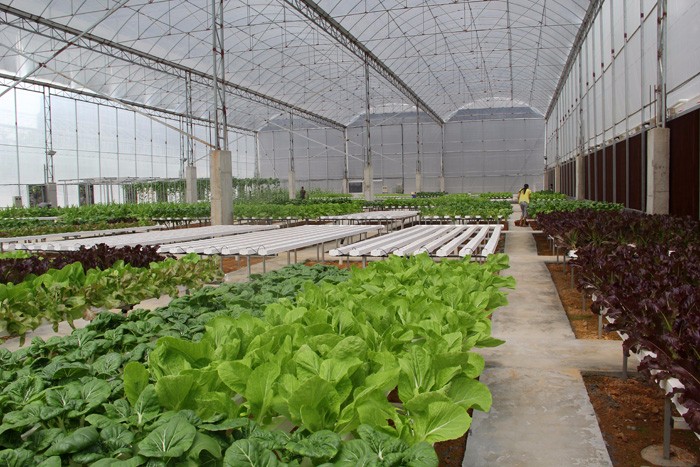
Draw the Boundary First: Scope Table
| Stage | Usually included | Frequently excluded (check the contract) |
|---|---|---|
| Design | System layout, row plan, piping schematic | Structural engineering of the building, local permits |
| Equipment | Channels, buckets, pumps, pipework, filters | Climate control (pad-and-fan, heating, lighting) |
| Site work | In-house installation crew | Foundations, leveling, water & power supply lines |
| Commissioning | System test, leak checks | Trial production run with a full crop cycle |
| Training | Operator training on EC/pH and daily tasks | Remote support after the first season |
| Spares & consumables | Startup kit | Media, nutrient, replacement parts in year two |
Write the excluded list into the contract. A supplier who states clearly what they do not provide is more reliable than one who leaves it silent — silence is where disputes grow.
The Four-Phase Delivery Model We Use on Projects
- Design freeze. Your greenhouse drawing, crop plan and budget define the layout. Nothing is purchased before this drawing is signed — it is the document that prevents 80% of later change orders.
- Equipment production and QC. Systems are manufactured and test-assembled at the factory before shipping. A test assembly is not a courtesy — it is how we catch mismatched fittings before they become a site problem.
- Installation and commissioning. The crew installs the system, pressure-tests the piping, and runs the pumps for 48 hours before handover.
- Trial run and training. We run one pilot section through a real crop phase with your operators — this is where the system meets reality and where your team learns.
Acceptance Criteria: Define “Done” Before You Pay the Final Installment
The most common dispute on hydroponic projects is not equipment quality — it is what “finished” means. Protect yourself with written acceptance criteria tied to milestones:
- Watertight test: no leaks at operating pressure for 48 hours
- Flow test: flow uniformity across all zones within ±10%
- Electrical test: all pumps, valves and controllers operational under load
- Trial crop: a defined survival/health benchmark for the first pilot crop — agree the number in advance
Payment Structure: Align Payment with Deliverables
We advise project owners to structure payment against milestones, not dates:
| Milestone | Typical share |
|---|---|
| Design approval | 20–30% |
| Production start / factory inspection | 30–40% |
| Arrival and installation | 20–30% |
| Commissioning, trial run, acceptance | 10–20% (hold this until the trial crop passes) |
If a supplier asks for the majority of payment before design approval, treat it as a risk signal. A factory-inspection milestone also gives you a cheap way to verify what you are buying — we welcome inspections of our 5,000 m² facility at any stage.
If You Are Tendering the Project: Four Points to Write Into the RFP
- Itemized bill of materials — reject lump-sum-only bids; you cannot compare what you cannot split
- Technical specs — channel wall thickness, pipe SDR rating, pump duty, filter micron rating; name the minimums
- Acceptance criteria — flow tolerance, watertight test, trial-crop benchmark (from the list above)
- Spares and support — spare parts list, warranty terms, and response time for remote support
Also worth checking: does the bidder operate a real growing facility, or only a workshop? We maintain a 2,400 m² trial greenhouse where every system we sell is grown in before it ships. A supplier who grows their own crop has already paid for mistakes you will not have to.
FAQ
Q: How long does a turnkey project take?
A: Design 2–3 weeks after your drawings arrive, production 3–4 weeks, installation 1–2 weeks on site depending on area. A realistic end-to-end schedule is 8–12 weeks from design approval to commissioning.
Q: Do you handle the greenhouse building itself?
A: We supply and install the hydroponic systems inside the greenhouse. The building structure, foundations and climate control are specified by us and provided by you or a local contractor — we can coordinate the interface to avoid gaps.
Q: What if our site is overseas?
A: We have delivered turnkey greenhouse projects internationally. Our installation team travels, and we also train local contractors for follow-on phases. The scope table above is exactly how we define the overseas contract.
Q: Can you work with our existing greenhouse?
A: Yes — retrofit projects are common. We start with a site survey and a level check of the floor, since hydroponic systems are more sensitive to slope than soil growing.
Book a Project Consultation → · WhatsApp
Related reading: Turnkey Greenhouse Case Studies · Our Manufacturing Facility · Commercial Hydroponic Systems