

On almost every strawberry project we’ve worked on lately, the first question is the same: should we move from field beds to suspended gutters (strawberry gutter)?
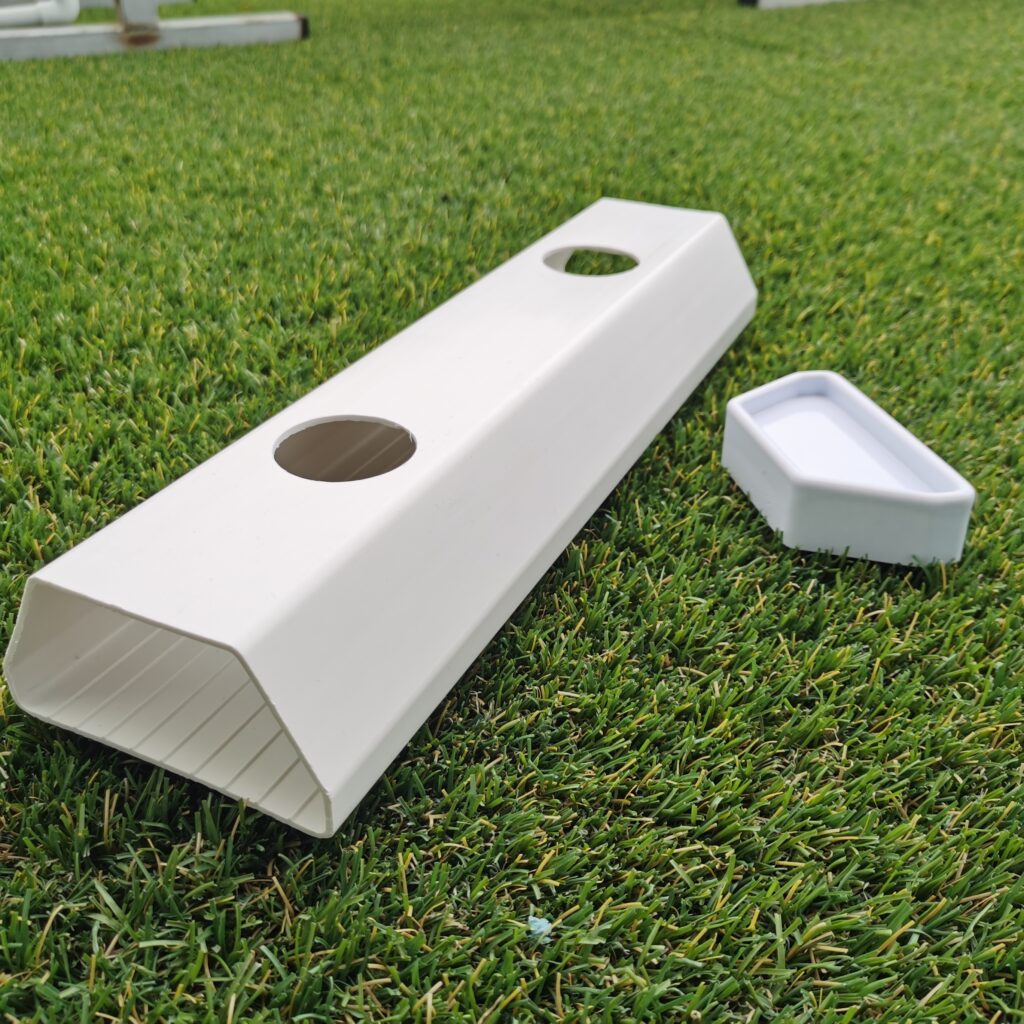
Straight answer up front: if you’re a commercial berry farm selling to order-based buyers or running a U-pick operation, suspended gutters are worth the investment. If you’re selling purely into traditional wholesale with a tight budget, field growing may not be the wrong choice. Hydroponics isn’t a magic answer. Here are the real trade-offs and the pitfalls.
What Suspended Gutters Actually Solve
1. Soil-borne Disease — the Strawberry Killer
Strawberries are notorious for continuous-cropping disorders and soil-borne diseases: anthracnose, root rot, nematodes. Field growers manage by rotation and soil fumigation — and fumigation isn’t cheap. With suspended gutters, roots grow in substrate (coco coir, peat) and never touch the field soil. That entire disease pathway is cut off.
We’ve seen farms lose a strawberry block in year three to disease, then convert to gutters anyway — after already paying for the dead plants and the lost season.
2. Residue Control
Export and premium retail buyers test for pesticide residues more strictly every year. Substrate growing with a drip system (the core of modern strawberry farming equipment) uses measurably fewer crop-protection inputs than field growing, which makes passing those tests much easier. For order-agriculture contracts, this is close to a hard requirement.
3. Harvest Efficiency — the Easiest One to Underrate
Bending over rows of field-grown berries caps how much one worker can pick in a day. Suspended gutters bring the fruit to waist height — workers stand and pick, and the gain in throughput is real. In peak harvest season, labor is one of the biggest line items on a berry farm.
There’s another quiet benefit: fruit hanging at the gutter edge gets better airflow and never touches soil, so the packable fruit percentage (visual grade) is higher than in the field. That one shows up directly in revenue.
The Costs Nobody Warns You About
Cost 1: Higher Upfront Investment Than You Think
A gutter system is not just the gutter. Channel + hanging hardware (wire, hangers) + drip + return lines + substrate add up per linear meter. And critically — you must check greenhouse load. The combined weight of gutters, substrate, plants, and water hangs from the roof structure. For older greenhouses, that’s a real engineering question.
We’ve assessed structures that needed reinforcement before a single gutter went up — a budget nobody had planned. Check structural load before you buy gutters.
Cost 2: Variety and Climate Fit
Strawberries need chill hours and temperature swings. In warm southern climates you need low-chill varieties or artificial chill (a cold room), which is a real investment that often gets forgotten. Don’t size your project on the gutter quote alone.
Cost 3: Substrate Management
Coco coir and peat are not permanent. Over time they accumulate salts and the physical properties change — they need replacing or flushing. Replacement labor and material should be in the annual operating budget from year one, not discovered in year three.
Cost 4: Drip Maintenance
Substrate strawberries depend on precise drip fertigation. In hard-water regions drippers scale up and clog — it becomes routine. Filtration is mandatory and lines need scheduled flushing. Same lesson as our NFT article, just as true for berries.
Cost 5: Salt Flushing
Soluble salts accumulate in recirculating systems and have to be bled off. Design in the bleed ports and solution handling at the start — retrofitting it later is expensive and awkward.
Field Beds vs. Gutters — Side by Side
| Dimension | Field beds | Suspended gutters |
|---|---|---|
| Upfront cost | Low | High (structure + drip + substrate) |
| Soil-borne disease risk | High (rotation/fumigation) | Essentially eliminated |
| Residue control | Hard | Easier |
| Harvest efficiency | Bending work | Standing work, clear gain |
| Operations skill | Conventional farming | EC/pH management + drip upkeep |
| Best sales channels | Traditional wholesale | U-pick, premium orders, export |
Cost and Payback — Being Honest
Payback on a gutter project depends mainly on four variables: variety, local selling channel, labor cost, and management quality. On the same system, well-managed farms out-produce poorly managed ones by 30% or more. A gutter system buys you a production method — not a yield guarantee. We say that on every project.
For a rough estimate, send us your scale (planting area or target linear meters), greenhouse details, and target sales channel. We’ll give you a budget range and sensitivity read based on project experience.
Product Summary
- Food-grade gutters with matching hangers, end caps, and seals
- Works with coir slabs, grow bags, or bare-root planting
- Complete drip and return-line packages
- Custom lengths to greenhouse layout, OEM available
Full specifications via RFQ — layouts are produced per project.
Get a Plan
Send us your greenhouse dimensions, structure type (new build or retrofit), growing scale, and target market. We’ll return a gutter layout and budget range.
Get a Layout & Budget → · WhatsApp
Related reading: Strawberry Gutter Growing Guide · Irrigation Systems · Commercial Hydroponic System Selection