

NFT is the mainstream choice for commercial leafy greens. No argument there. But a situation we run into constantly is a farm that saw the yield numbers — and skipped the operating conditions.
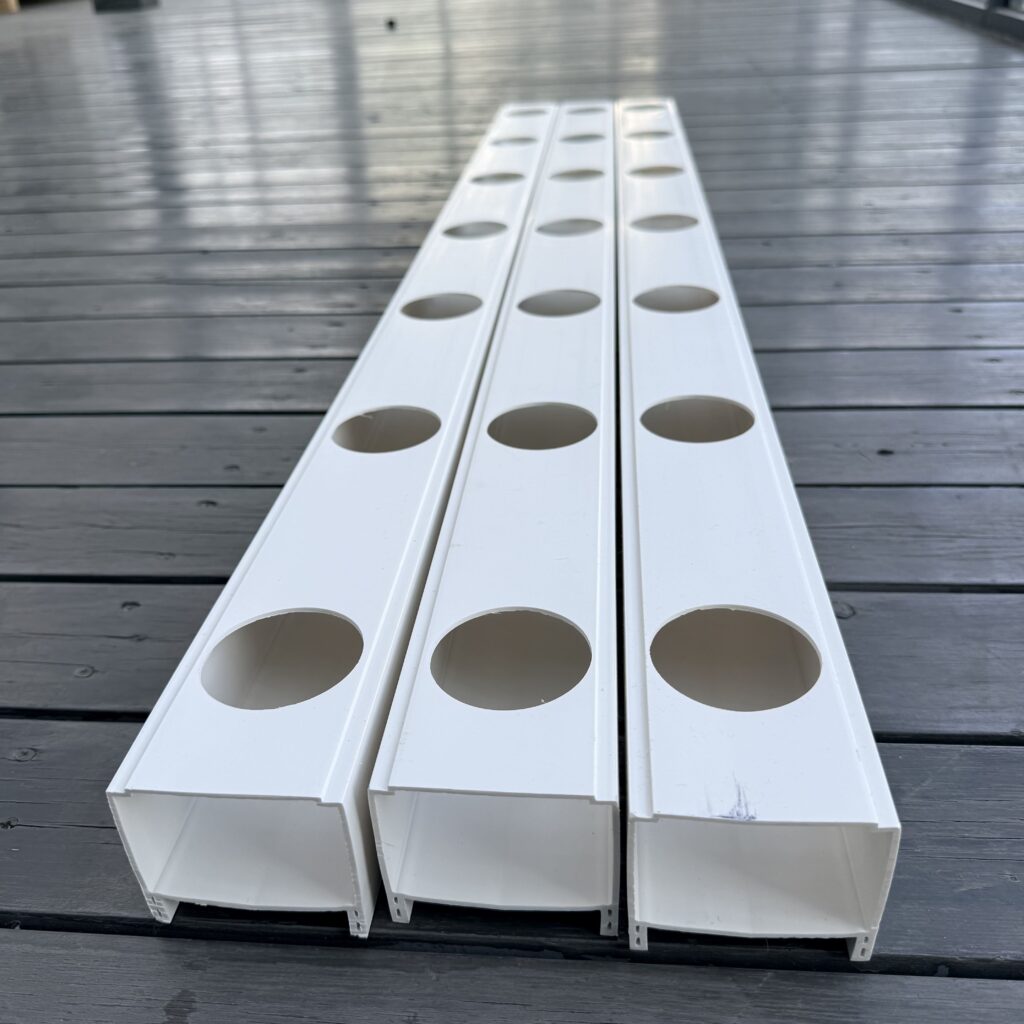
This article covers three things honestly: which projects NFT actually fits, where the money goes, and how hard the day-to-day maintenance really is. Read it before you order.
How NFT Works in 30 Seconds
NFT (Nutrient Film Technique) is simple: a pump delivers nutrient solution to the high end of the growing channels, and a 2–3 mm film of solution flows down the slight slope across the roots, then returns to the reservoir and recirculates.
The roots sit half in the film (water and nutrients) and half in the air (oxygen). That “root in a humid film” design is the engine behind NFT’s high yields — and the source of every one of its strengths and weaknesses.
Which Projects NFT Actually Fits
Good fit:
- Leafy greens: lettuce, spinach, bok choy — 30 to 45 day cycles and fast cash flow
- Greenhouse floors that can be leveled, or new builds designed for NFT from day one
- Reliable grid power, plus the ability to install backup power
- A stable off-take channel (grocery, food service supply chains)
Poor fit:
- Fruiting crops like tomatoes or peppers — look at Dutch buckets instead
- Regions where summer water temperature runs above 26–28 °C with no cooling option
- No dedicated operator — “set it up and it grows itself” is not how NFT works
This isn’t meant to scare you. It’s the checklist many farms skipped before they ordered.
Where the Money Goes
A commercial NFT hydroponic system (hydroponic nft system) budget splits roughly like this:
| Component | Share | Notes |
|---|---|---|
| NFT channels | 30–40% | The core; material and wall thickness decide lifespan |
| Support/racking structure | 15–20% | Rows, height, and load capacity set your density |
| Water delivery | 15–20% | Pumps, piping, reservoir |
| Control system | 10–20% | From simple timers to full EC/pH automation — the price range is huge |
| Installation & fittings | ~10% | End caps, seals, fasteners |
One honest warning: the two places quotes hide the most are the racking and the controls. Galvanizing thickness on the steel and control redundancy look identical on paper — the difference shows up in year three.
Five Pitfalls We See Repeatedly in NFT Projects
Pitfall 1: Power Failure
As covered above — thin film, exposed roots. When the power goes out the roots dehydrate fast; in hot weather, 30 minutes can cause irreversible damage.
Backup power is mandatory, even if it’s only a generator sized for the pumps. Don’t skip it.
Pitfall 2: Channels Too Long — Oxygen Starvation at the Tail
Past a certain channel length, plants at the tail end get measurably less dissolved oxygen and lag behind the rest. A trap many farms hit: buying long channels because the per-meter price looked better, then watching the tail rows underperform all season.
With standard flow rates there’s a sensible maximum channel length for each profile. We calculate it in the design phase, before you buy.
Pitfall 3: Slope Problems
NFT channels run on a slope so the film flows. If the floor isn’t level the solution pools — soggy roots, root rot. Slope too steep and the film breaks apart. Checking floor levelness is the first acceptance item on site.
Pitfall 4: Algae
Light + nutrients = algae. Gaps around lids and net-pot holes let light in; after one season you get a green film inside the channels that steals oxygen and clogs lines. Buy channels with tight lid and hole fit, and fix light leaks during routine inspection.
Pitfall 5: Summer Water Temperature
A reservoir sitting in an exposed concrete tank can hit 30 °C. Dissolved oxygen drops below what roots need, and the whole greenhouse looks tired — often blamed on fertilizer. Cooling (mix with well water, chillers, shading) needs to be decided at design stage; retrofitting later is expensive.
Our NFT Product Line
- NFT channels: food-grade PVC-U, custom lengths, matched end caps and seals
- Racking systems: multi-level options, designed around your greenhouse clear height
- Complete systems: channels + racking + pumps + piping + control, configured to project scale
- Strawberry gutters: suspended NFT-family gutters for berries — see the strawberry gutter page
All configurations support OEM/custom manufacturing. Regional distribution terms available.
FAQ
Q: How much channel do I need per acre of greenhouse?
A: It depends on row count and tiers — multi-level racking uses very different channel length than a single-layer layout. Send us your greenhouse dimensions and we’ll produce a layout drawing.
Q: How many hours a day do the pumps run?
A: 24/7. Which is exactly why we keep repeating the power and backup points above.
Q: Can I buy just the channels?
A: Yes — channels are available wholesale. For a first project we recommend the complete system to avoid field piping mismatch.
Get a Plan → · WhatsApp
Related reading: NFT Channel Buying Guide · Commercial Hydroponic System Selection · NFT vs DWC