

A farm does not stop because a pump failed; it stops because the replacement was three weeks away. Hydroponic spare parts inventory decisions should therefore be ranked by downtime risk and lead time, not by unit price — the cheapest part on the shelf is often the one that saves a crop.
This guide ranks the parts that matter, explains how to size stock, and covers what to negotiate into the equipment order itself.
What Counts as a Critical Spare?
A critical spare is any component whose failure stops production before it can be replaced from local supply. Three questions decide whether a part belongs on the shelf:
- What fails? If this component stops, does the crop lose water, nutrient or climate control — and within how many hours?
- How long to replace? Local stock, next-day courier, or an import with weeks of lead time?
- What does the delay cost? Lost crop, lost planting window, or a quality downgrade at harvest?
Parts scoring high on all three belong on site. Parts scoring high on only one belong on a monitored reorder list. Everything else can be ordered when needed.
Which Parts Should Be on the Shelf?
| Category | Hold on site | Why it ranks high |
|---|---|---|
| Pumps | One complete duty pump, plus seal and impeller kits | Failure stops feed within hours; repair kits alone do not cover motor failure |
| Dosing and injection | Spare dosing head, seals, check valves, spare injector pump | Nutrient delivery failure affects EC and pH faster than most alarms escalate |
| Sensors and probes | One spare EC probe, pH probe, and calibration solutions | Drift causes wrong decisions long before a probe fails outright |
| Controllers and power | Spare relays, fuses, power supplies, UPS batteries | Cheap parts, and their failure takes out everything downstream |
| Filtration | Spare filter elements, housings seals, differential gauge | Clogging is routine; a blocked filter in hot weather costs plants in hours |
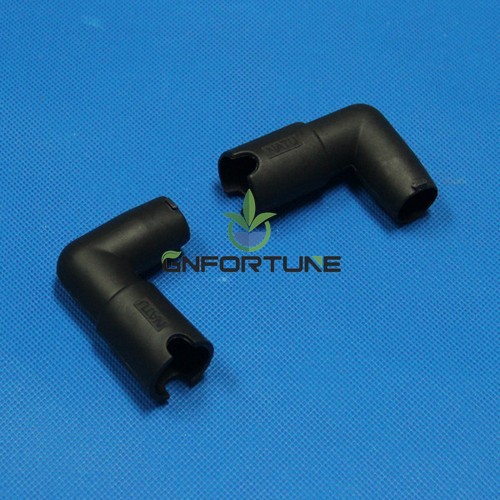
| Irrigation hardware | Emitters, drippers, fittings, valves, repairs couplings | High failure count but low individual consequence; stock by consumption rate |
Two categories are often forgotten. Standby power: a generator or battery backup sized for the critical load, not for the whole site. And consumables with long lead times — substrate, specific seed varieties and proprietary fittings — which belong on a reorder trigger rather than a shelf.
How Much Stock Is Enough?
Work from lead time rather than from a percentage of equipment value. If a part takes three weeks to arrive and its failure stops production in six hours, hold at least one on site. If the same part is available next day from a local supplier, one is optional and zero is defensible for non-critical items.
Set minimum and reorder levels per line, review consumption quarterly, and check expiry dates on anything with a shelf life — calibration solutions and probe storage solution degrade quietly, and an out-of-date buffer makes readings worse than no spare at all.
What Should Be Negotiated Into the Equipment Order?
Spares are cheaper and faster when agreed at purchase than when ordered during a failure. Ask for three things: a recommended spares list with quantities from the supplier, commissioning spares included in the contract, and a stated response time for technical support and part dispatch.
Then confirm availability in your region. A part held in a European warehouse is not a next-day part for a farm in Southeast Asia, and the difference should show up in your stock levels rather than in an optimistic warranty clause.
FAQs About Hydroponic Spare Parts
How many spare pumps should a farm hold?
At least one complete duty-rated pump for each critical duty point, or a permanently installed standby on the same manifold. Seal and impeller kits cover wear but not motor or winding failure, and pumps fail more often electrically than mechanically.
Should sensors be held as spares or replaced on a schedule?
Both. Keep one spare EC and pH probe on the shelf for sudden failure, and replace probes on a fixed schedule because drift degrades decisions before the probe stops working. Calibration solutions and storage solution count as spares too.
What is the most commonly underestimated item?
Backup power for the critical load. Farms size generators for lighting or cooling and forget that dosing, circulation and control are what keep plants alive through the first night of an outage.
How should spares be stored?
Clean, dry, labelled and logged, away from chemicals and direct sun. Rubber seals and membranes age badly in heat; probes need correct storage solution; and a spare nobody can find during a failure is functionally absent.
Is a supplier spares list enough?
It is a starting point, not a plan. Supplier lists optimise for their catalogue; adjust quantities by your own lead times, failure history and the consequence of each failure on your specific crop and climate.
What to Send When You Request a Quotation
System type and duty points, number and rating of pumps and dosing units, controller and sensor models, and your nearest source of replacement parts. With that, a supplier can quote a commissioning spares package matched to your configuration rather than a generic kit.
Related reading: pump redundancy is covered in pump sizing and redundancy, probe care in sensor calibration and probe maintenance, alarm escalation in alarm thresholds and escalation, and what to negotiate in warranty and spares clauses.
Send your system configuration, pump and controller models, and nearest parts source, and we will quote a commissioning spares package matched to your setup: contact our team.